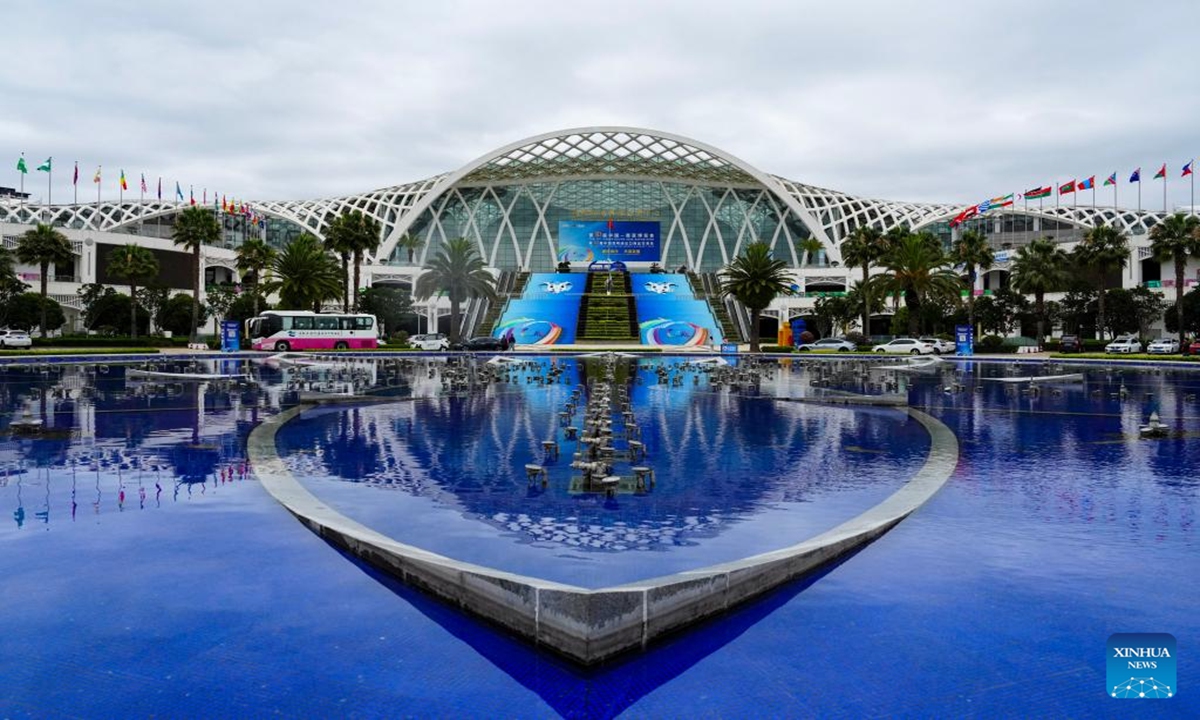
A view of Kunming Dianchi International Convention and Exhibition Center, the venue for the 10th China-South Asia Exposition in Kunming, Southwest China's Yunnan Province Photo: Xinhua
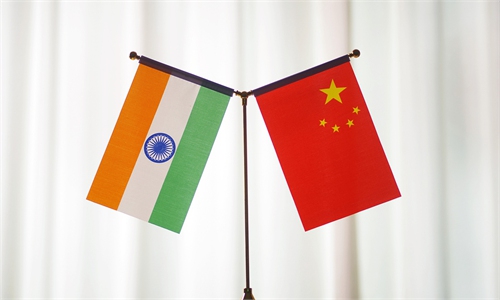
The 10th China-South Asia Exposition is set to be held from June 11 to 16 in Kunming, Southwest China's Yunnan Province. With 13 themed pavilions covering services trade, green energy, cultural tourism, intelligent manufacturing, modern agriculture, and other key sectors, the event stands as one of the largest comprehensive trade fairs for South Asia.Beyond serving as a key platform for economic and trade exchanges between China and South Asian countries, the event also provides a revealing glimpse into the opportunities embedded in China-India trade relations.
Nearly 800 free booths will be provided to South Asian exhibitors, including a number of Indian exhibitors. The arrangement fully demonstrates China's sincerity in opening its vast domestic market and sharing development dividends with regional partners, while offering Indian companies a direct channel to understand market dynamics in China and identify export opportunities.
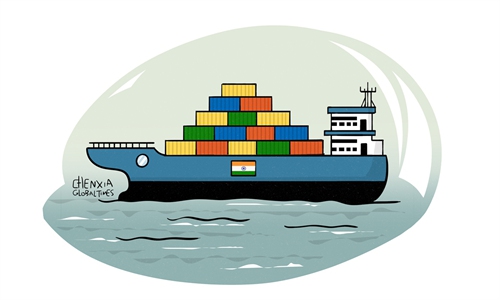
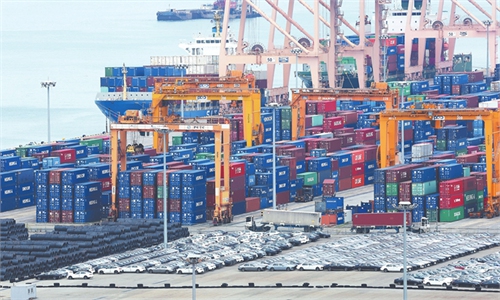
Over the past five months, India's exports to China have registered remarkable growth. China's General Administration of Customs said on Tuesday that China's imports from India jumped 36.1 percent year-on-year in the first five months of this year. This trend is worth noting as it highlights the industrial chain cooperation potential between the two economies.
For a long time, India's trade deficit with China has been a recurring concern in New Delhi's economic discourse - one that certain narratives have deliberately exaggerated and twisted. But objectively, the roots of the problem lie in structural differences in the industrial division of labor and a lack of deep collaboration.
Simply fixating on deficit figures or resorting to trade protectionism and administrative intervention can never resolve the issue fundamentally. In this context, India's recent export momentum to China holds the potential to ease the trade issue - provided India finds the right direction.
Deepened industrial chain collaboration seems to be the answer. The most impressive highlight of India's export surge to China lies in the growth of electronics components. India's Union Minister for Electronics and Information Technology Ashwini Vaishnaw said on Monday that the country exported electronics components worth Rupee 35,000 crore ($3.67 billion) to China last year, according to the Economic Times.
If anything, it is a tangible outcome of collaboration between the Chinese and Indian manufacturing sectors, especially in the electronics industry. Such mutually beneficial and deeply integrated industrial collaboration has overhauled the traditional trade pattern where China mainly exported finished manufactured goods while India supplied primary products.
It stands as compelling evidence of bilateral trade complementarity and industrial win-win cooperation, and provides a viable path for India to optimize its export structure and raise the added value of its outbound products. The development also fully shows that narrowing the trade deficit does not rely on import restrictions, but on India's capacity to further integrate into regional industrial chains and enhance the technological content and overall competitiveness of its exports.
China's economy is undergoing an accelerated transformation toward a green economy, digital services, modern agriculture and high-end intelligent manufacturing, with industrial and consumption upgrading generating massive new market demand.
Meanwhile, the China-South Asia Exposition shows China's market opening is genuine and China is willing to share development opportunities with an open and accommodating attitude. These factors all represent space and opportunities for industrial cooperation for neighboring countries, including India.
Of course, translating these opportunities into actual trade growth depends on India's own adjustments - specifically, whether it can elevate bilateral engagement from basic commodity trading to deep industrial chain coordination, thereby enabling local businesses to undertake higher-value-added production and move up the global value chain.
Against the backdrop of rising global trade protectionism, economic and trade cooperation between China and India carries far-reaching significance beyond the bilateral realm. The China-South Asia Exposition has proven that China's market openness is real and inclusive, and that substantial cooperation opportunities are readily available for all willing partners.
For India, actively leveraging open regional platforms, proactively adapting to China's market demand and advancing in-depth industrial synergy will provide the most practical and effective path to boost its own trade, while injecting steady impetus into regional economic integration and common prosperity.
RELATED ARTICLES