ARTS / BOOKS
Books and words, like water and grain, nourish my life: Palace Museum librarian
Inside the Forbidden City
Editor's Note:
In an age of information overload, reading remains a necessary channel to invigorate the mind, provide inspiration and cultivate virtue. Whether it is childhood enlightenment or the pursuits of adulthood, everyone's reading journey carries unique emotions and life experiences. The Global Times has specially launched the "100 Avid Readers" series, inviting guests from various fields to share their connections with books, stories of growth and sparks of thought.
In this installment, Zhu Yong, director of the institute of cultural communication at the Palace Museum, shares his reflections on reading and writing, as well as his plans for the next stage of his work.
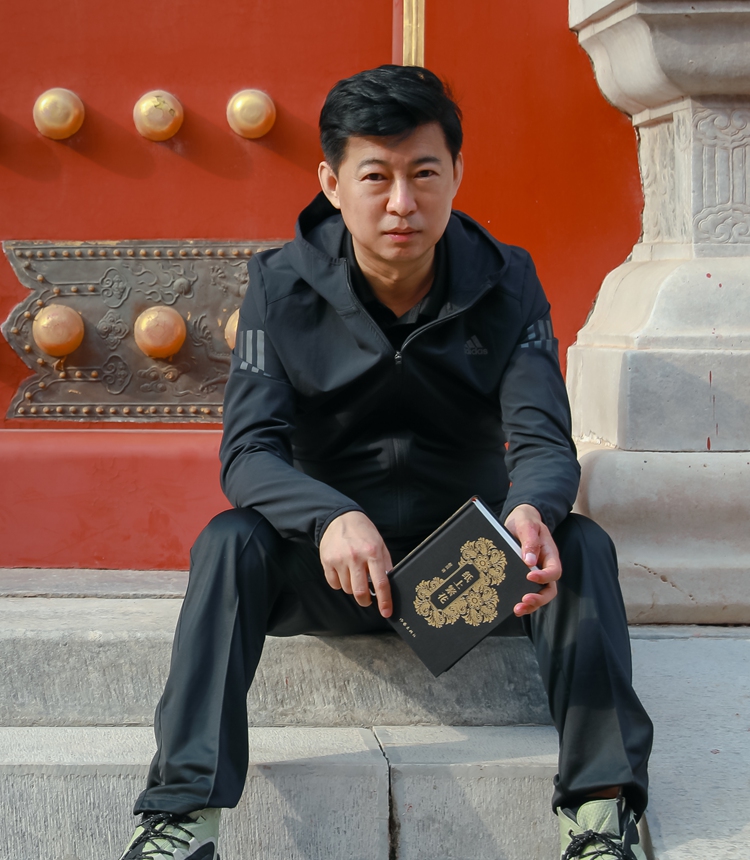
For Zhu, a research fellow at the Palace Museum, as well as a writer, documentary director, and screenwriter, these titles are secondary to a more enduring practice: reading and writing. "Reading and writing are fundamental parts of my life," he wrote. Everything else, in his view, grows from them.
Even at 58, Zhu's relationship with books remains physical and close at hand. Reading is not a scheduled discipline but an instinctive habit. Books are scattered around his room - bedside tables, tea tables, and in quiet corners.
A book is always in his bag. Whether waiting for someone, riding the subway, or simply passing a few quiet moments, he turns these gaps into reading time. "As long as there is a book in my bag," he said, "I feel at ease."
In an interview with the Global Times, Zhu shared his reflections on reading and writing, his long-standing connection with the Palace Museum, and his plans for the next stage of his work.
From Shenyang to Beijing
Growing up in Shenyang, Northeast China's Liaoning Province, Zhu spent his childhood around the Shenyang Imperial Palace, a place he often visited for play. School trips also occasionally took him there.
The memories of the Shenyang Imperial Palace, together with his interest in history and classical art, have stayed with him since then. However, only later, in Beijing's Palace Museum, these memories resurfaced, he recalled.
After completing his PhD, Zhu joined the newly established research institute of the Palace Museum in 2011. The institute was tasked with deepening interdisciplinary research on the Forbidden City's architecture, collections, historical documents and court culture. His work has since developed along two parallel paths: academic research and cultural communication.
Since 2020, he has served as the director of the institute of cultural communication at the Palace Museum.
While much of his work has focused on research, publishing studies and books on the Palace Museum, Zhu has also been committed to making scholarship accessible to the public. Through television programs, documentaries and other media projects, he has sought to bring the museum's cultural legacy beyond academic circles.
His writing, however, is where these threads converge most fully. Zhu cites Victor Hugo and Roland Barthes, writers who transformed architecture into literature. Hugo's Notre-Dame de Paris and Barthes' reflections on the Eiffel Tower convinced him that buildings are not merely physical structures; they can become language itself.
"A text does not only describe a building; it can also construct it," said Zhu.
For Zhu, the Forbidden City is such a living text. It is not a static heritage site but an unfolding narrative space, continuously open to interpretation. "It is a vibrant, living archive," he said, "one that can sustain my writing for a lifetime."
"The Palace Museum has nourished my writing, helping it put down deeper roots and grow ever more abundant. I believe my writing is still growing," said Zhu.
This long engagement with the Palace Museum also shapes his latest literary memoir, From Shenyang Imperial Palace to the Palace Museum: My Literary Memoir. In the preface to the memoir, Zhu writes, "Books and words, like water and grain, have nourished my life, making it fuller and more abundant."
A slow formation
Zhu's early reading life began in childhood. His father's bookshelf held a wide range of books, including history texts, classical Chinese works, and popular historical fiction. He would flip through works such as Records of the Grand Historian without fully understanding them, tracing the outlines of unfamiliar ideas instead. He also read literary magazines as well as both Chinese and international literary works.
At the time, he did not see himself as someone who loved history. He was simply a child with limited access to books, reading whatever was available. Yet these early encounters quietly shaped his path. "It may have been subconscious," he reflected, "but it was my starting point."
Looking back, Zhu does not see those years as systematic learning, but as a slow formation of curiosity. "The reading in my youth provided me with the impulse to set out," he said. "Even if my understanding was shallow and my early writing immature, they was a beginning for me."
Over time, his reading habits have shifted. In his school days, he read mostly modern literature. Now, he finds himself returning to classical texts, such as Tang Dynasty poetry and Song Dynasty lyrics.
For Zhu, reading is not only a form of enjoyment but a way of building an intellectual structure and deepening his understanding of the world. Without sustained reading, he believes, it is impossible to develop true intellectual depth.
In addition to his professional responsibilities, he read extensively, including a large number of classical texts, many of them related to the culture, history, and documentary records of the Palace Museum.
Over the years, he has remained committed to reading printed books, avoiding e-books and reading on his phone.
To him, reading in print is a deeply satisfying experience. The scent of ink and paper, the texture of the pages, and the careful design of a well-made book all contribute to this sense of pleasure. "Whenever I hold a good book in my hands," he said, "I feel truly happy."
Alongside his reading, he writes columns on the Forbidden City, and takes part in documentary projects on the relocation of the Palace Museum's collection to the south during the War of Resistance against Japanese Aggression (1931-45).
"The Palace Museum is a focal point - it is both a homeland of culture and the homeland of my literary imagination," noted Zhu.
In an age of information overload, reading remains a necessary channel to invigorate the mind, provide inspiration and cultivate virtue. Whether it is childhood enlightenment or the pursuits of adulthood, everyone's reading journey carries unique emotions and life experiences. The Global Times has specially launched the "100 Avid Readers" series, inviting guests from various fields to share their connections with books, stories of growth and sparks of thought.
In this installment, Zhu Yong, director of the institute of cultural communication at the Palace Museum, shares his reflections on reading and writing, as well as his plans for the next stage of his work.
Zhu Yong Photo: Courtesy of Liaohai Publishing House
From childhood visits to the Shenyang Imperial Palace, the only existing royal palace building complex in China other than the Forbidden City in Beijing, to a career at the Palace Museum, the two palaces have quietly accompanied Zhu Yong through much of his life.For Zhu, a research fellow at the Palace Museum, as well as a writer, documentary director, and screenwriter, these titles are secondary to a more enduring practice: reading and writing. "Reading and writing are fundamental parts of my life," he wrote. Everything else, in his view, grows from them.
Even at 58, Zhu's relationship with books remains physical and close at hand. Reading is not a scheduled discipline but an instinctive habit. Books are scattered around his room - bedside tables, tea tables, and in quiet corners.
A book is always in his bag. Whether waiting for someone, riding the subway, or simply passing a few quiet moments, he turns these gaps into reading time. "As long as there is a book in my bag," he said, "I feel at ease."
In an interview with the Global Times, Zhu shared his reflections on reading and writing, his long-standing connection with the Palace Museum, and his plans for the next stage of his work.
From Shenyang to Beijing
Growing up in Shenyang, Northeast China's Liaoning Province, Zhu spent his childhood around the Shenyang Imperial Palace, a place he often visited for play. School trips also occasionally took him there.
The memories of the Shenyang Imperial Palace, together with his interest in history and classical art, have stayed with him since then. However, only later, in Beijing's Palace Museum, these memories resurfaced, he recalled.
After completing his PhD, Zhu joined the newly established research institute of the Palace Museum in 2011. The institute was tasked with deepening interdisciplinary research on the Forbidden City's architecture, collections, historical documents and court culture. His work has since developed along two parallel paths: academic research and cultural communication.
Since 2020, he has served as the director of the institute of cultural communication at the Palace Museum.
While much of his work has focused on research, publishing studies and books on the Palace Museum, Zhu has also been committed to making scholarship accessible to the public. Through television programs, documentaries and other media projects, he has sought to bring the museum's cultural legacy beyond academic circles.
His writing, however, is where these threads converge most fully. Zhu cites Victor Hugo and Roland Barthes, writers who transformed architecture into literature. Hugo's Notre-Dame de Paris and Barthes' reflections on the Eiffel Tower convinced him that buildings are not merely physical structures; they can become language itself.
"A text does not only describe a building; it can also construct it," said Zhu.
For Zhu, the Forbidden City is such a living text. It is not a static heritage site but an unfolding narrative space, continuously open to interpretation. "It is a vibrant, living archive," he said, "one that can sustain my writing for a lifetime."
"The Palace Museum has nourished my writing, helping it put down deeper roots and grow ever more abundant. I believe my writing is still growing," said Zhu.
This long engagement with the Palace Museum also shapes his latest literary memoir, From Shenyang Imperial Palace to the Palace Museum: My Literary Memoir. In the preface to the memoir, Zhu writes, "Books and words, like water and grain, have nourished my life, making it fuller and more abundant."
A slow formation
Zhu's early reading life began in childhood. His father's bookshelf held a wide range of books, including history texts, classical Chinese works, and popular historical fiction. He would flip through works such as Records of the Grand Historian without fully understanding them, tracing the outlines of unfamiliar ideas instead. He also read literary magazines as well as both Chinese and international literary works.
At the time, he did not see himself as someone who loved history. He was simply a child with limited access to books, reading whatever was available. Yet these early encounters quietly shaped his path. "It may have been subconscious," he reflected, "but it was my starting point."
Looking back, Zhu does not see those years as systematic learning, but as a slow formation of curiosity. "The reading in my youth provided me with the impulse to set out," he said. "Even if my understanding was shallow and my early writing immature, they was a beginning for me."
Over time, his reading habits have shifted. In his school days, he read mostly modern literature. Now, he finds himself returning to classical texts, such as Tang Dynasty poetry and Song Dynasty lyrics.
For Zhu, reading is not only a form of enjoyment but a way of building an intellectual structure and deepening his understanding of the world. Without sustained reading, he believes, it is impossible to develop true intellectual depth.
In addition to his professional responsibilities, he read extensively, including a large number of classical texts, many of them related to the culture, history, and documentary records of the Palace Museum.
Over the years, he has remained committed to reading printed books, avoiding e-books and reading on his phone.
To him, reading in print is a deeply satisfying experience. The scent of ink and paper, the texture of the pages, and the careful design of a well-made book all contribute to this sense of pleasure. "Whenever I hold a good book in my hands," he said, "I feel truly happy."
Alongside his reading, he writes columns on the Forbidden City, and takes part in documentary projects on the relocation of the Palace Museum's collection to the south during the War of Resistance against Japanese Aggression (1931-45).
"The Palace Museum is a focal point - it is both a homeland of culture and the homeland of my literary imagination," noted Zhu.
RELATED ARTICLES