China conducts 1st comprehensive field-based evaluation of pure electric agricultural machinery for vegetables
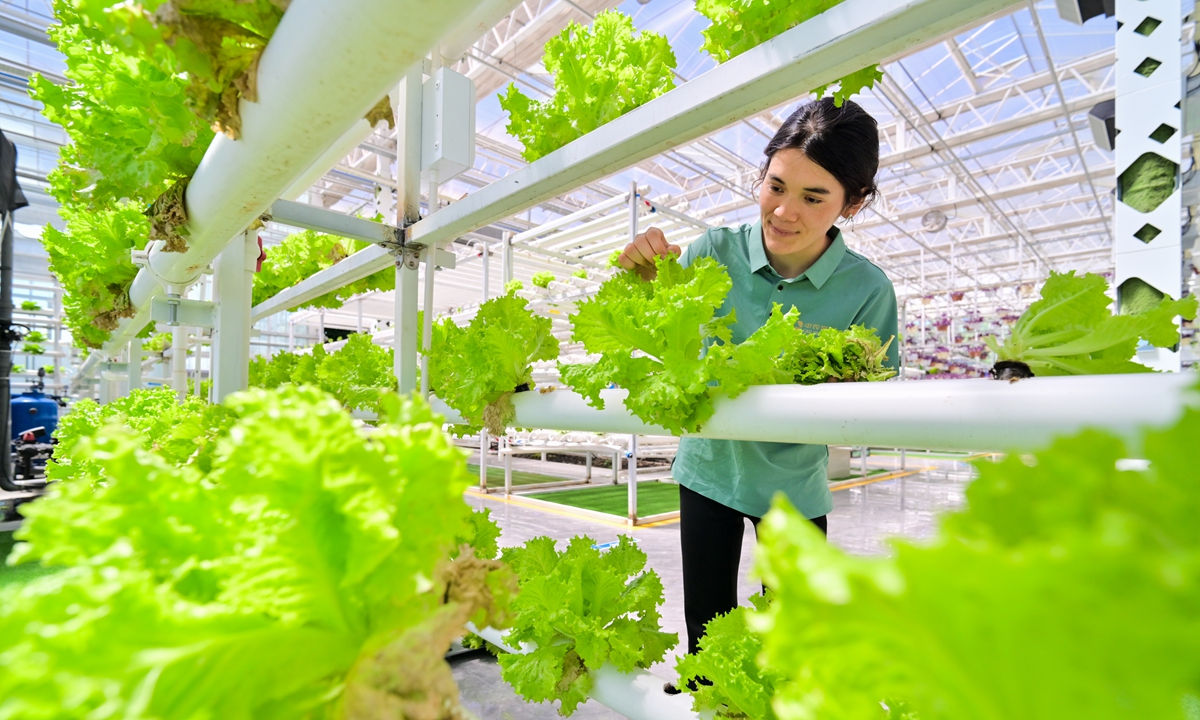
A worker performs routine vegetable maintenance at a smart agriculture science and technology facility in Changji, Northwest China's Xinjiang Uygur Autonomous Region, on May 17, 2026. Photo: VCG
The Nanjing Institute of Agricultural Mechanization under the Ministry of Agriculture and Rural Affairs conducted centralized testing of more than 20 all-electric agricultural machinery models covering the entire process of vegetable cultivation, management and harvesting over the weekend, CCTV News reported on Sunday.
It was the first time that China conducted a comprehensive field-based evaluation of pure electric agricultural machinery for vegetables, according to the CCTV News report.
A Chinese agricultural expert noted that the electrification of agricultural machinery is attracting increasing attention from the government and industry, due to these machines' automation capabilities and smart applications. The effort is a step further in China's effort to boost the agricultural sector with the help of modern technologies, the expert said.
According to CCTV News, the capabilities of multiple new all-electric agricultural machines were demonstrated at the institute's testing site in Nanjing, capital of East China's Jiangsu Province.
The 20-plus new types of pure electric agricultural machinery covered in this centralized evaluation included electric transplanters, electric crop protection machines, electric multifunctional work platforms and electric transport vehicles.
A manipulator of the electric transplanter precisely picks up seedlings and places them into the delivery channel, performing soil opening, seedling dropping, and soil closing in one seamless motion. It can transplant 7,000 seedlings in one hour.
A vegetable harvester uses brushes to press leafy vegetables onto a conveyor belt, while a vibrating blade cuts the roots, allowing whole vegetables to be transported into bins via the belt.
The comprehensive mechanization rate for vegetable production in China is currently about 50 percent, far lower than the level of mechanization for grain crop production, the report said. Pure electric agricultural machinery is compact, highly flexible, and responds quickly, making it particularly suitable for complex working environments such as greenhouses and hilly areas, filling gaps left by traditional diesel-powered machinery.
Meanwhile, the advantages accumulated by China's new-energy vehicle industry in batteries, electric motors and electronic control systems can be rapidly transferred to the agricultural machinery sector, creating new global competitive advantages, according to the CCTV News report, citing analysts.
Li Guoxiang, a researcher at the Rural Development Institute of the Chinese Academy of Social Sciences, told the Global Times on Sunday that vegetable cultivation and harvesting procedures are generally more difficult than those for staple crops due to the diversity and relative fragility of vegetables, and the sector is traditionally labor-intensive.
"With electric-powered automated vegetable planting and harvesting machinery, efficiency is expected to improve, making the process less labor-intensive. More importantly, because electric-powered machinery can continuously collect operational data, the development of such hardware can inherently promote the advancement of smart agricultural technologies," Li said.
"Such emission-free machines can greatly help reduce pollution and emissions, and given the volatility of global crude oil prices, all-electric agricultural machinery can also significantly reduce operating costs and help increase farmers' incomes," Li noted.
China's annual "No.1 central document," released in February, highlighted the pivotal roles of technological innovation and outlined plans to advance agricultural and rural modernization. It called for expanding application scenarios for advanced technologies such as drones, the Internet of Things, and robots, according to the Xinhua News Agency.
Global Times
RELATED ARTICLES