Illustration: Chen Xia/GT
There is a narrative in Western discourse on China that its political system is inherently incapable of delivering on long-term strategic goals, and that the system is systematically distorted by short-term political incentives, leading to wasteful "visibility projects" and misallocated resources. A recent example of this view appears in the Foreign Affairs article titled "China's Edifice Complex."
Like many Western critiques of Chinese governance, this analysis suffers from a severe diagnostic error: It mistakes temporary administrative friction for systemic failure, and views a dynamic, evolving governance model through a static, immutable lens.
Here, China's governance offers a masterclass in adaptive self-correction. The transition from the 14th Five-Year Plan (2021-25) to the 15th Five-Year Plan (2026-30) is a case in point. Rather than ignoring past inefficiencies, the country has actively codified lessons learned. The new planning cycle introduces unprecedented institutional guardrails: Performance reviews are now decoupled from short tenures, and rigorous "tracking audits" monitor major infrastructure projects from day one. Crucially, the introduction of "lifetime accountability and retroactive probes" for local government hidden debts has established a hard budget constraint, effectively de-incentivizing officials from taking on reckless debt to fund short-term vanity projects.
Critics who look at a local vanity bridge and declare China's entire strategic capacity broken are like drivers who spot a single pothole and declare the entire highway system impassable.
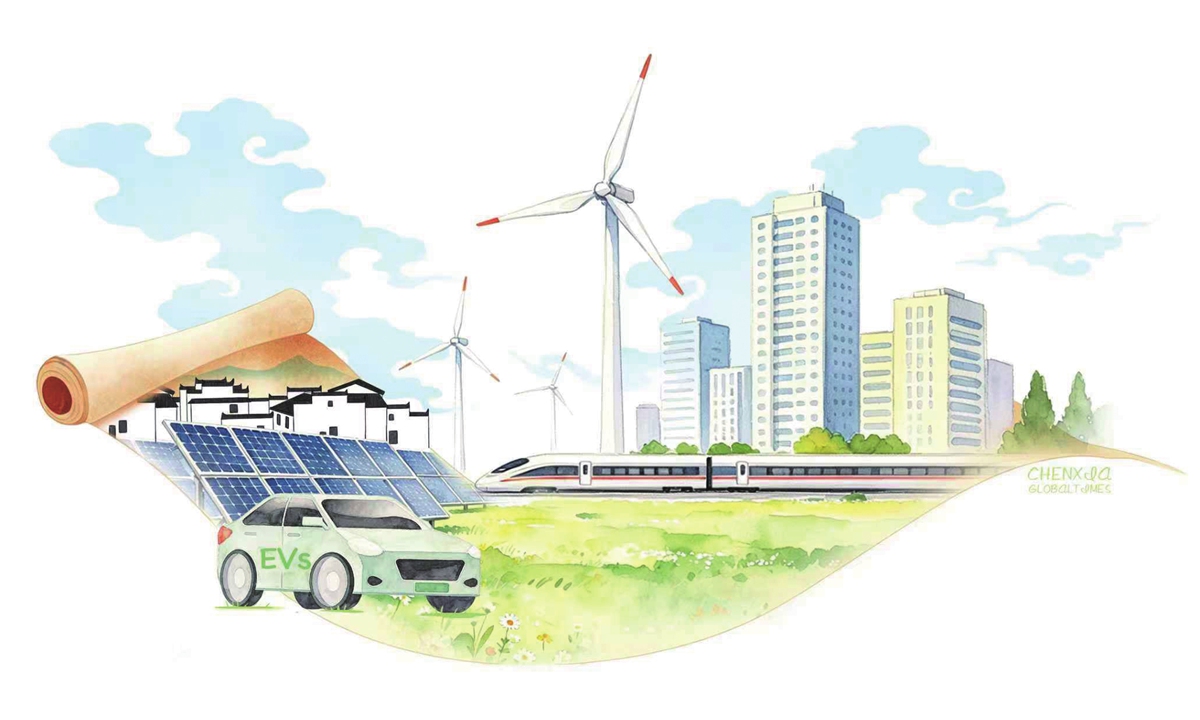
If the biased logic of some Western media, like that in the Foreign Affairs article, were correct, China's multi-decade strategic miracles would have been mathematically impossible. The targeted poverty alleviation campaign, which lifted nearly 100 million people out of destitution over 8 years, required unprecedented precision, continuous recalibration of resource transfers, and relentless execution. The high-speed rail network - now the world's largest - and China's dominant position in the global renewable energy and electric vehicle supply chains are not "short-term victories." They are the fruits of multi-decade, highly consistent strategic commitments delivered by a system that excels at adjusting its tactical tools without losing its strategic destination.
Furthermore, some Western observers often misinterpret local policy experimentation as chaotic waste. In the Chinese administrative tradition, local governments often act as incubators, testing out new policies and absorbing the initial costs of trial and error before successful models are scaled nationally.
The core premise of the critique is that the Western and Chinese systems each have different mechanisms that lead to short-termism. Indeed, overcoming the short-term impulses of decision-makers to achieve sustainable resource allocation is a universal challenge of modern statecraft. Yet, while Western representative democracies often find themselves trapped in gridlock - where long-term national priorities are constantly hostage to polarized electoral cycles and veto players - China's administrative state utilizes its centralized authority to push through painful but necessary reforms.
China's governance is not perfect, nor is it a fixed, frozen blueprint. Rather, its strength lies in its evolutionary, "experimentalist" nature. When "visibility projects" emerge, the system responds not with paralysis, but by engineering new audit mechanisms, debt ceilings, and evaluation metrics. It is a system that is dynamic, self-critical, and relentlessly keeping pace with the times.
Long-termism is not the absence of mistakes; it is the discipline of continuous, institutionalized learning. This capacity for self-reform is the true engine of Chinese modernization - a reality that some Western observers will continue to miss if they remain obsessed with the potholes while ignoring the direction of the road.
RELATED ARTICLES