You can be a loyal Singaporean and still be moved by ancestors’ letters
By Published: Jun 16, 2026 10:10 PM
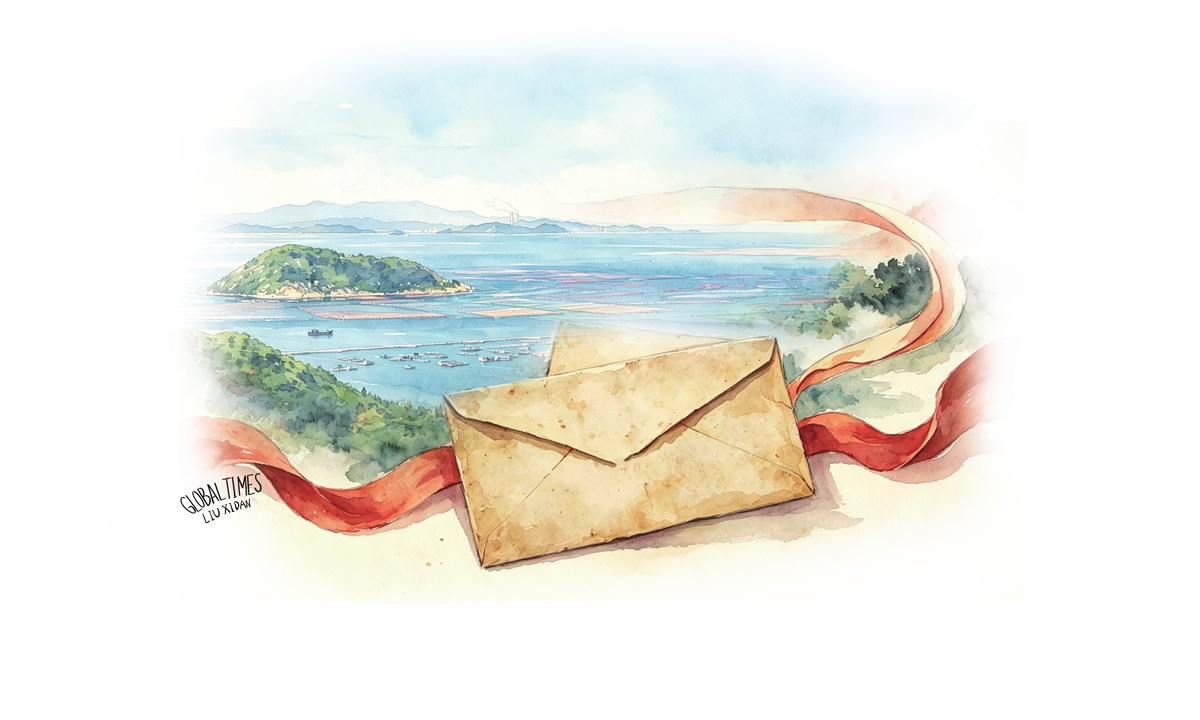
Illustration: Liu Xidan/GT
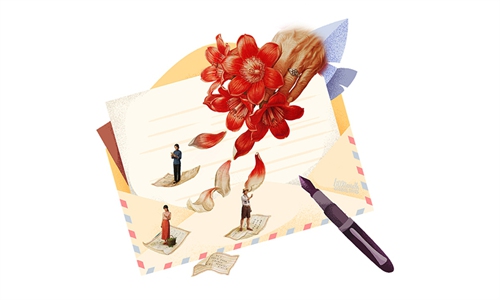
The movie Dear You has quietly touched the hearts of countless ethnic Chinese across the globe, including those in Singapore.Dear You follows a Chinese youth discovering his grandmother's qiaopi (remittance letters), leading him to Thailand to search for his grandfather. There, he uncovers the poignant history of early Chinese migrants to Southeast Asia, revealing a timeless tale of family, duty and cultural heritage connecting generations.
The yellowed family letters featured in the film and the seemingly simple yet culturally powerful classical Chinese words act like keys, softly unlocking the vault of Chinese cultural memory.
If you can understand those words, and if you can feel the warmth of traditional Chinese culture embedded in these historical letters, there's a high probability that you're fundamentally Chinese at heart.
The film is set to officially debut in cinemas in Singapore on Thursday. Why, even before its debut, certain mainstream media outlets in Singapore instinctively raised their guard?
Singapore is a unique nation. It is the only independent sovereign country in Southeast Asia with a majority ethnic Chinese population. It is a young nation, geographically nestled among powerful neighboring countries of Malay heritage. In such a geopolitical climate, if Singapore appears to harbor too strong a cultural or political attachment to China, it will spark intense suspicion and hostility from its neighbors.
For Singapore, national security and survival are paramount. Thus, from the very beginning, Singapore's elites had to go to great lengths to prove to the world that Singapore is not an extension of China, and that its people are independent Singaporean citizens.
This diplomatic balancing act has created a highly sensitive defensive reflex within Singaporean society when dealing with Chinese culture. To some, cultural "root-seeking" and emotional resonance are easily misconstrued by the outside world as political disloyalty or the result of foreign influence.
Yet, most Chinese Singaporeans have received some form of traditional Chinese education. The deep-seated imprint of traditional Chinese culture remains etched in their hearts. If we analyze their psychology objectively, we can see that this internal conflict and outward coldness stem from a very real, painful logic of survival.
They might use cold political logic to dismantle warm sentiments, or even emphasize how the financial demands of relatives back in China burdened their ancestors who migrated south, all to deliberately distance themselves emotionally from China. This is about surviving in a tight spot. They must employ this calculated indifference to safeguard their identity as an independent sovereign nation.
The fascinating part of this psychological dynamic is that the more desperate they are to deny and sever the connection, the more it proves just how powerful the cultural bond is. It is because the poetry and the warmth in those letters strike the softest spot in their hearts that they experience an instinctive panic and resistance.
In truth, in a diverse world of many races and cultures, embracing your Chinese heritage and identifying with Chinese culture is entirely separate from your political allegiance to a nation. A Chinese Singaporean can be a fiercely loyal citizen of Singapore, and also be moved by classical Chinese poetry, shedding tears over the letters of their ancestors, or raising their children and living their lives guided by traditional Chinese values.
This explains why when Dear You's Chaoshan dialect version opened ticket reservations in Singapore, massive viewer traffic crashed the ticketing website and all 4,816 tickets for the eight scheduled screenings on the first day were sold out within 1.5 hours.
The era of qiaopi has long passed, and the grandmothers and grandfathers who wrote and sent them are fading away. But the handwriting they left on paper, and the values they lived by - placing honor above material gain and showing unbreakable resilience - have become the bedrock of Chinese culture.
The author is a senior editor with the People's Daily and currently a senior fellow with the Chongyang Institute for Financial Studies at Renmin University of China. dinggang@globaltimes.com.cn. Follow him on X @dinggangchina
RELATED ARTICLES