FCC rolls back on Chinese toy drones ban; expert says move reflects domestic resistance
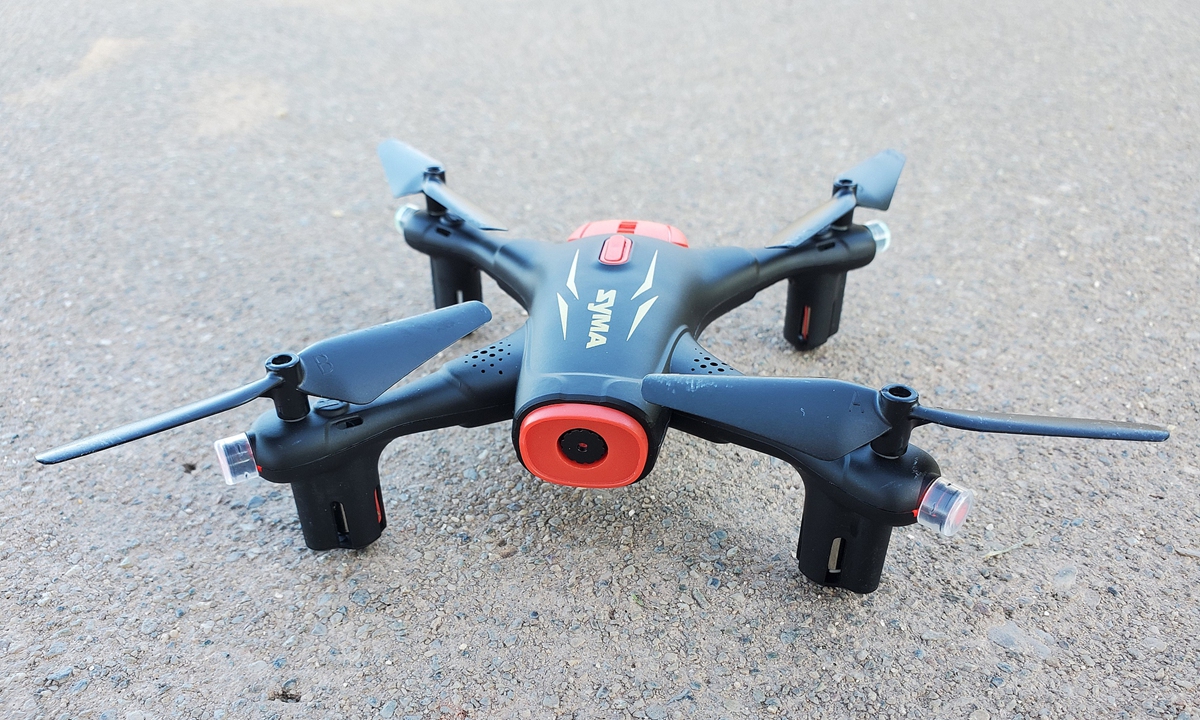
A toy drone made by Chinese company Syma California, US File photo: VCG
The US Federal Communications Commission (FCC) said it will lift the ban on imported new models of Chinese toy drones, according to a public notice released on Monday. Chinese experts said the easing of restrictions may be partly driven by industrial opposition following earlier bans, under which the normal operation of US companies that produce or import related products has already been damaged.
The FCC claimed the decision was based on a determination by the US Department of War, which found that devices lacking the core capabilities of traditional drones - including range, endurance, sensing, payload, connectivity, and data collection and storage - do not present security risks when classified as "unsophisticated, low-risk toys," Reuters reported on Tuesday.
The easing came after FCC said in December 2025 that it was barring imports of all new models of foreign-made drones and critical components, including those from China's DJI and Autel, claiming they pose risks to US national security.
"The removal of the ban reflects, to some extent, domestic pushback from relevant industries in the US," said Gao Lingyun, a research fellow at the Chinese Academy of Social Sciences, adding that after restrictions on Chinese toy drones, the US lacks competitive domestic alternatives, and an outright ban would either create supply gaps or drive up costs for domestic toy drone producers and importers.
The easing of restriction is welcomed by US toy industry. The Toy Association of the US said in an announcement on Tuesday that it is a "significant policy victory" for companies that manufacture or import toy drones and remote-control flying toys.
Gao said that within the US there remains a strong entrenched force opposing closer China-US cooperation, and that restrictions on Chinese products often stem from inertia or bias rather than practical necessity. Gao added that US' excessive political considerations embedded in trade policy have led to decisions that, from an economic perspective, are often questionable.
He Weiwen, a senior fellow at the Center for China and Globalization, told the Global Times on Wednesday that the US' tendency to use generalized security concepts to impose trade restrictions on China will inevitably lead to harm to US domestic consumers and related industrial supply chains.
RELATED ARTICLES