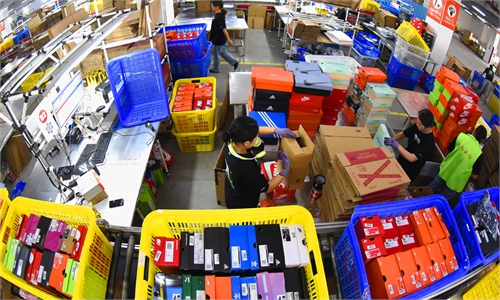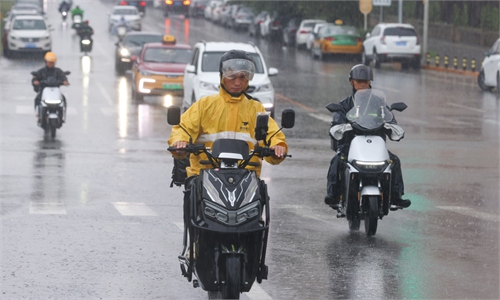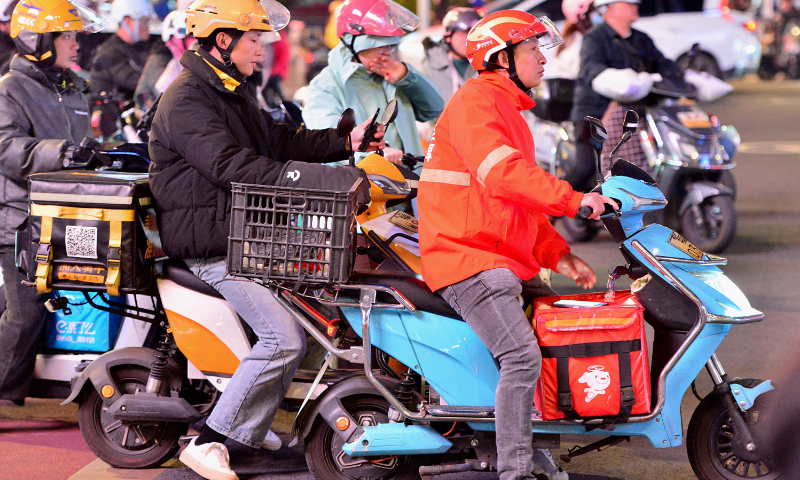
Food deliverymen from different platforms are seen in Fuzhou, East China's Fujian Province, on January 9, 2026. Photo: VCG
China's State Administration for Market Regulation (SAMR) has drafted the "Ten Rules on Regulating Subsidy Practices of Food Delivery Platforms, which is open for soliciting public comments until July 17.
The release of the draft rules is timely, reflecting the industry's need for more orderly development, a Chinese industry analyst said, noting the market regulators will continue to strengthen oversight of food delivery platforms, crack down on excessive low-price competition and steer the sector toward sustainable growth.
For some time, the platforms have resorted to irregular subsidies and pricing wars to win customers. These practices harm the interests of platform operators, food delivery riders, and consumers, squeezing the real economy, said the SAMR.
The anti-monopoly and anti-unfair competition commission under SAMR conducted an investigation and assessment of market competition conditions in the food delivery sector, and found many platforms engaged in leveraging their capital advantages to capture market share, pressuring merchants to participate in subsidy programs and driving irrational competition in the industry, said the SAMR.
The market regulator said it is necessary to regulate subsidy practices by food delivery platforms, guide them to operate in compliance with relevant laws and regulations, and promote healthy and orderly competition.
The draft rules stipulate that massive subsidies should not be used to restrict market competition and disrupt market order. The rules prohibit food delivery platforms from forcing merchants to participate in subsidy programs or engage in other unfair competitive practices, and outlawing the sale of goods below cost.
The release of the draft rules is timely and reflects the industry's broader need for more orderly development, Liu Dingding, a veteran industry analyst, told the Global Times on Wednesday, noting the rules will help curb low-price competition among the platforms.
Liu said that, in the past, platforms relied heavily on subsidies to gain market share, often squeezing smaller competitors. "The new rules will ban over-sized subsidies and below-cost dumping, helping prevent price wars and protecting smaller players," Liu said.
More importantly, the drafted rules will encourage a shift from price competition to quality competition, and inspire more investment in delivery services, food safety, and riders' welfare, Liu noted.
The release of the draft rules on Wednesday came about two months after SAMR imposed administrative penalties of 3.597 billion yuan ($532.3 million) on seven e-commerce platforms, including PDD, Meituan, JD.com, Ele.me, ByteDance's Douyin, Alibaba's Taobao and Tmall.com, for involvement in illegal "ghost shop" operations in the food-delivery sector.
According to Xinhua News Agency, April's fine was the heaviest penalty imposed on platforms since the Food Safety Law was amended in 2015. The move sends a clear signal that oversight of online food safety will be tightened in China.
RELATED ARTICLES