US-Japan drills, planned Typhon missile deployments trigger Japanese domestic opposition, stir regional security concerns

latest news
Japan and the US launched the annual Resolute Dragon field exercise on Saturday, with the large-scale joint drill focusing on the defense of islands in Japan's southwestern region, including Okinawa, according to Japanese media reports.
The exercise, combined with reports that the US military plans to deploy Typhon midrange missile systems to Japan for joint exercises next week and in September, has been interpreted by Japanese media as efforts aimed at countering China. Chinese experts said the moves reflect Tokyo's continued use of the so-called "China threat" narrative to enable military buildup, while promoting domestic political consolidation, advancing constitutional revision and justifying military expansion.
According to the Yomiuri Shimbun, the Resolute Dragon exercise began on Saturday in Kyushu and Okinawa. Against the backdrop of what the report described as a worsening security environment which it claimed to be due to so-called China's maritime activities, the two sides are conducting training aimed at improving counterstrike capabilities, transport capacity and coordination for the defense of remote islands.
The exercise has been held annually since 2021. This year's drills will continue through June 30 and include live-fire training, combat operations and logistics exercises at Ground Self-Defense Force camps and training areas, according to the Yomiuri Shimbun.
The exercise also marks the first participation of a newly established long-range missile unit deployed in March at Camp Kengun in Kumamoto Prefecture.
"Japan's decision to deploy midrange missiles and hold joint military exercises with the US in its southwestern region while emphasizing island defense once again shows that Tokyo still harbors illusions that it can rely on US military power if a conflict were to occur with China in the region," Song Zhongping, a Chinese military affairs expert, told the Global Times on Sunday.
However, experiences from recent military conflicts show that if Japan were to recklessly provoke confrontation with China, the US might not be able to provide the level of support Japan expects, he said.
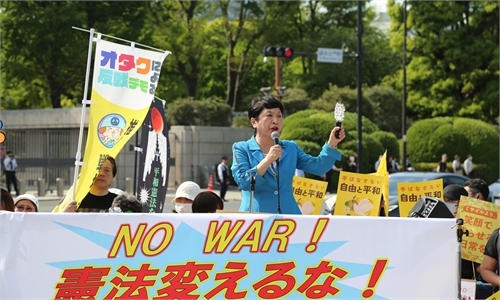
Civic groups and local residents in Japan have voiced opposition to the large-scale US-Japan joint military exercise, which began Saturday across the Kyushu region in southwestern Japan and Okinawa Prefecture, the Xinhua News Agency reported.
Nikkei Asia reported that the US military will deploy Typhon midrange missile systems to Japan for joint exercises next week and again in September, with the launchers to be kept in the country in what is seen as stronger US involvement in efforts to counter China.
A senior SDF official explained that this is not a deployment in which the launchers can be moved right away, according to Nikkei. However, a Japanese government official told Nikkei Asia that "storing them in Japan, which means that they can be deployed when necessary, will serve as a deterrent against China.".
Song warned that deployment of Typhon systems to Japan could serve as an initial step toward introducing more advanced missile capabilities into the country.
"By first bringing in mobile missile systems under the framework of joint exercises, the US and Japan may be attempting to gradually lower domestic opposition to missile deployments," he said. "Once that threshold is crossed, it could become easier to introduce more advanced and potentially more threatening weapons systems in the future, including hypersonic missiles."
"Ultimately, these actions are intended to justify military expansion and facilitate the deployment of more advanced US weapons systems on Japanese territory," he said.
However, both the US and Japan should realize that such collusion would severely jeopardize regional security. Any attempt to provoke conflict will bring no benefits to either country, Song said.
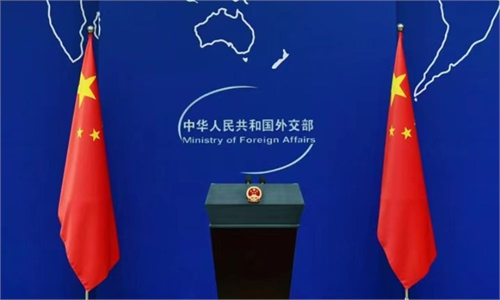
Chinese Foreign Ministry had addressed the issue in May, when spokesperson Guo Jiakun said that the deployment of Typhon, a strategic offensive weapon, will harm the legitimate security interests of other countries, threaten regional strategic security, and push up the risk of military confrontation and arms race. It will bring nothing but harm to peace and stability in the region.
Over the years, people from multiple Asian countries, including Japan, have voiced their opposition to the deployment. China urges the US and Japan to listen to the calls of regional countries, correct the erroneous practice, and play a positive role with concrete actions for regional peace and stability, Guo said.
RELATED ARTICLES