'Illegal, null and void': Chinese FM condemns Japan-Philippines maritime delimitation talks
Latest Tokyo-Manila initiatives could heighten regional tensions, undermine regional stability: Chinese experts
Chinese Foreign Ministry
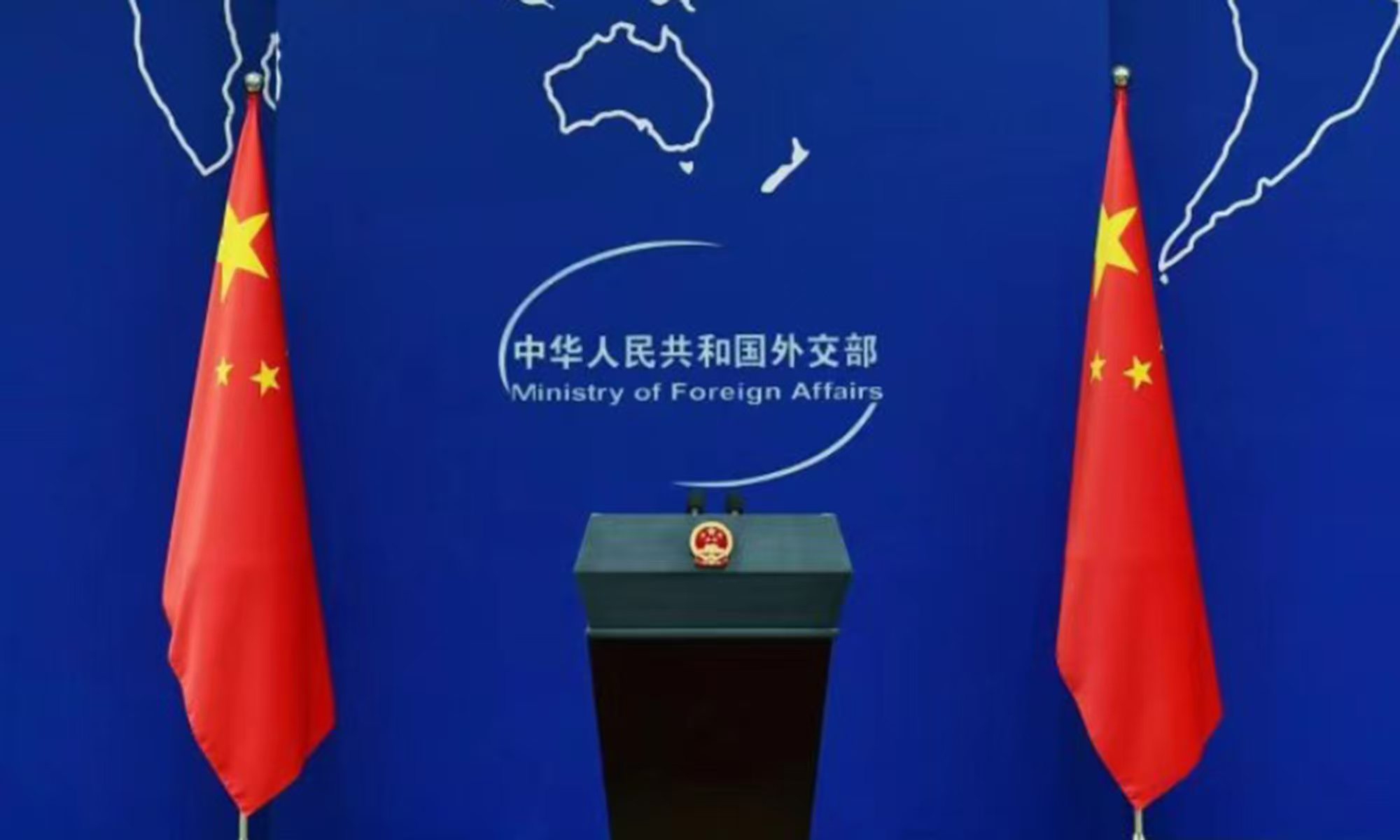
A Chinese foreign ministry spokesperson on Friday condemned the launch of so-called maritime delimitation talks between Japan and the Philippines, calling the talks completely illegal, null and void.
The response came after Japanese Prime Minister Sanae Takaichi and Philippine President Ferdinand Marcos Jr. wrapped up talks in Tokyo, with a joint statement released late Thursday announcing that the two countries would begin formal negotiations to delimit the maritime boundary of the exclusive economic zone (EEZ) and continental shelf between them.
Chinese experts noted that the area Japan and the Philippines intend to delimit falls within China's continental shelf and EEZ. They argued that Tokyo and Manila are attempting to bypass China in drawing maritime boundaries near Taiwan island. Such a move, they said, constitutes a serious provocation and reflects efforts by the two countries to coordinate their China-related strategies while serving as a forward outpost for the involvement of outside powers in the region.
Severe violation
At Friday's regular press briefing, when asked about Japan and the Philippines' plan to start talks on the delimitation of the exclusive economic zone and continental shelf between Japan and the Philippines, Chinese foreign ministry spokesperson Mao Ning said that the area the two countries announced they will delimit is east of China's Taiwan island. According to China's domestic law and international law including UNCLOS, China has exclusive economic zone and continental shelf in this area.
Japan and the Philippines' so-called maritime delimitation talks constitute a severe violation of China's maritime rights and interests, UNCLOS and other international law and basic norms governing international relations, Mao added.
"China strongly deplores and firmly opposes that and has lodged serious protests with both countries," she said.
"The so-called delimitation talks are completely illegal, null and void, and will have no effect on China's claims to rights in the area east of Taiwan island or exercise of China's lawful rights. China urges Japan and the Philippines to immediately stop any violation of China's maritime rights and interests and take concrete actions to uphold regional peace and stability," Mao said.
During the Philippine President's visit to Japan, the two sides issued a Japan-Philippines Joint Statement on the Comprehensive Strategic Partnership, in which they claimed the leaders of the two countries have decided to commence formal negotiations to delimit the maritime boundary of the EEZ and the continental shelf between the two countries "in order to enhance legal certainty in the region."
The move was widely interpreted as carrying strategic implications beyond maritime administration. Singapore-based newspaper The Straits Times reported that the move signals a formal effort to define boundaries between Japan and the Philippines, which share overlapping maritime interests "and a common wariness about China" in the East China Sea and South China Sea.
The report further noted that "the groundwork had already been laid." The Reciprocal Access Agreement, which allows each country's forces to enter the other's territory for joint drills and disaster relief, took effect in September 2025. Four months later, Tokyo and Manila signed an acquisition and cross-servicing agreement governing the sharing of military supplies and services, according to the report. Analysts said it suggested that the latest move is part of a longer-term strategic alignment.
"The prerequisite for maritime delimitation is that the waters concerned involve only maritime claims generated by opposite or adjacent coasts of the negotiating parties. Where third-party rights are involved, especially in areas where sovereignty and maritime jurisdiction disputes remain unresolved, any bilateral arrangement must not prejudice the legitimate rights and interests of a third party," Yang Xiao, a research professor at the Institute of Peaceful Development under the Chinese Academy of Social Sciences, told the Global Times on Friday.
Yang noted that this is a basic principle of international law and is also reflected in UNCLOS. Given that the waters involved are closely linked to the maritime rights and interests of Taiwan island and its adjacent waters, which concerns China's sovereignty, rights and jurisdiction, neither Japan nor the Philippines has the authority to make arrangements concerning the area while bypassing China, he said.
"The announcement of maritime delimitation talks at this particular moment is not simply about maritime cooperation between the two countries," Yang said. "It reflects an attempt to bind their interests together across these waters, connect the island chain and strengthen coordinated efforts against China."
"In international maritime practice, one important bottom line is not to prejudice the interests of a third party," Yang added. "If Japan and the Philippines insist on pushing forward, it will not automatically grant legitimacy to their claims. Instead, it could create further disputes, widen divisions and undermine regional peace and stability."
Dangerous military cooperation
Beyond the planned maritime delimitation negotiations, the two countries also highlighted coast guard cooperation in the maritime cooperation section of the joint statement, saying they had decided to further promote exchanges between maritime law enforcement agencies, including through joint training and capacity-building activities.
The cooperation agenda also extends well beyond the coast guard. The joint statement stated that the two leaders decided to continue closely working together to further promote the transfer of military equipment, including destroyers, TC-90 aircraft and radar systems. Tokyo also reaffirmed its commitment to contributing to the capacity building of the Armed Forces of the Philippines.
The commitments further demonstrate the growing ambition behind bilateral military cooperation. Reporting on the development, The Independent noted that Marcos Jr. represents the first potential major customer for Japanese arms since Takaichi's government lifted a ban on lethal weapons exports in April.
"This policy shift marks a significant departure from Japan's postwar pacifist stance as the nation accelerates its military and arms industry development," according to the Independent.
A number of international media outlets and observers have linked the strengthening Japan-Philippines partnership directly to China. The Associated Press reported that "Both nations have China firmly in mind as they tighten a military relationship that the United States hopes will act as a bulwark against Beijing."
Japanese news agency Jiji Press described the meeting and joint statement as marking an "increasingly evident quasi-alliance against China."
"The economic cooperation outlined in the joint statement largely continues existing trends, but cooperation in the political and military fields represents a dangerous move, one that carries disruptive implications for regional peace," Yang said.
"Japan is breaking through previous constraints imposed by its pacifist constitution, exporting offensive weapons and sending military personnel to Philippine territory. These developments reveal a shared intention to target China and reshape the existing regional order," he added.
Chen Xiangmiao, a research fellow at the National Institute for South China Sea Studies, told the Global Times on Friday that both countries have demonstrated clear ambitions in relation to the South China Sea and East China Sea.
"To feed their ambitions, they are further strengthening their collusion," Chen said. "Japan hopes to deepen its presence in the South China Sea by using the Philippines as a strategic foothold, while the Philippines seeks greater military support and arms supplies from Japan. Each side is pursuing its own interests."
Chen argued that the statement carries strong Cold War undertones, seeking to align positions on the East China Sea, South China Sea and even the Taiwan question in opposition to China.
At Friday's press briefing, when asked about reports that orders from Japan's Ministry of Defense have tripled over the past five years due to rising demand for surface-to-air missiles, aircraft and other weapons, Mao said, "We have noted the reports with deep concern. The reactivation and rapid rise of Japan's military industrial complex represents another major development in Japan's accelerating remilitarization. It is raising widespread concern both within Japan and across the international community."
"Senior officials of the Japanese government spare no effort to promote arms sales in the world in an attempt to develop the military industry into an economic pillar of the nation. This contravenes Japan's self-claimed image as a 'pacifist nation'," Mao said, asking, "Does Japan intend to return to the path of militarist expansion? All peace-loving people in the world, including the Japanese people, must stay on high alert."
RELATED ARTICLES