Chinese FM urges Japan to reflect on wartime aggression after report on Japanese military's 'heterologous blood transfusion' experiments
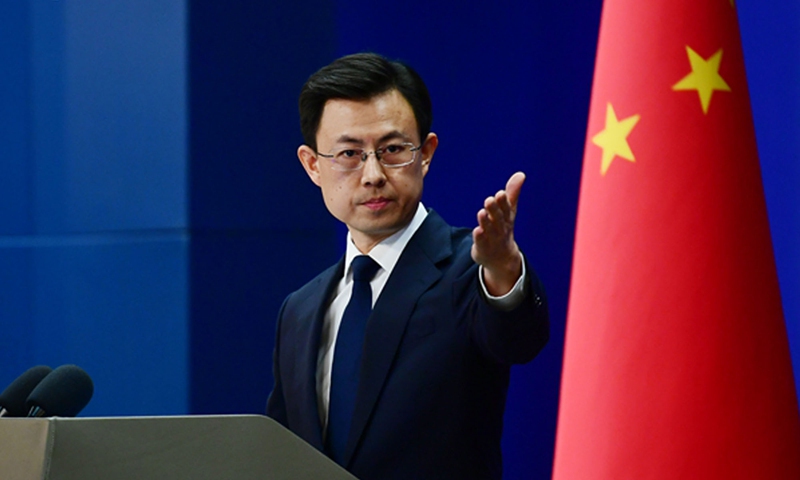
Photo: Chinese Foreign Ministry spokesperson Guo Jiakun
Chinese Foreign Ministry spokesperson Guo Jiakun said at Monday's regular press conference that the invading Japanese army's large-scale, inhumane and heinous live-human experiments and bacteriological warfare will forever remain a stain on human history, adding, "We urge Japan to sincerely reflect on its crimes of aggression, make a clean break with militarism, and earn the trust of its Asian neighbors and the international community through concrete actions."
These comments were made when he was asked to comment on Japanese media reports that records from a 1940 conference of Japanese military doctors show that the invading Japanese army conducted multiple "heterologous blood transfusion" experiments in the autumn of 1938, injecting animal blood into human subjects. The records indicate that a total of 23 people were involved in the experiments, although their gender, age and nationality remain unknown. The experiments may have taken place in China. The reports also said that the Japanese military attempted to destroy evidence related to human experimentation when Japan was defeated. Previously declassified materials from the Khabarovsk war crimes trials held by the former Soviet Union showed that military doctors from Japan's Unit 731 confessed that "live-subject heterologous blood transfusion experiments" were a "standardized routine practice."
Guo said that China has noted the relevant reports, adding that the Khabarovsk trials in 1949 left behind a large body of original audio recordings, written records and physical evidence, forming a complete chain of evidence that substantiated the crimes of the Japanese military's bacteriological warfare and carried forward unfinished work left by the Tokyo Trials. Today, an increasing amount of evidence continues to expose the crimes of Japanese militarism, and more people, including those in Japan, are learning about this dark and brutal chapter of history.
"Only by respecting established historical facts and conclusions, addressing the gaps left by history, and upholding the bottom line of peace can the tragedies of war be prevented from recurring. Japan's remilitarization represents a step backward and is a path of no return," Guo said.
Global Times
RELATED ARTICLES