Translators' Voices: China's green transition shows ability to combine long-term vision with practical implementation

José Medeiros da Silva Photo: Courtesy of Medeiros da Silva
Editor's Note:The year 2026 marks the start of the 15th Five-Year Plan period (2026-30). The outline of the 15th Five-Year Plan dedicates a chapter to "accelerating the green transition across the board and building a Beautiful China."
From the guiding philosophy that "lucid waters and lush mountains are invaluable assets," to the strategic guidance of China's "dual carbon" goals, and further to the systematic arrangements for comprehensive green transition, China has, under the guidance of Xi Jinping Thought on Ecological Civilization, accelerated its green and low-carbon transition and continued to improve the quality of its ecological environment.
The book series Xi Jinping: The Governance of China includes a number of President Xi's important ideas on ecological conservation. These ideas profoundly reflect the inheritance, enrichment and development of the theoretical framework for ecological civilization construction, as well as the continuity, elevation and focus of its goals and tasks.
Volume V of the book series includes "The Beautiful China Initiative" as a dedicated topic, systematically expounding the thinking and arrangements for building a Beautiful China.
In the 25th installment of the special series "Decoding the Book Xi Jinping: The Governance of China," the Global Times, along with the People's Daily Overseas Edition, continues to invite Chinese and foreign scholars, translators of Xi's works, practitioners with firsthand experience, and international readers to focus on the theme of "accelerating the green transition across the board and building a Beautiful China." Together, they explore the vivid practices through which China, under the guidance of Xi Jinping Thought on Ecological Civilization, applies the concept of green development throughout the process of economic and social development, and discuss its major practical significance and contemporary value.
In the 25th article of the "Translators' Voices" column, the Global Times (GT) reporters Wang Wenwen and Liu Xuandi interviewed José Medeiros da Silva (Medeiros da Silva), a Brazilian professor at Zhejiang International Studies University. Medeiros da Silva was a member of the translation team of the Portuguese edition of Xi Jinping: The Governance of China.
GT: In the book series Xi Jinping: The Governance of China, President Xi put forward important thoughts on ecological civilization, among which the "two mountains" concept that "lucid waters and lush mountains are invaluable assets" has become a guiding principle for China's ecological civilization development. How do you understand the profound meaning of this concept? What kind of path to modernization has China taken under its guidance?
Medeiros da Silva: The "two mountains" concept is one of the most representative expressions of Xi Jinping Thought on Ecological Civilization. At its core lies the recognition that economic prosperity, quality of life, and lasting social development ultimately depend on preserving the natural conditions that sustain life. More than an environmental policy, it represents a shift in perspective: Ecological protection is no longer viewed as a constraint on growth but as an essential condition for achieving higher-quality development.
This understanding has become one of the foundations of China's efforts to build an ecological civilization. On this basis, the country has been pursuing a path of modernization that seeks to move beyond the traditional divide between economic development and environmental protection, integrating high-quality growth, rural revitalization, green transition, technological innovation, and common prosperity. The goal is not simply to expand material wealth but to build a more balanced, sustainable, and harmonious society. In this sense, China's modernization seeks to demonstrate that economic development, social well-being, and ecological protection can advance together in ways that are mutually reinforcing.
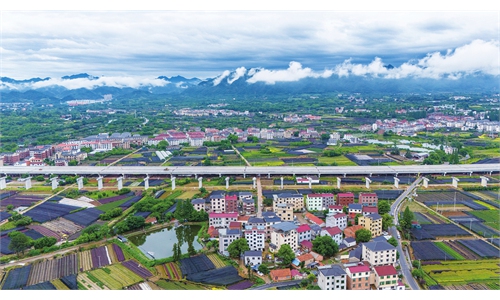
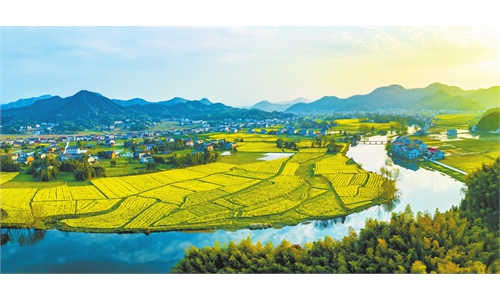
I was able to observe this integration firsthand during a visit to Anji County in East China's Zhejiang Province. As I walked through its landscapes, I was reminded of traditional Chinese shanshui paintings, where mountains, rivers, and human beings exist in a state of harmony. In Anji, this aesthetic sensibility takes on a contemporary and tangible form. Common prosperity is not merely an ideal. It is visible in the villages' architecture, in the quality of life enjoyed by local residents, and in the way the local economy has been reorganized around natural resources. The experience allowed me to see how cultural heritage, ecological stewardship, and modernization can coexist and strengthen one another. It also showed that such achievements require not only goodwill, but also strategic vision, political commitment, and sustained investment over time.
For this reason, I believe that the "two mountains" concept transcends the Chinese context. At a time marked by climate change, accelerating biodiversity loss, and the challenges of sustainable development, it offers a valuable point of reference for countries seeking to reconcile economic growth with environmental protection - not as opposing goals, but as complementary dimensions of the same development project. Its most enduring contribution may be its demonstration that building a sustainable future requires not only technological progress, but also a deeper transformation in the way we understand the relationship between humanity and nature. Ultimately, it calls for reflection on the broader path of human civilization in the 21st century.
GT: In Volume V of Xi Jinping: The Governance of China, President Xi stated that "green growth should be a defining feature of high-quality development, and new quality productive forces are intrinsically green." How do you understand the dialectical relationship between high-quality development and high-standard environmental protection reflected in this statement? What implications does it offer for other countries pursuing modernization and green transformation?
Medeiros da Silva: President Xi's statement suggests that environmental concerns are no longer a peripheral issue, but have become an integral part of the very logic of innovation, productivity, and value creation.
The dialectical relationship embedded in this statement operates on two complementary levels. First, it affirms that quality and sustainability are inseparable. A development model that degrades ecosystems, depletes natural resources, or transfers environmental costs to future generations can hardly be considered truly high-quality development. Second, it points to a transformation in the very foundations of production. New quality productive forces are driven by scientific innovation, artificial intelligence, digitalization, clean energy, and low-carbon technologies. These forces not only reduce environmental impacts, but also transform sustainability into a source of innovation, responsibility, advanced productive capacity, and long-term prosperity.
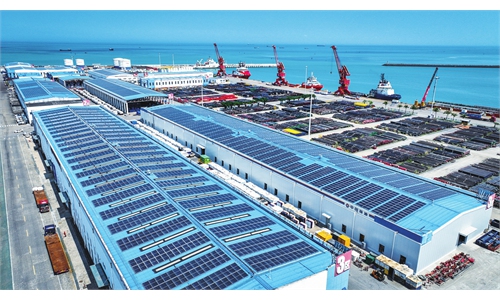
This helps explain why China treats green development as a core component of its modernization strategy. Investments in renewable energy, the circular economy, smart infrastructure, and advanced technologies are not viewed as concessions to environmentalism, but as key drivers of a more resilient, innovative, and future-oriented economy. In this sense, the green transition is not merely an environmental agenda. It is also a strategy for industrial upgrading, strengthening productive capabilities, and creating new sectors with higher added value.
For other countries, China's experience offers a valuable point of reference - not as a model to be mechanically replicated, but as an invitation to develop their own approaches, capable of combining innovation, ecological responsibility, and shared prosperity. In an increasingly interconnected world, this perspective broadens the possibilities for cooperation and mutual learning in addressing the common challenges facing humanity.
GT: 2026 marks the start of China's 15th Five-Year Plan period (2026-30). The outline of the plan lists "major new strides in advancing the Beautiful China initiative" as one of the major objectives for economic and social development during this period. How do you view China's integration of ecological civilization and green development goals into its long-term national development planning? How would you assess the importance of such policy continuity and implementation in achieving coordinated progress between economic growth and environmental protection?
Medeiros da Silva: The integration of ecological civilization and green development goals into the 15th Five-Year Plan shows how mature these issues have become within China's modernization process. They have become structural components of the country's broader development strategy. I find it particularly significant that the construction of a Beautiful China has been placed among the central objectives of economic and social planning for the period from 2026 to 2030.
What impresses me most is China's ability to combine long-term vision with practical implementation. The country has demonstrated a remarkable capacity to translate broad strategic objectives into public policies, investments, institutional mechanisms, and progressively achievable goals. Five-year plans play a crucial role in this process because they translate long-term national aspirations into concrete priorities, policy frameworks, and measurable objectives.
From this perspective, the incorporation of the green transition and the Beautiful China Initiative into the 15th Five-Year Plan illustrates the interconnected nature of several key concepts shaping contemporary China, including ecological civilization, green development, common prosperity, and new quality productive forces. Rather than isolated ideas, these concepts form an integrated framework that seeks to guide the construction of a more innovative, balanced, and sustainable society.
Perhaps one of the most important contributions of China's experience is the demonstration that building an ecologically sustainable society depends not only on setting ambitious goals, but also on maintaining strategic direction and continuity of purpose over time. When it comes to the relationship between development and nature, decades matter more than political cycles.
GT: In Volume V, President Xi pointed out that "a sound ecosystem is essential for civilization to prosper. We must work together to promote harmonious coexistence between humanity and nature, build a community of all life on Earth, and create a clean and beautiful world for us all." In your view, what significance does Xi Jinping Thought on Ecological Civilization hold for addressing current global sustainable development challenges and advancing global ecological civilization?
Medeiros da Silva: As Xi often emphasizes, there is only one Earth in the universe. The idea of building a community with a shared future for humanity - a vision that emphasizes the interconnected destinies and responsibilities of all peoples - invites us to recognize an increasingly evident reality: The major ecological challenges of our time transcend national borders and affect all of humanity, albeit in different ways.
Climate change, biodiversity loss, land degradation, water scarcity, and ocean pollution are not challenges that any single country or civilization can solve alone. They require new forms of cooperation, dialogue, and shared responsibility. In this context, the value of a national experience lies not only in its domestic achievements. It also lies in its capacity to contribute to a broader reservoir of ideas, reflections, and practical solutions available to humanity as a whole.
I see the aspiration to build a clean and beautiful world not merely as an environmental goal, but as a civilizational horizon. Its deeper significance lies in its potential to foster collaboration, mutual learning, and more harmonious coexistence among nations. In an increasingly interconnected world, a community of life on Earth should not be understood as the project of any single nation, but as a shared undertaking of humanity as a whole.
RELATED ARTICLES