Netherlands moves to join US-led 'Pax Silica' initiative amid concerns over US export control bill; Chinese expert warns of competitiveness risks

Conceptual diagram of AI Photo: VCG
A senior Dutch minister on Tuesday expressed concerns over US legislation tightening export controls on China, while simultaneously signing a declaration in Washington to formalize the Netherlands' membership in the US-led "Pax Silica" AI supply chain initiative. Chinese analysts say the move reflects the Netherlands' delicate balancing act - managing mounting US pressures for alignment while seeking to preserve its access to the Chinese market and autonomy over high-tech export decisions.
Analysts warned that this wavering approach may not protect the Netherlands' interests, but instead risks undermining policy autonomy and increasing economic vulnerability in key high-tech sectors, particularly in relation to China-linked supply chains and export markets.
Dutch Trade Minister Sjoerd Sjoerdsma met US Commerce Secretary Howard Lutnick and lawmakers in Washington on Tuesday to express concerns over the Match Act, a bipartisan bill introduced in April that would require allies such as the Netherlands to align more closely with Washington's tougher export controls on China.
The proposed legislation aims to make it harder for Chinese chipmakers to produce AI semiconductors, partly by establishing mechanisms that could pressure allied countries to restrict shipments of semiconductor equipment to China, Reuters reported.
Speaking to reporters, Sjoerdsma claimed the US and the Netherlands share the same goal of preventing sensitive technologies from "ending up in dangerous hands," but warned that elements of the bill appear to give Washington excessive influence over decisions affecting Dutch national security and the way its companies operate, according to Reuters.
He added that while what Reuters described as an "excellent cooperative working relationship" with Washington would be welcome, it would be "undesirable" if it turned into "cooperation by force," according to the report.
During the same visit, Sjoerdsma also signed the declaration to formalize the Netherlands' membership in the US-led "Pax Silica" group of allied countries coordinating AI supply chains.
The move highlights the Netherlands' strategic importance in the global semiconductor industry, as Dutch technology firms play a key role in advanced chipmaking equipment.
Yang Chengyu, an expert on European affairs at the Chinese Academy of Social Sciences and deputy secretary-general of its AI research promotion center, said the dilemma reflects the fact that European countries like the Netherlands are increasingly unable to make purely economic decisions in their trade relations with China, as they are constrained by US policy pressure and alliance-based mechanisms.
While the Netherlands and its tech companies are seeking to strike a balance under these constraints - given the importance of the Chinese market to their high-tech exports and global competitiveness - continued accommodation of coercive external pressure could ultimately undermine their own long-term interests, Yang told the Global Times on Wednesday.
The latest development comes amid broader US efforts to block China from obtaining advanced chips and chipmaking tools, marking a shift that analysts described as moving from unilateral export controls toward a more institutionalized allied framework for technology hegemony.
The Netherlands's participation in Pax Silica, led by US Under Secretary of State for Economic Affairs Jacob Helberg, was described by Reuters as "an important win for one of the pillars of US tech diplomacy." In addition to the Netherlands, several US allies in the EU such as Germany and Greece have also joined Pax Silica, according to a Financial Times report on Wednesday.
This trend suggests that US restrictions on China's access to advanced technologies are evolving into a long-term, institutionalized bloc system, which expands the reach of export controls through allied coordination while seeking to reinforce Washington's dominance over global technology, Yang said.
However, the expert warned that such an approach could fragment global supply chains, increase compliance costs for industry, and deepen geopolitical divisions in the technology sector.
The Dutch government have opposed the broad scope of the proposed Match Act in April, warning it could hurt the competitiveness of semiconductor firms, including Dutch companies, Reuters reported. ASML derived about one-third of its sales from China last year.
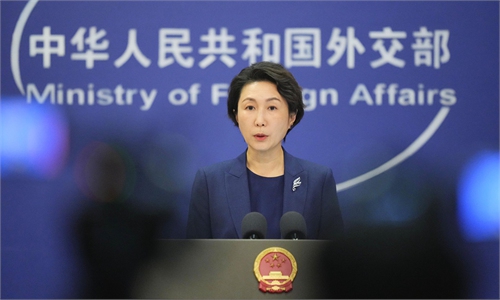
In response to US pressure on the Netherlands over technology restrictions on China, a Chinese Foreign Ministry spokesperson has said previously that China opposes the US' overstretching the national security concept and using all sorts of pretexts to coerce other countries into joining its technological blockade against China.
"Semiconductor is a highly globalized industry. In a deeply integrated world economy, the US' hegemonic and bullying practices seriously violate international trade rules, undermine the global semiconductor industry structure, impact the security and stability of the international industrial and supply chains, and will surely boomerang," said the spokesperson.
China is willing to strengthen policy communication with the Netherlands through platforms such as the China-Netherlands Joint Economic and Trade Committee, and to properly address issues in bilateral economic cooperation through dialogue and consultation, said Chinese Commerce Minister Wang Wentao during a meeting with Sjoerdsma in Yaoundé, Cameroon on March 25.
RELATED ARTICLES