Illustration: Liu Rui/GT
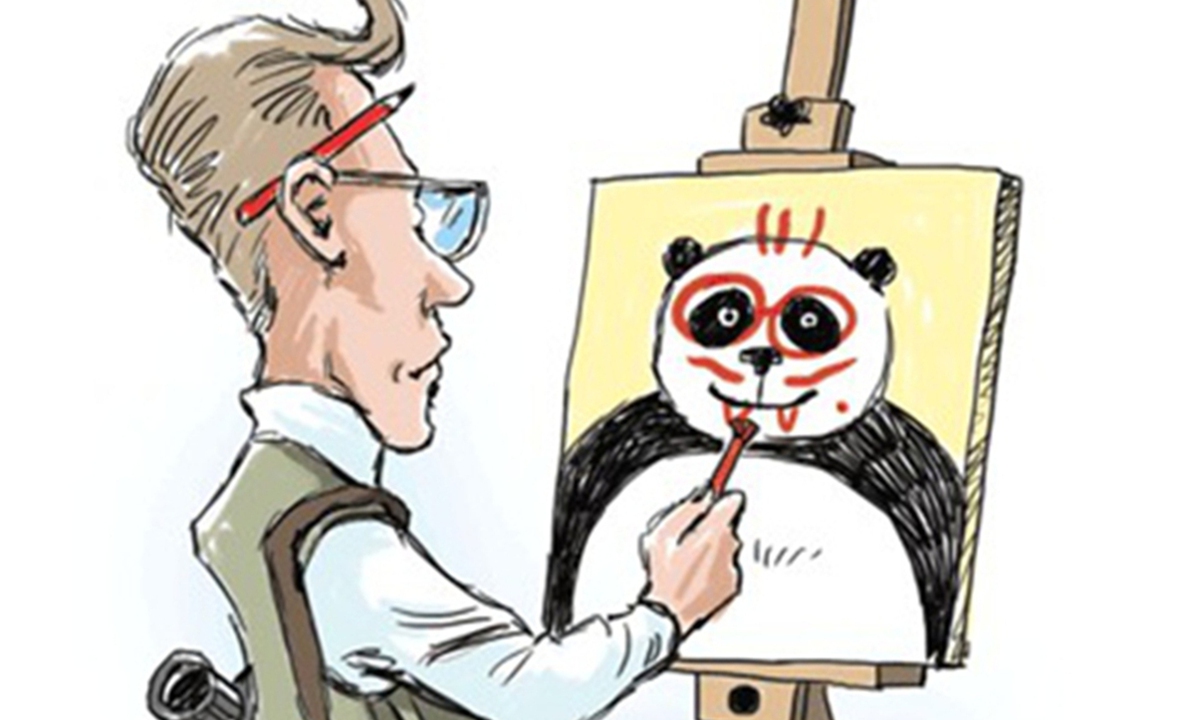
In the four decades of smearing China's economic growth and diplomatic rise in Western media and their Asian sub-outlets, many tricks have been played to manipulate public opinion.These tricks most of the time look innocuous, but they are all part of a carefully planned and patiently executed global brainwash, through the use of what Karl Kraus, an Austrian essayist, called "veiled words."
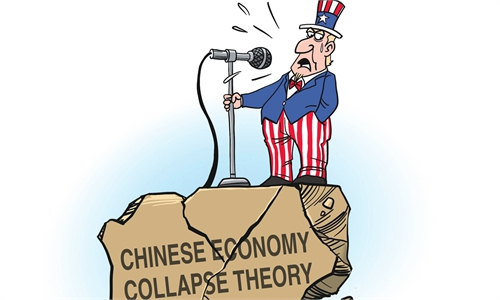
One week, China is in a process of economic collapse; the next, it is a threat to the world because of its economic might, flooding the markets with cheap or technologically superior goods, or "overcapacity." The endgame is to demonize China, destroying its image and its credibility before attacking it, in the economic realm first, and later in the military field, most likely through Asian proxies.
Here is a non-exhaustive list of rhetorical and semantic devices used in Western media to disparage and demonize the "enemy."
"Unsustainable overcapacity" and "market-bending subsidies." China's trade surplus and the success of Chinese companies abroad are attacked in Western media and by government officials as being fueled by "market-bending subsidies" and leading to an "unsustainable overcapacity" that "decimates" Western industries.
"Regime" or "junta" versus "government." Western media systematically speak of the "government" of Western countries or US vassal states, and put the label "regime" or "junta" on the government of a country attacked by the Western camp. A leader who suits the agenda of the West is in charge of a "government," whereas the leader who does not toe the line is in charge of a "regime," or a "junta" if he or she is surrounded by military brass.
Constantly playing down China's economic growth and belittling its technological and social achievements. Western media have been relentlessly portraying China as a place where it is not possible to trade and invest anymore. The negative "investment climate" and the "grim economic outlook" (despite around 5 percent growth) actually mean that, unlike so many other Global South countries, the Chinese government has managed to force Western corporations operating in China to abide by the rules.
Coexistence, collaboration or common prosperity with a rising China was never an option for the West's deep state. The West-China relationship has always been about Western domination of China through containment and coercion (both financial and military), be it with the Wolfowitz Doctrine, the WTO membership or today's "strategic sequencing" of aggression on China.
As a result, the West has been gradually neglecting and abandoning the values that it tirelessly tried to impose on the Global South. Today, some Western countries, starting with the US but closely and perhaps more forcefully followed by the EU, are indulging themselves in protectionism, to force China to make concessions in the field of technology transfers and industrial investments.
China, as the No.1 perceived threat to the Anglo-American hegemony, is openly called by US and EU governments a competitor, a systemic rival, an existential threat, or even an enemy in political, media and academic circles. In the meantime, it is called a trade partner, an old friend and is enticed to invest and even assist in the re-industrialization of the West.
This contradiction is the result of decades of media manipulation, not only of ordinary people, but of the "elites" of Western countries.
That explains why some diplomatic circles in the West, even those who are China experts, are openly and unashamedly Sinophobic, to the point of working even against their own president or prime minister who could be leaning closer to China for what should be the obvious reason of national interest.
Demonizing China is an increasingly difficult task. For decades, Western media have been taking their talking points from government ministries and intelligence agencies on how to disparage China. It's been mostly successful until the rise of social media and China's visa-exemption policy, which allows more Westerners to go to China and see for themselves how they've been fooled by their own governments and media.
With Western media being overly critical of China, even the most casual readers in the West have started to suspect that there might be too much amount of exaggeration in these claims.
What the mainstream media should do now is adjusting its strategy by relying less on so-called foreign correspondents, and more on specialist think tanks, which recommend to "get to know" and understand China better.
The author is a French entrepreneur and author based in China. opinion@globaltimes.com.cn
RELATED ARTICLES