ARTS / CULTURE & LEISURE
Yunnan village boosts rural revitalization with heritage and Dai-ethnic homestay
A song of wild green paradise
By in Xishuangbanna Published: Jun 24, 2026 09:31 PM

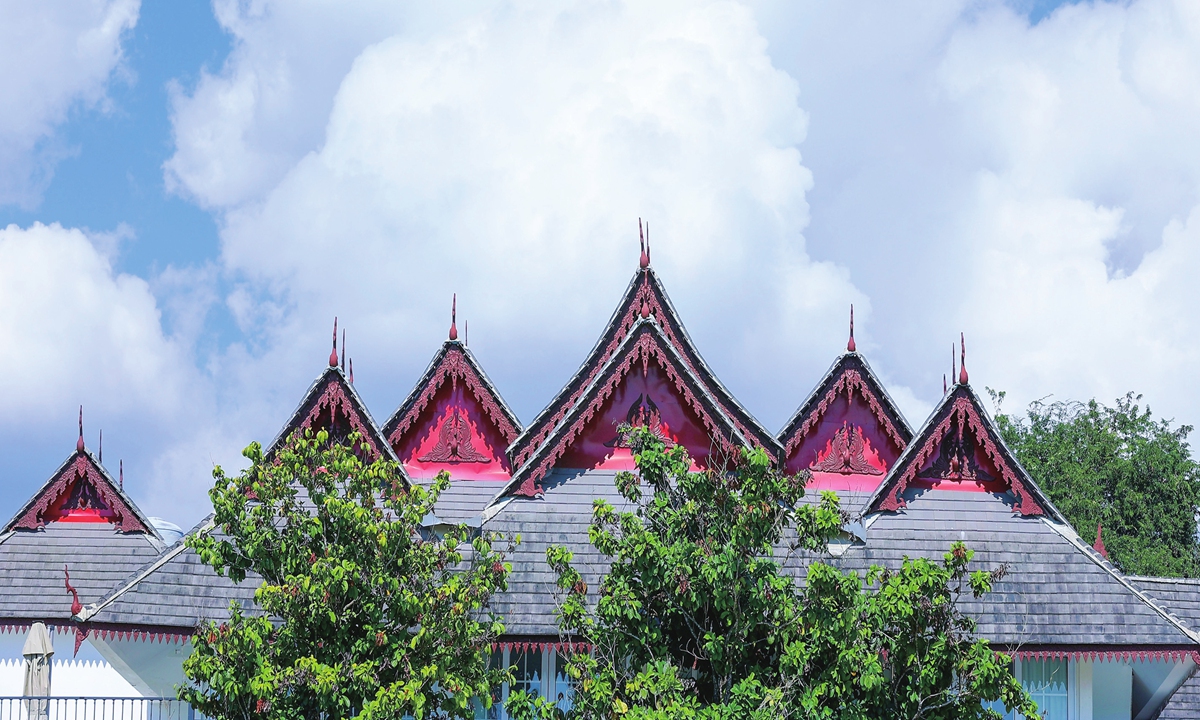
Rooftops featuring Dai ethnic styles in Sanman villages Photo: Courtesy of China Agricultural University
Morning light filters through the carved wooden windows of a traditional Dai-ethnic stilt house, and golden flecks dance across the rattan table, as I wake up slowly in a renovated old Dai dwelling in Manluanzhan village, a Dai ethnic community near the China-Laos border in Jinghong, Xishuangbanna, Southwest China's Yunnan Province. The gentle crowing of roosters and birdsong replace the harsh sound of the alarm clock, providing a rare and precious sense of serenity to urban workers.When I push the wooden window open, pomelo and jackfruit trees in the courtyard hang heavy with fruit. Upon stepping out of the courtyard, one finds neat asphalt roads connecting all households. Traditional Dai stilt houses, carefully renovated while preserving their original charm, are scattered gracefully. Public facilities such as multi-purpose entertainment rooms and reading pavilions are clean and well designed, with wall murals and village notice boards incorporating Dai brocade patterns and elephant totems - subtle expressions of Dai cultural wisdom. The village retains its ancient charm while embracing modern convenience.
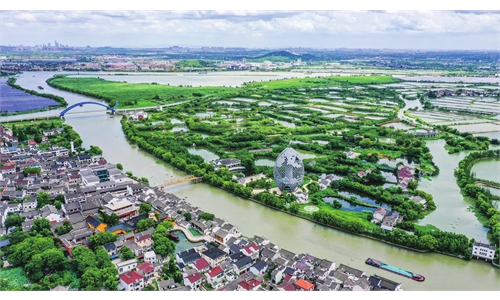
Sanman is a rural tourism complex that integrates three neighboring Dai villages - Mankongdai, Manluanzhan, and Mankongmai - through a "small cluster" collaborative model. It has broken free from past challenges of idle resources, single industries, and reliance on rubber tapping and small-scale farming.
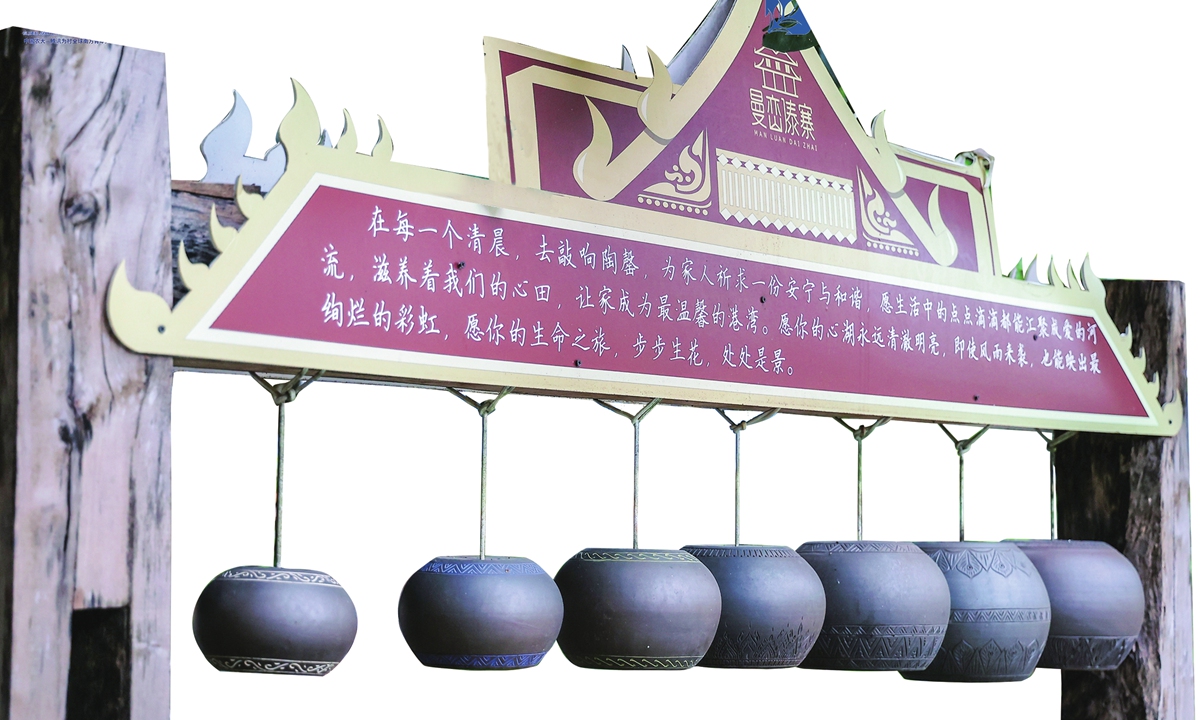
Leveraging intangible cultural heritage (ICH) such as Dai pottery, Sanman villages have created an agricultural-tourism pathway featuring Dai-style homestay and cultural markets.
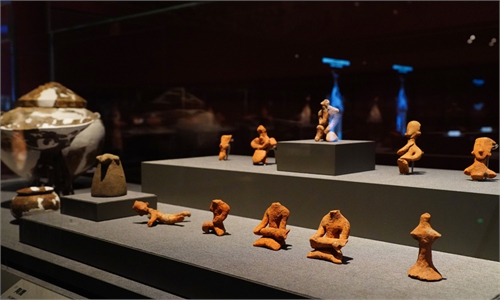
An exhibition of Dai pottery in Manluanzhan Village, Xishuangbanna, Southwest China's Yunnan Province Photo: Hu Yuwei/GT
Intangible heritage revitalizes Dai countrysideToday, the Sanman villages offer visitors eight distinctive areas, including the "Cloud Spring Tea Pavilion" and cultural markets.
The three-village complex has developed a dozen intangible heritage cultural products such as coffee labels, while establishing eight new business formats including rural apartments, Dai medicine wellness center and more.
The cultural core lies in Mankongdai Village, which has long preserved precious intangible heritage. In the past, these cultural events were only displayed during festivals, and elderly artisans struggled to earn a living from them. Village officials have now awakened these dormant resources, turning ancient crafts into profitable industries.
The Dai medicine wellness center offers herbal packs and therapeutic massages using local rainforest herbs, attracting visitors from busy cities seeking restorative lifestyles. At the cultural markets, Dai brocade bags, handmade crossbows, and dried tropical fruits are neatly displayed, with villagers in traditional attire sharing the cultural stories behind each item.
A few people know that just a few years ago, Sanman was quite different: low-yield rubber plantations, dilapidated empty farmhouses, narrow income channels, and many young people leaving the village for the city.
The turning point came in 2023 when the local government partnered with a team from China Agricultural University. They deeply explored the value of Dai traditional dwellings and millennia-old ethnic culture, adopting a "one village, one theme" approach: Mankongdai focuses on intangible heritage experiences, Manluanzhan on premium wellness homestay, and Mankongmai on tourism service zones.
Dai homestay drives shared economic growth
While Mankongdai serves as a window for intangible heritage, neighboring Manluanzhan is the core of the Sanman homestay experience. Traditional Dai houses have been transformed into boutique rural apartments.
Li Faxin, rural CEO of the Sanman villages, told me that at first, many villagers hesitated to convert their traditional Dai houses into guesthouses. The team organized study tours, invited successful enterprises to visit the villages, and provided low-interest loans. Ten village officials took the lead. Once income materialized and the neighbors started noticing the profits, participation surged. In 2025, the average annual income per guesthouse operator from accommodation alone reached 60,000 yuan (about $8,830).
In addition to the homestay cluster, Manluanzhan features complete modern public facilities: an outdoor swimming pool nestled among orchid-filled rubber groves, a spacious conference center for study tours and team-building, and an exhibition hall displaying Dai pottery and paper crafts. With full supporting facilities, Manluanzhan has transformed into an integrated resort village, enabling villagers to earn a stable income near their home.
The villages have also established a benefit-sharing mechanism. Most guesthouses are operated by homeowners under unified company management. Operating costs are centrally procured. The village collective runs restaurants, swimming pools, conference rooms, cafes, and Dai medicine centers. A unified QR code payment system ensures prompt revenue distribution. Most income goes directly to operators, with a small portion retained for the company and returned to the village committee for collective dividends. This creates a win-win for villagers, the collective economy, and the enterprise, Li Faxin explained.
This sound benefit-sharing mechanism has laid a solid foundation for Sanman's long-term development, ensuring tourism dividends truly reach every household.
During the 2025 Spring Festival holidays, Sanman's rural retreats became highly popular, attracting over 6,000 visitors. Room occupancy reached 100 percent, and nine rural apartment buildings were fully booked, according to the Xinhua News Agency.
With support from the local governments and the China Agricultural University team, Sanman has built a local talent pool, training over 90 rural artisans and industry leaders. Through rural CEO programs, villagers have learned e-commerce and cultural-tourism marketing skills, successfully shifting from "policy blood transfusion" to "self-generated vitality."
Today, Sanman villages also serve as a demonstration window for China's rural revitalization, regularly hosting officials and scholars from Africa, Southeast Asia, and other Global South countries.
As a rainforest Dai-ethnic village, Sanman has taken intangible cultural heritage as its core, homestay as its direction, and agricultural-tourism integration as its vision. The three-village complex continues to transform green mountains and clear waters into industries that enrich the people, protecting the Dai ethnic group's thousand-year cultural heritage while opening new avenues for prosperity. Finally, such attempts offer a vivid, replicable model for revitalizing border ethnic minority villages.
RELATED ARTICLES