Time for morning tea & football: World Cup matches add special flavors to century-old cuisine culture
Time for morning tea & football
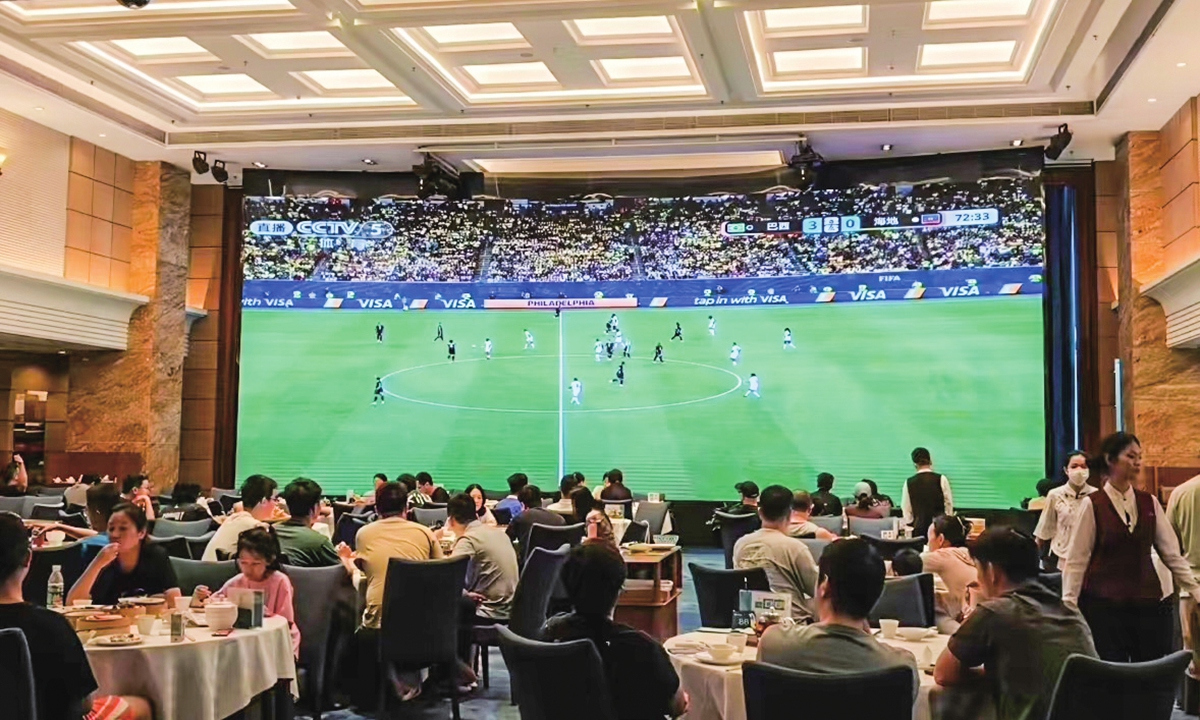
Diners watch a World Cup match at a morning tea restaurant in Shunde, South China's Guangdong Province. Photo: Courtesy of Pan Ning
For decades, Chinese football fans are accustomed to watching World Cup matches in the summer every four years with some barbecue skewers and refreshing beer, as in most cases the games were broadcast live in China late at night.But the situation is different this year as the games returned to North America after 32 years, meaning many of the matches are being broadcast in the early morning. This has led to "Cantonese morning tea" restaurants, instead of street pubs, turning out to be the "biggest winners."
Amidst the aroma of various teas and steam rising from diverse dim sum dishes, people enjoy shrimp dumplings, pork buns, steamed fish balls and beef rice rolls in front of a big screen, while engaging in heated discussions and even debates over the ongoing matches.
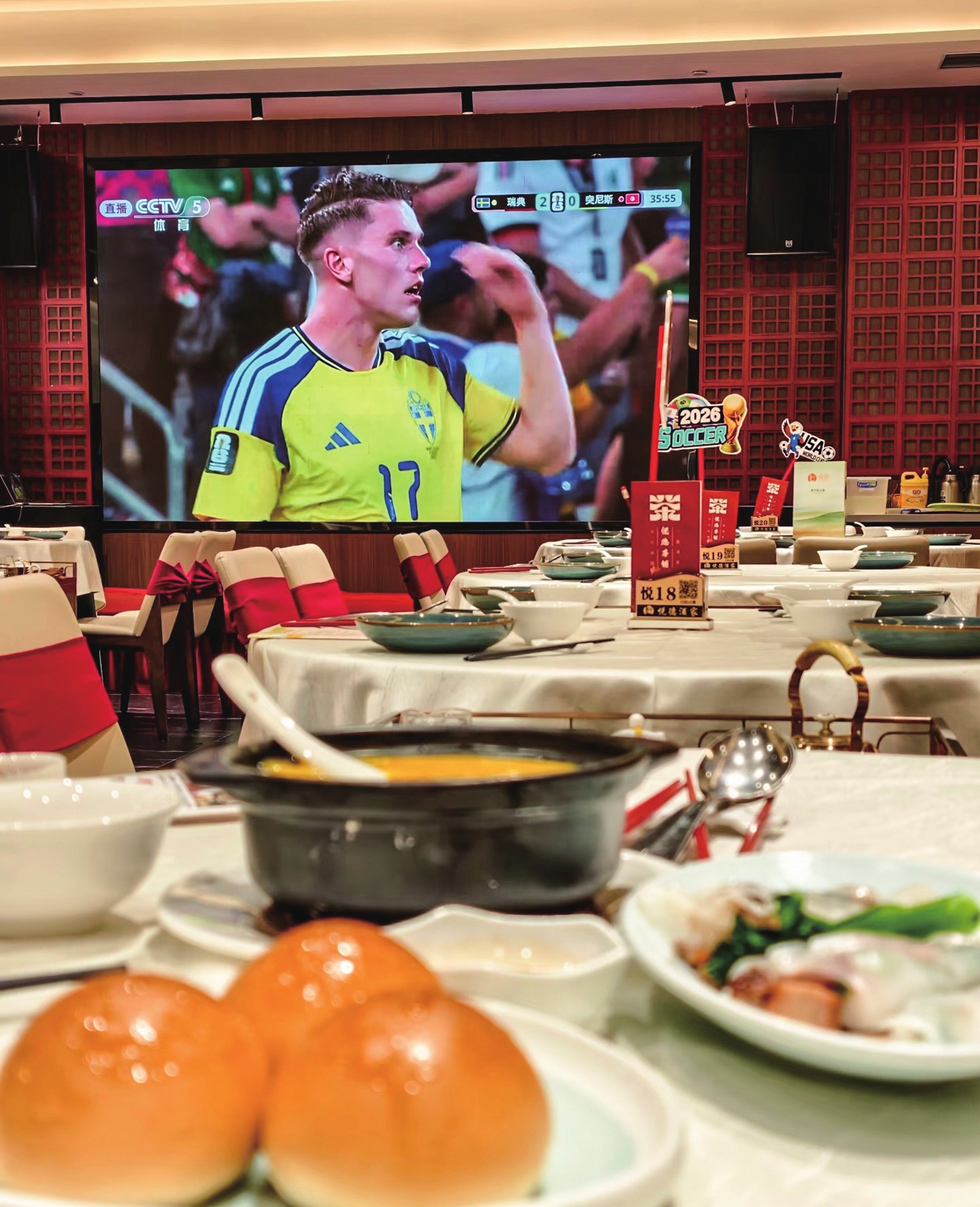
A morning tea restaurant in Shunde, South China's Guangdong Province, plays a World Cup match on TV. Photo: Courtesy of Pan Ning
Drink tea, not beerMorning tea has long been a daily routine prevalent in South China's Guangdong Province, particularly the Pearl River delta. During this year's football season, more than 50 restaurants in Guangzhou, Shenzhen and other cities have launched "World Cup" packages, per China Consumer Reports. Additionally, many morning tea restaurant chains in cities in the region have installed huge screens as a selling point.
According to data from local services platform Meituan, in the five days since the start of the World Cup on June 11, searches for "restaurants serving morning tea" in Guangdong surged eightfold compared to the same period in 2025. Among them, searches for "Cantonese morning tea" rose by 134 percent, while those for "Guangzhou morning tea rankings" and "Shunde morning tea" jumped by 254 percent and 231 percent, respectively.
One restaurant in Guangzhou has set up one big screen and three screens, and has seen notable pickup in customer volume since the start of the game season. Ou Chenglin, the restaurant manager, said that from 8 am to 2 pm all the screens have been tuned to the World Cup. "The long lines last from morning to noon time," he said, according to China Consumer Reports.
Another restaurant has set up a special zone for fans where football enthusiasts can discuss the matches or engage in heated debate without disturbing other clients. "This special zone has been more popular than expected," the manager said.
Some restaurants have also launched promotional events, such as "Guess the scores to win free dim sum/drinks" or invited on-site sports commentators to attract customers and enhance their experience, according to posts on social media platforms such as Xiaohongshu, or RedNote.
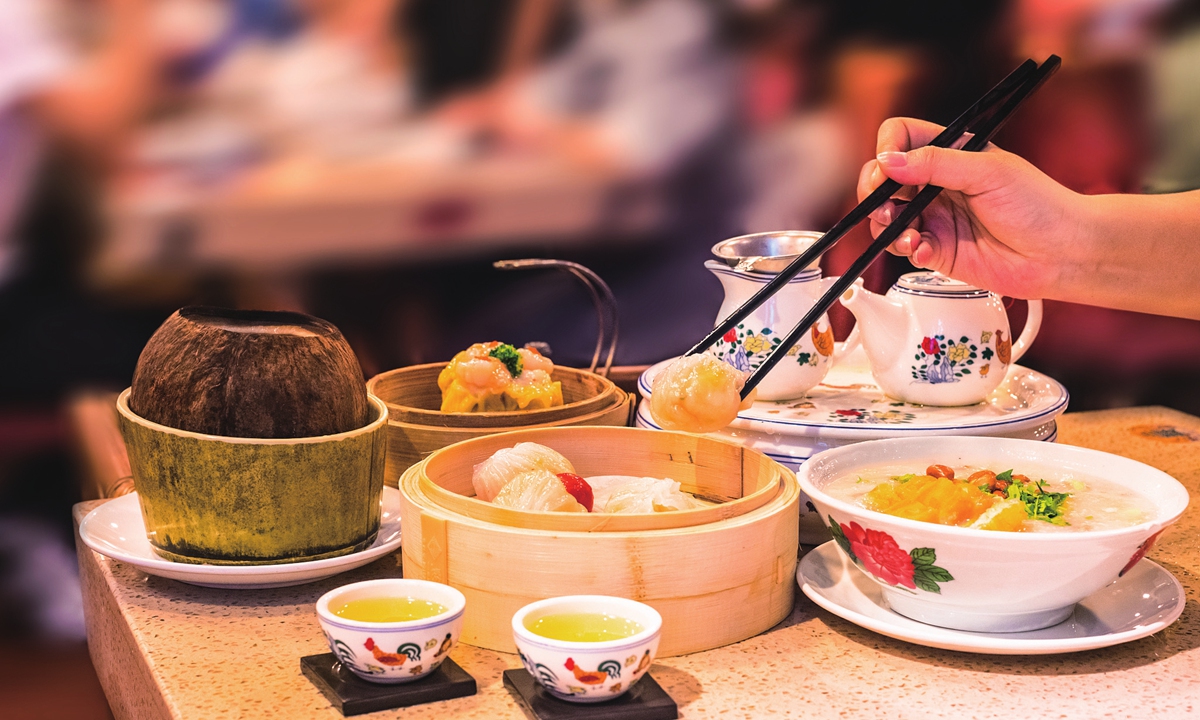
Guangzhou dim sum dishes Photo: VCG
Tradition, new experienceCantonese dim sum is a traditional Chinese meal made up of small plates of dumplings and other snack dishes and is usually accompanied by tea. Similar to the way that the Spanish eat tapas, the dishes are shared among family and friends. Typically, dim sum is consumed during brunch hours - late morning to lunchtime.
According to food magazine Lucky Peach, the culture began in tearooms in the second half of the 19th century in the port city of Guangzhou: Travelers and traders took breaks for a meal and to exchange information. As local immigrants settled down overseas, the practice took root in many parts of the world and became one of the most notable Chinese food cultures worldwide.
Today, dim sum is still a popular way to enjoy routine family gatherings or reunions with friends, and has even gained traction among tourists wanting to experience local culture. The World Cup has adding fresh elements to the old tradition.
Netizen Qing Yuan shared her experience with the Global Times. "My family has the tradition of having morning tea together once a week. Usually, men finish the meal quicker and go have a cigarette outside before returning to chat with family. Over the past weekend, the experience was a bit different. My husband and father-in-law stayed throughout the family gathering and together delivered a speech about football facts," Qing told the Global Times.
"I know little about sports, including football. But it's a great experience to have the family together with a common topic," she said.
Pan Ning, a young white-collar based in Shunde, Guangdong, told the Global Times that the new World Cup scenario is much healthier - get up early, eat a balanced breakfast and take things easy, instead of staying up late and consuming a bunch of greasy food and alcohol.
Traveling to Guangzhou for the Dragon Boat Festival holidays, a Beijing resident surnamed Chen told the Global Times that local, authentic morning tea has been at the top of his to-do list. Chen noted that he has asked for recommendations for places on social media and that he has found netizens from Guangdong are "friendly and humorous."
One local netizen suggested he start with the classic shrimp dumplings and sweet pork buns while watching the game. Halftime breaks are the perfect time to take a bite of chicken feet with black bean sauce, steamed chicken bundles or pork ribs, since they take more time to enjoy. For the second half and the climax, Chen and his friends were advised to take things slow by enjoying some light desserts and sipping on some aromatic tea.
"We basically followed their instructions. The dim sum dishes were so delicious and very different from northern tastes. Also, it was a great experience to immerse ourselves in a local food culture that has incorporated some up-to-date elements. It also felt very international," Chen said, referring to the national flags of the competing teams hanging over the restaurant hall and eaters who came wearing jerseys of the team they support.
"During the World Cup, many restaurants installed large screens to cater to consumers' interest in the tournament. However, needs vary drastically among different customer groups. Elderly tea diners prioritize casual chatting, low costs and a leisurely social experience, while younger consumers tend to make impulsive purchases, valuing feelings, on-site atmosphere and social functions," Zhu Danpeng, a food industry analyst, told China Consumer Reports.
However, from restaurant operators to customers and industry observers, they are all aware that the World Cup is a catalyst that can drive traffic for a while, constituting a short window of promotion. After the tournament ends, only restaurants offering quality food, reasonable prices and authentic experiences will be able to retain customers.
RELATED ARTICLES