World’s highest dam starts power generation in SW China, marking breakthrough in ultra-high earth-rock dam construction
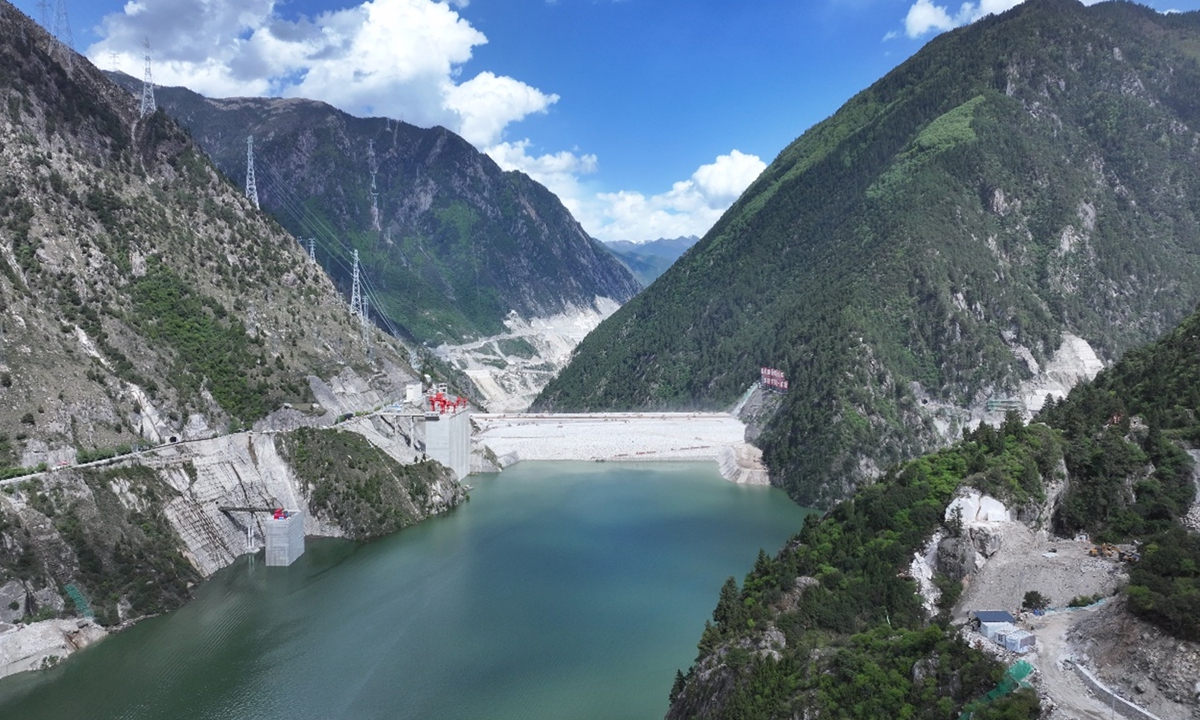
The Shuangjiangkou hydropower project in Southwest China's Sichuan Province Photo: POWERCHINA Chengdu Engineering Corporation Limited
The first generating unit of the Shuangjiangkou Hydropower Station in Southwest China's Sichuan Province was connected to the power grid on Friday, marking the start of power generation at the world's highest dam and a major breakthrough for China in building ultra-high earth-rock dams above 300 meters.
Located in the Aba Tibetan and Qiang Autonomous prefecture, the project features a 315-meter-high earth-rock dam with an earth core, surpassing the Jinping-I and Lianghekou hydropower stations to set a new global height record for dams.
The Shuangjiangkou Hydropower Station includes a major regulating reservoir on the upper reaches of the Dadu River. With an installed capacity of 2 million kilowatts, it is designed to generate about 7.7 billion kilowatt-hours of electricity annually on average.
The dam has a total filling volume of more than 46 million cubic meters. If the earth and rock used for the project were piled into a wall one meter high and one meter wide, it would be long enough to circle the Earth's equator, according to the project designer.
POWERCHINA Chengdu Engineering Corporation Limited, also known as POWERCHINA Chengdu, was responsible for the project's planning, feasibility studies, survey and design throughout the process.
"The development of Shuangjiangkou dates back several decades," said Zhang Shishu, the Party secretary and chairman of POWERCHINA Chengdu. Zhang said the company began surveying hydropower resources in the 1950s and launched hydropower planning for the main stream of the Dadu River in 1977.
During a planning adjustment in 2003, the originally planned Dusong project was dropped due to excessive inundation losses. After extensive surveys and studies, POWERCHINA Chengdu moved the dam site upstream to the confluence of the Zumuzu River and the Chuosijia River, where the project was later named Shuangjiangkou. After comparing multiple options, the project was finalized with a normal water storage level of 2,500 meters and a maximum dam height of 315 meters.
Li Yonghong, chief design engineer of the project, said building the 315-meter-high dam involved world-class challenges, including high altitude, severe cold, high seismic intensity and deep overburden layers. The overburden at the riverbed of the dam site is nearly 68 meters thick at its deepest point, and there had been no precedent, either in China or abroad, for building an earth-rock dam higher than 250 meters on such a deep overburden layer.
To address the challenge, POWERCHINA Chengdu's geotechnical team carried out extensive tests and optimized the zoning of dam-building materials and the use of excavated materials, allowing dam filling to begin on schedule in 2020.
For winter construction at altitudes above 2,200 meters, the team pioneered the use of large-span, fully enclosed air-supported membrane structures and heliostat-based dam-surface heating technology in a hydropower project. The approach raised the temperature of the core-wall soil material by more than 5 C and pushed monthly filling intensity above 200,000 cubic meters. The project also developed the world's first intelligent production system for dam core-wall materials, enabling full-chain smart control.
In addition to being the world's highest dam, Shuangjiangkou also features several record-setting engineering achievements, including an underground powerhouse with the highest in-situ stress among completed projects of its kind in China, the country's first ultra-long-distance transport and blending system for dam-filling materials, the world's largest-capacity hydraulic hoist, the world's largest-section discharge tunnel in a hydropower project, and the world's largest variable-section vortex shaft under construction.
The hydropower station also has a generating-unit water head variation of 80 meters and a maximum flood discharge head of 250 meters, both at world-leading levels.
To address the complex geological challenges in the underground powerhouse cavern complex, the team developed a new rockburst classification system based on local conditions. The approach reduced rockburst frequency by 40 percent and kept maximum deformation during excavation within 30 millimeters, reaching a world-leading level.
The Shuangjiangkou Reservoir has annual regulation capacity and a total reservoir capacity of 2.9 billion cubic meters. Once fully operational, it is expected to increase the annual power generation of downstream cascade hydropower stations by an average of 6.6 billion kilowatt-hours, while enhancing the peak-shaving and frequency-regulation capacity of the Sichuan power grid, improving the power supply structure and raising flood-control standards across the Dadu River Basin. It will also serve as an important flood-control barrier on the upper reaches of the Yangtze River.
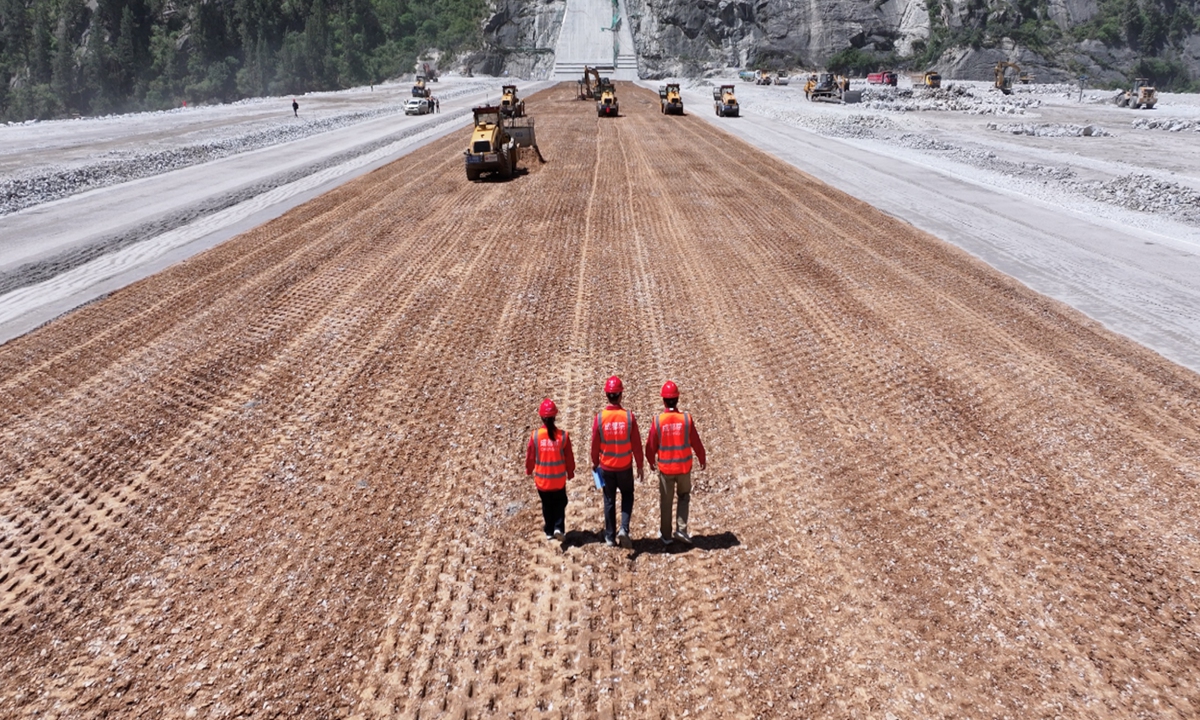
The Shuangjiangkou hydropower project in Southwest China's Sichuan Province Photo: POWERCHINA Chengdu Engineering Corporation Limited
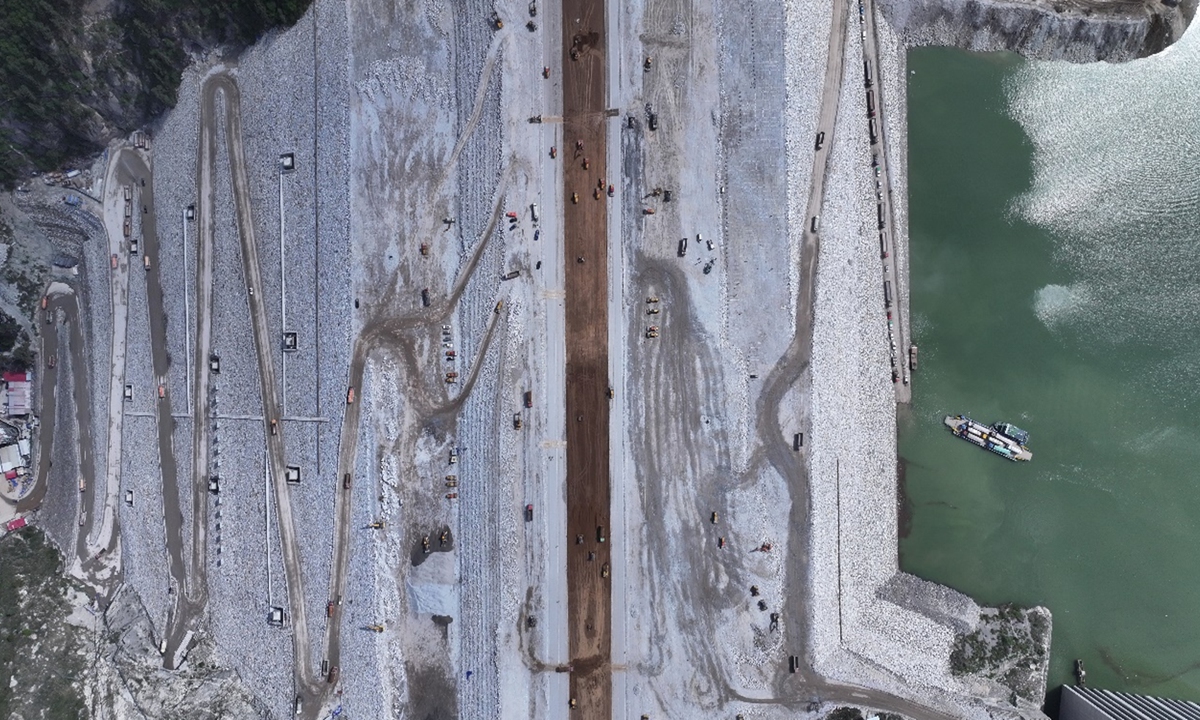
The Shuangjiangkou hydropower project in Southwest China's Sichuan Province Photo: POWERCHINA Chengdu Engineering Corporation Limited
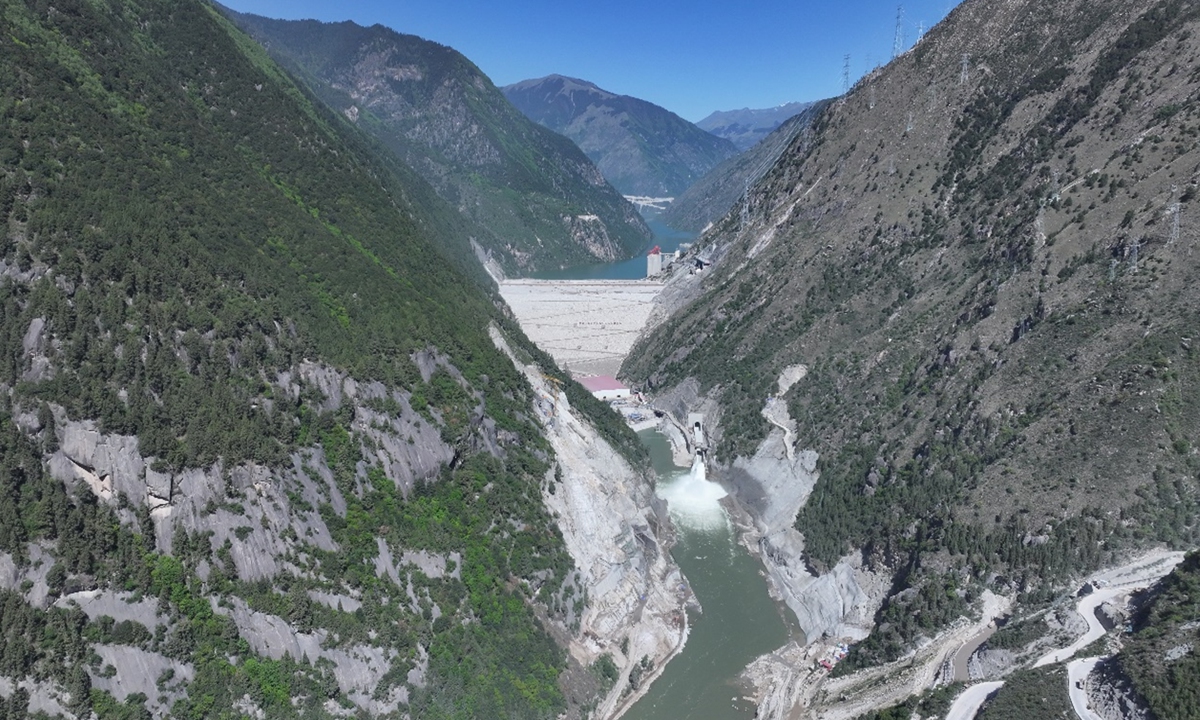
The Shuangjiangkou hydropower project in Southwest China's Sichuan Province Photo: POWERCHINA Chengdu Engineering Corporation Limited
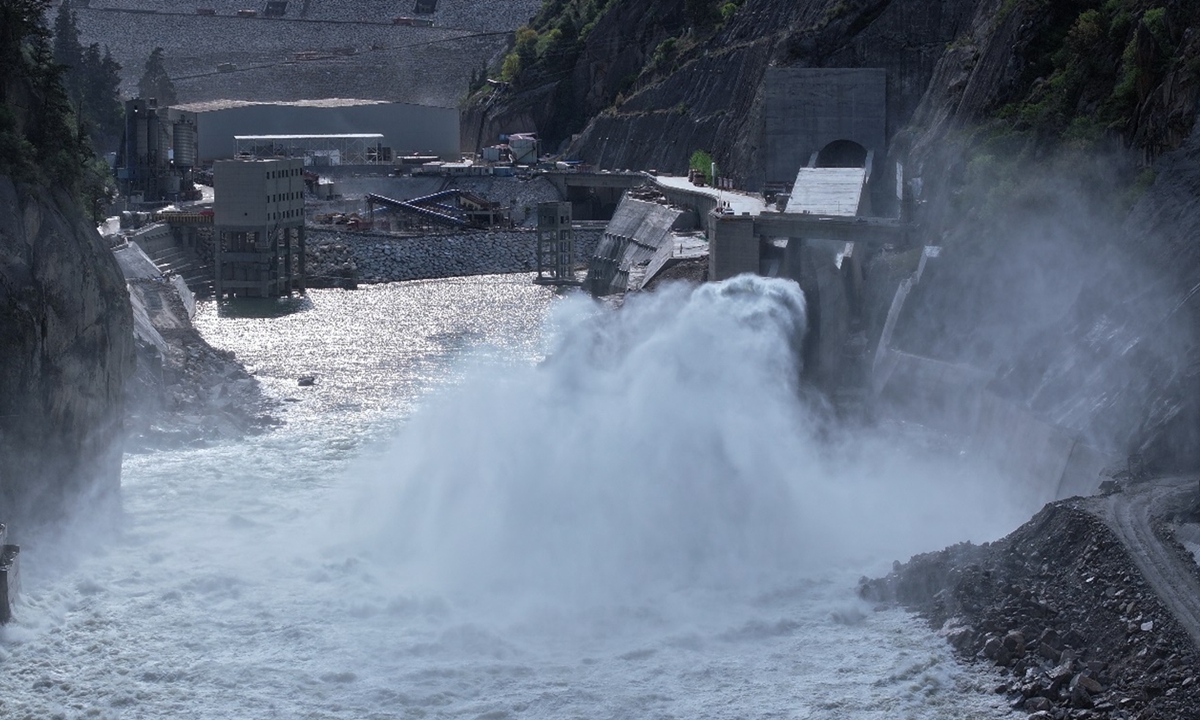
The Shuangjiangkou hydropower project in Southwest China's Sichuan Province Photo: POWERCHINA Chengdu Engineering Corporation Limited
Global Times
RELATED ARTICLES