IN-DEPTH / IN-DEPTH
Doctors, enterprises and sports exchanges show paired-up assistance taking root in daily life in Xizang
By and Yang Ruijia in Xizang Published: Jun 26, 2026 09:57 PM


A view of the Potala Palace from Nanshan Park in Lhasa, Southwest China's Xizang Autonomous Region Photo: Shan Jie/GT
The plateau sun was beating down on Nyingchi, and inside the gymnasium, the stands were roaring.
On the court, Nagqu from Southwest China's Xizang Autonomous Region and Zhongshan from South China's Guangdong Province were locked in a tight basketball game. A fast break from one side drew cheers from half the stands; a steal from the other brought the rest of the crowd to its feet. Fans shouted with a mix of instructions, encouragement and sometimes disbelief, their voices rising with every change of possession.
This was one scene from the 2026 Nyingchi Namcha Barwa Basketball Invitational, which opened in Nyingchi on May 16 and brought together 16 teams from across Xizang as well as Guangdong, Sichuan and Qinghai provinces.
For Xizang, such a tournament is also a sign of broader changes. Public life on the plateau is becoming more connected and more varied, shaped not only by major projects, but also by improvements in health care, education, culture, sports and ecological protection.
Behind many of these changes is China's paired-up assistance mechanism for Xizang. Launched in 1994, it has brought officials, doctors, teachers, technicians and enterprise workers from other parts of China to the plateau, helping strengthen local services and development capacity. Over the decades, the mechanism has also become a channel for closer exchanges among different ethnic groups.
The broader importance of such exchanges was underlined again as China prepares to implement the Ethnic Unity and Progress Promotion Law, a fundamental law on ethnic affairs adopted at the fourth session of the 14th National People's Congress and set to take effect on July 1, 2026, according to the Xinhua News Agency.
Recently, Global Times reporters visited a number of places across Xizang - from a roaring basketball court and a busy hospital ward to school campuses and even a tree-planting site in a mountain village - and found how paired-up assistance is being felt in ordinary, everyday settings.
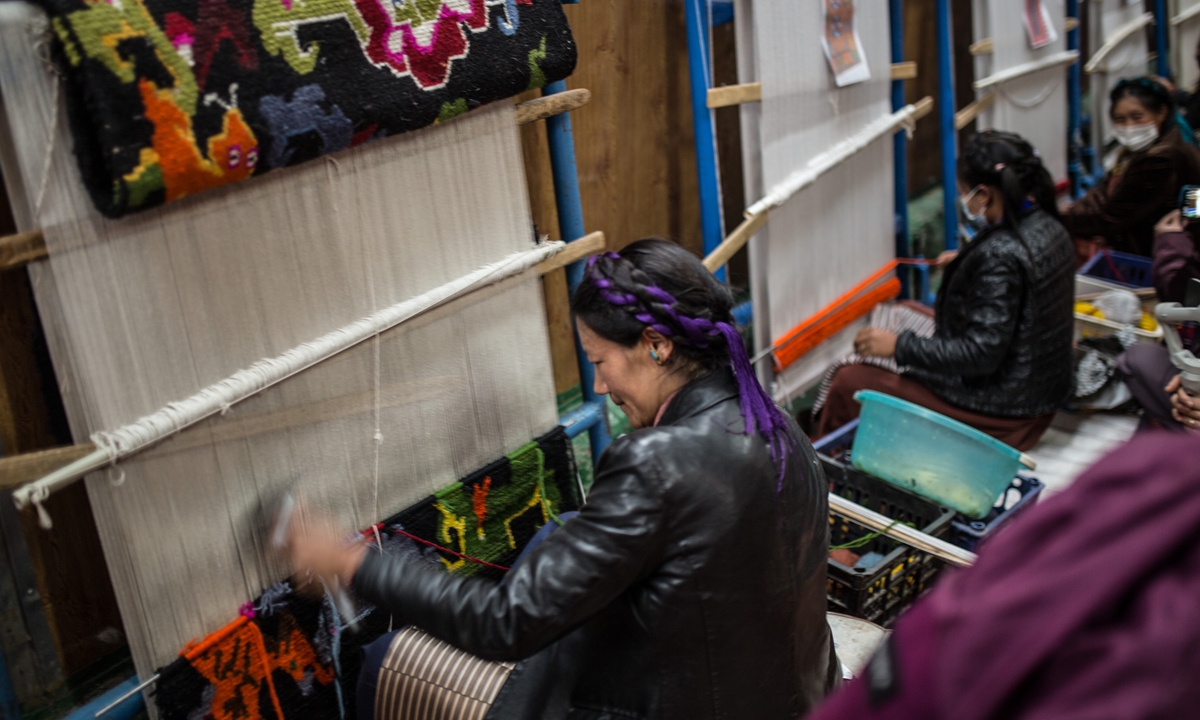
Women weave Tibetan carpets in Namling county in Xizang's Xigaze as part of industrial aid from Shandong Province. Photo: Shan Jie/GT
'We came here to pass on what we know'
In the pediatric ward of Nyingchi People's Hospital, a mother sat quietly beside her child.
Several nurses walked in and began checking on the child. Their conversation moved naturally between Putonghua and Tibetan language as they asked about the child's condition, explained what needed to be done next and tried to ease the mother's worries.
For a while, she listened silently. Then, as one nurse spoke to her softly in Tibetan language, the mother's face relaxed into a small smile.
It was an ordinary scene, but one that showed how much trust and communication matter in plateau medical care.
For Zhang Chunmin, a Guangdong medical expert working at the hospital, one case remains especially vivid.
On August 6, 2025, doctors from Guangdong and Nyingchi worked together to operate on a premature baby born at just 35 weeks. Before surgery, the infant weighed only 1.85 kilograms and was suffering from congenital duodenal atresia as well as a severe infection.
The surgery required close cooperation among pediatrics, surgery, anesthesiology, intensive care and nursing teams. It was completed successfully, setting a local record in Nyingchi for the lowest body weight of a patient to undergo surgery.
"Our work is not only to treat patients, but to help local doctors build the skills and confidence to handle difficult cases on their own. We came here to pass on what we know. " Zhang told the Global Times.
The same effort can be seen in the hospital's intensive care unit. Liu Dongdong, deputy director of the intensive care medicine department at Nyingchi People's Hospital, arrived in Nyingchi in July 2025 as part of Guangdong's 11th group of medical experts.
Liu, a critical care specialist from the First Affiliated Hospital of Guangzhou Medical University, comes from a respiratory medicine team associated with renowned Chinese respiratory disease expert Zhong Nanshan.
"As we are here, we should teach them our skills," Liu told the Global Times. She said the goal is not only to treat critically ill patients during the one-year assistance period, but also to help local doctors strengthen their thinking, skills and confidence in intensive care.
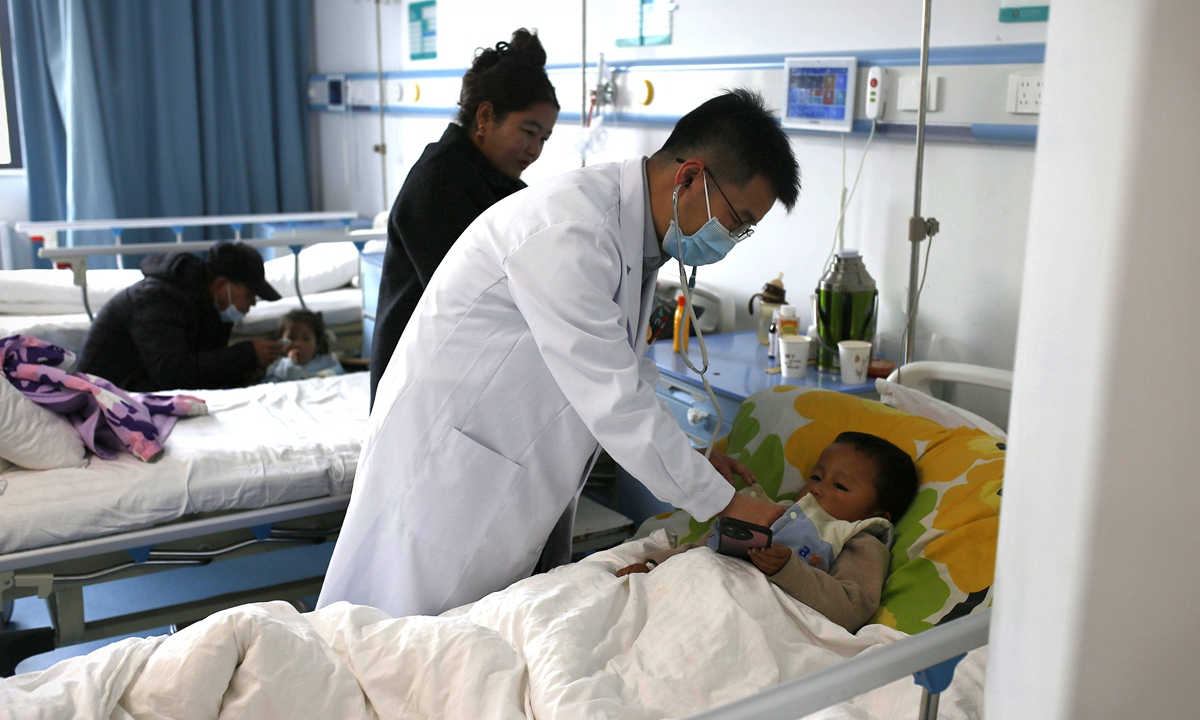
A pediatrician from Guangdong Province sees a child at Nyingchi People's Hospital in Nyingchi, Xizang, in May 2026. Photo: Shan Jie/GT
Over the past 32 years, more than 1,300 medical professionals from Guangdong have worked in Xizang, training local doctors through ward rounds, consultations and hands-on guidance, according to the Guangzhou Daily.
At Nyingchi People's Hospital, that process is visible across departments. In the rehabilitation department, local doctor Bianba Luobu said he has worked with many medical experts from outside Xizang over the years.
"They are all very willing to share with us their techniques," he told the Global Times. "We stay in contact often, mainly to exchange skills and experience."
Bianba, who studied medicine in Central China's Hunan Province before returning to Xizang, said the hospital's capacity has changed greatly. Some treatments that once required patients to travel to other provinces can now be carried out locally, he said.
The improvement is not limited to one department.
In April, the hospital completed two robot-assisted total knee replacement surgeries, marking the first clinical use of a domestically developed orthopedic surgical robot in Xizang, the China News Service reported.
For patients, these changes mean fewer long journeys for treatment and a better chance of receiving timely care close to home.
By 2024, Xizang's maternal mortality rate had fallen to 34.94 per 100,000, while its infant mortality rate dropped to 4.32 per thousand, according to the People's Daily, reflecting a marked improvement in the health of women and children in the region.
Trees now survive here
On a hillside on the outskirts of Lhasa, the young trees were still low, but they had already begun to soften the color of the mountain.
Rows of Chinese pine and Qilian spruce stand along the hillside. Higher up, where the altitude rises above 4,000 meters and the wind becomes sharper, sea buckthorn and other cold-resistant plants have been planted. Workers move between the saplings, checking whether rain, wind or loose soil has damaged them.
This is Area No 32 of Lhasa's northern and southern mountains greening project. Lozang Yonten, a manager with Sinopec's Xizang branch, told the Global Times at the site that the section, contracted by Sinopec at the end of 2023, covers about 120 hectares of planted land, with altitudes ranging from about 3,700 meters to 4,400 meters.
According to Lozang Yonten, the company has invested more than 38 million yuan ($5.6 million) in the area. The main tree species include Chinese pine and Qilian spruce, while sea buckthorn and other hardy plants have been used in higher-altitude sections.
"The survival rate can now be kept above 95 percent," he said.
The number is hard-earned. On the plateau, strong ultraviolet rays, high evaporation, steep slopes and poor surface water retention all make afforestation difficult. Seedlings must first be kept in local nurseries in Lhasa for 180 days before they are planted, so that they can better adapt to the environment, Lozang Yonten said.
In the beginning, saplings were carried uphill by mules. The terrain made the work slow and expensive. Later, drones were brought in to carry seedlings to planting points, which took about 20 minutes for a round trip. Workers waited on the slope with small flags, guiding the drone as it dropped the saplings before returning for another load.
Water has to travel even farther. It is drawn from the Lhasa River and pumped uphill through a three-level pumping system before flowing through pipelines across the mountain.
"Spring and winter irrigation are the biggest challenges in maintenance," Lozang Yonten said. Once the trees grow larger and their roots reach deeper into the soil, the situation will gradually improve, he added.
The work has also brought income to nearby villagers. During planting and maintenance, local residents were hired to dig pits, carry materials, rent out equipment and patrol the slopes. The project has helped increase local residents' income by more than 8 million yuan, Lozang Yonten explained.
The company will continue maintenance for at least 30 years, according to Lozang Yonten. The goal, he said, is to keep the survival rate above 85 percent in the coming decade.
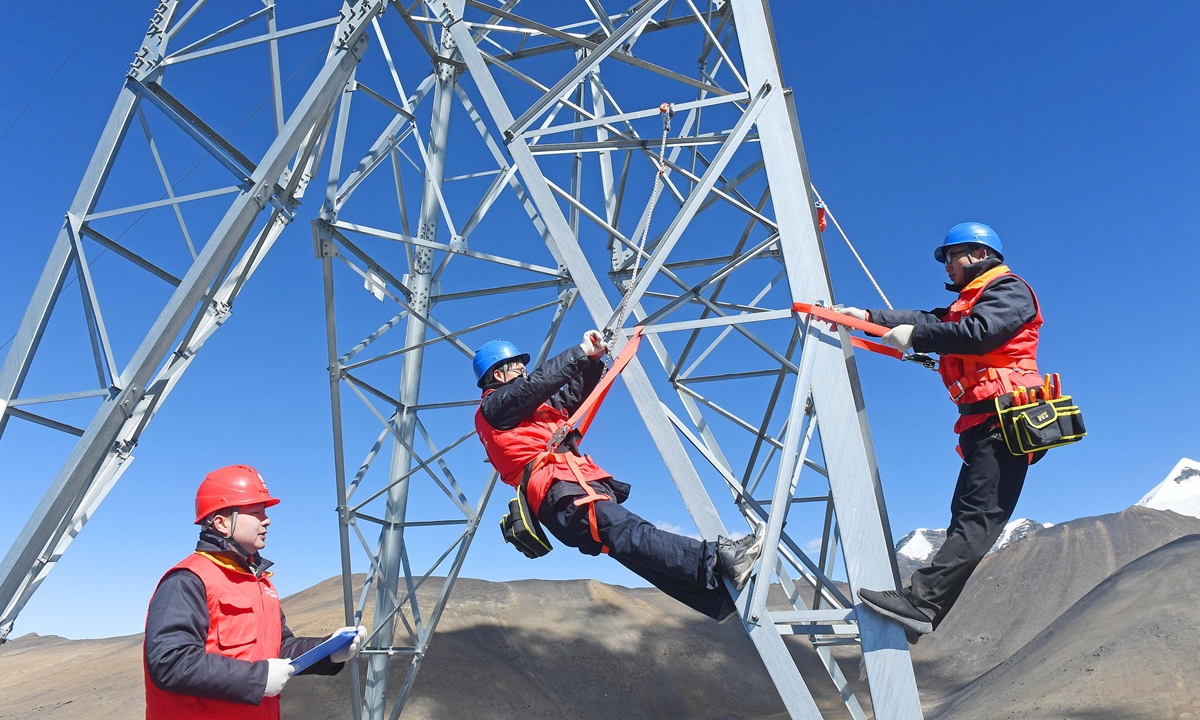
Workers from Anhui Province carry out power supply maintenance at an altitude of 5,548 meters in Shannan, Xizang. Photo: VCG
Beyond the court
Back at the gymnasium in Nyingchi, as Nagqu team battled Zhongshan team, two other teams were already warming up on the sideline: Xizang Minzu University and Ngari teams.
Players stretched, passed the ball and took practice shots, occasionally turning toward the ongoing game as the commentator's voice rose over another fast break. For the teams waiting on the sideline, the match was also a chance to watch opponents with different styles.
Qusang, a player from Xizang Minzu University, said his team had traveled from Xi'an, Northwest China's Shaanxi Province, where the university is located. The team included students from different parts of the country, including Guizhou, Shaanxi, Ningxia, Qinghai, Yunnan and Xizang.
"We are all brought together by the university, and now we are representing the school in this tournament," Qusang told the Global Times.
Nearby, the Ngari team's players came from different counties and professions, including teachers and public security workers. Among them was Zhasang, a physical education teacher at a vocational school in Ngari.
Zhasang said teams from Xizang still need more systematic training, tactical awareness and chances to compete with teams from other regions. Matches with teams from Guangdong and elsewhere, he said, allow plateau players to learn through real competition.
"I believe one day Xizang basketball will go beyond the plateau," Zhasang told the Global Times.
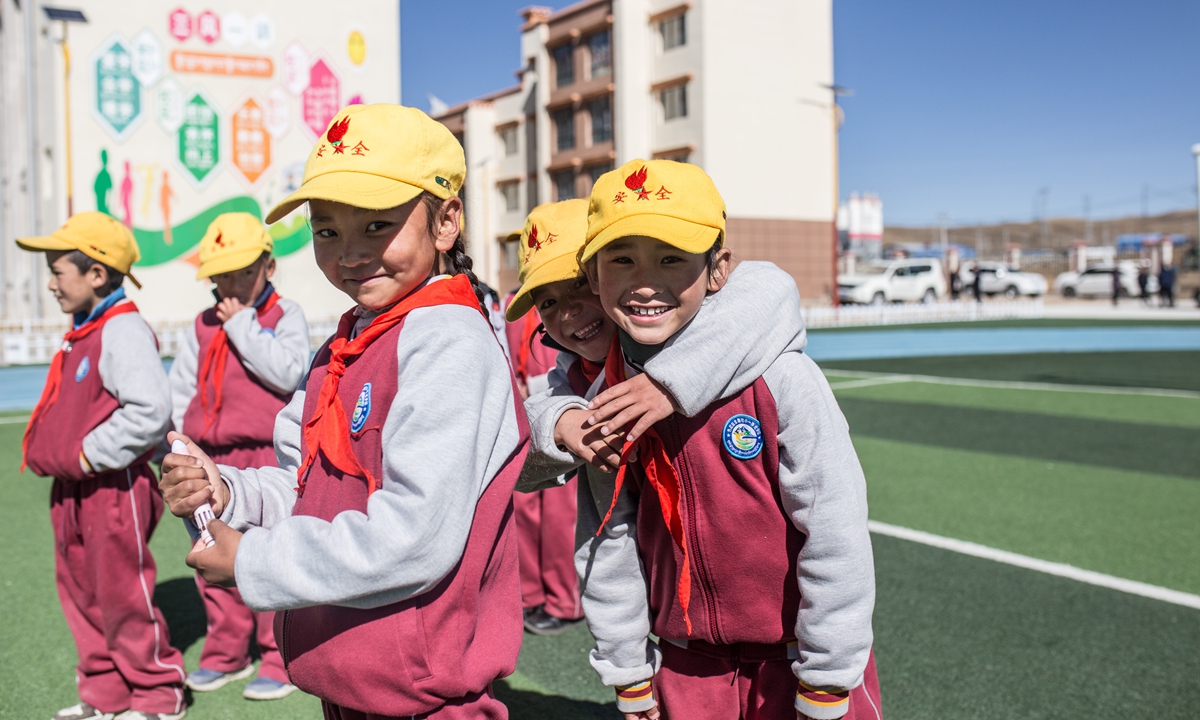
Primary school students play on a newly built playground in Nagqu, Xizang. Paired-up assistance to Nagqu is mainly undertaken by Zhejiang and Liaoning provinces and five major state-owned enterprises. Photo: Shan Jie/GT
The support does not stop at tournaments. In Lhasa, 25 standardized rural campus playgrounds supported and aided by Beijing were completed and put into use in 2026. At Qamdo Experimental Primary School, an aid-Xizang sports teacher from North China's Tianjin Municipality helped introduce more specialized training, including handball, giving students access to sports less common on local campuses.
Earlier talent programs have opened wider paths as well. The "Nursery Plan," launched by 17 paired-up assistance provinces and municipalities, sends young reserve athletes from Xizang to other parts of the country for training, the Global Times learned in a previous interview with local sports authorities.
In recent years, such talent cultivation has begun to show results, with Xizang athletes making breakthroughs in events including snowboarding, cross-country skiing and ski mountaineering, and some young athletes from the region qualifying for international competitions including the Winter Olympics.
RELATED ARTICLES