China-Russia educational co-op an indispensable investment
By Published: Jun 28, 2026 10:04 PM

China Russia Photo: Xinhua
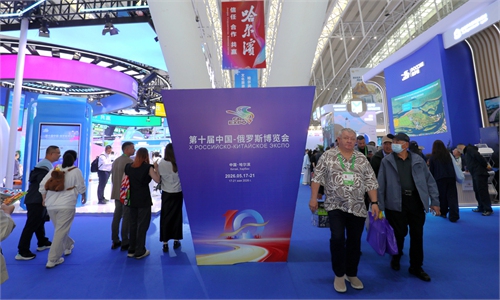
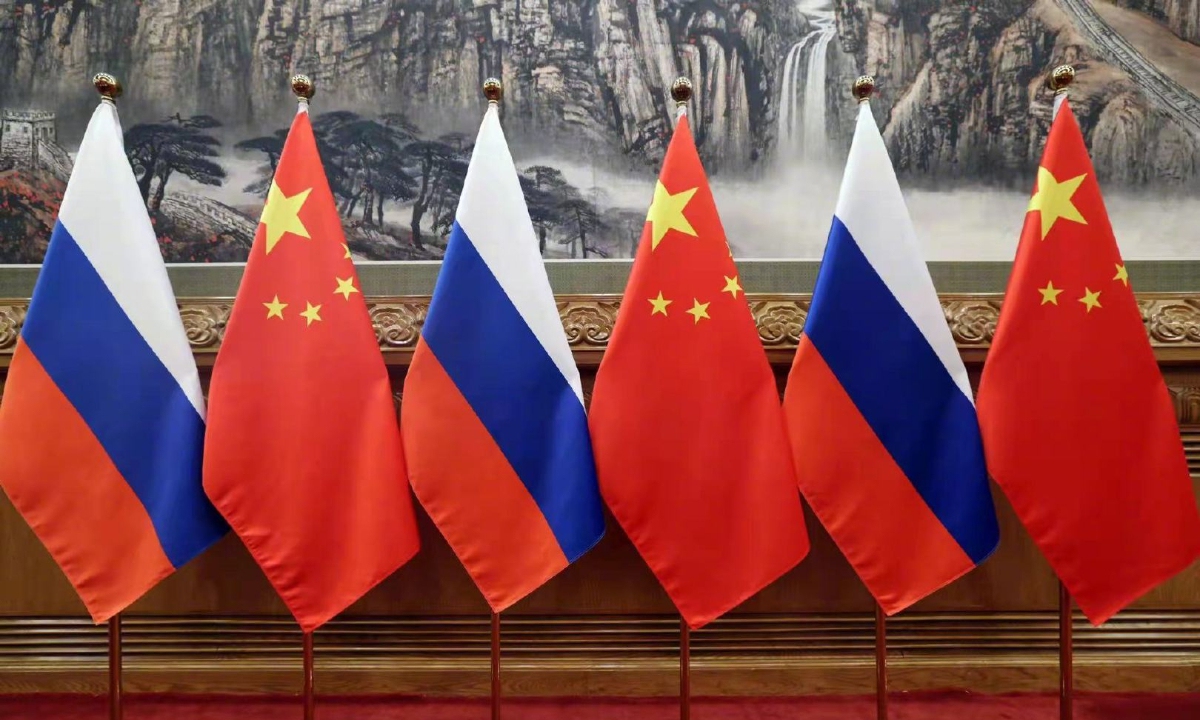
In May, when President Vladimir Putin was on his most recent regular official visit to Beijing, the two sides signed a diverse set of educational documents, and the two heads of state attended the opening ceremony of the China-Russia Years of Education. In a joint declaration, the two countries specifically emphasized their intention to deepen cooperation in higher education and in academic research, as well as to support building direct partnerships between universities.
During Putin's visit, at least six major agreements focused on promoting this dimension of bilateral ties were signed by top national universities, including the Peking University, the Harbin Institute of Technology, the Sichuan University and the Beijing Foreign Studies University on China's side, and the Moscow State University, the Moscow Institute of Physics and Technology, the Peoples' Friendship University of Russia and the Saint Petersburg State University on Russia's side.
These agreements highlighted an important shift in the geography of China-Russia university partnerships. Historically, such partnerships arose mostly in adjacent regions of the two countries, while the most prestigious and highly ranked educational institutions were engaged in this cooperation only to a very limited extent. From now on, one can observe a more active participation of universities from metropolitan areas in western Russia and in eastern and southern China.
The deliberate accent of the two presidents on higher education is hardly surprising - without heavy investment into the younger generation of potential leaders in the public and private sectors, it would be next to impossible to raise or even to sustain the current level of bilateral interaction.
What is happening between China and Russia in this domain now? There are 21,000 Russian students in China's higher education institutions and about 66,000 Chinese students in Russian universities. The overall scale of bilateral trans-border student exchanges looks like a drop in a bucket. However, the dynamics are quite telling: In two decades, the scale has grown by more than an order of magnitude.
This rapid rise of trans-border educational exchanges is even more significant in the current challenging international environment. After 2022, Russia has to a large degree been ostracized by the European and North American higher education communities. Though applicants from Russia are not formally banned from submitting their applications to schools in the West, these applicants had to reconsider such important issues as tuition costs, visa reliability, banking access and safety of travel.
Meanwhile, China has not been exposed to a similar scale of sanctions, but growing geopolitical tensions, security concerns and visa/screening policy changes in the West reduced Chinese student access to many high-end university programs and labs - especially in the US.
As a result of all these trends, China stands out these days as one of the top foreign educational destinations for many Russians. China-Russia cooperation in building university partnerships is accelerating: Today, the number of active partnership programs, including bachelor's, master's and joint institutions hosted by Chinese universities, has reached 260. Russia has become one of the few countries that have been able to establish a joint university in China. Recent dynamics have allowed Russia to join the top countries in terms of the total number of joint educational projects with China.
Nonetheless, the remaining problems are manifold. One of the most evident is the language barrier. Although more than a hundred thousand Chinese and Russians start learning the language of the other country each year and these numbers are growing by 7 percent annually in China and 12 to 15 percent in Russia, there is still no room for complacency - the two nations have to do much more. The substantive focus of joint programs has to be broadened: Alongside prioritizing STEM education, more attention should be granted to studies of Chinese and Russian civilizations, culture, literature and history.
At the same time, this particular dimension of China-Russia interaction is one of the most complicated and highly delicate. In the case of China and Russia, it is particularly difficult to overcome the institutional inertia since both nations have long-lasting traditions in education and legitimately take pride in their respective educational systems.
International cooperation in higher education has always been a long-term undertaking that does not promise any fast returns on the initial investment. However, this is an indispensable precondition for securing truly friendly and mutually respectful relations between nations. No matter whether we address interpersonal or international communications, the basic rule is the same: There can be no lasting respect without a deep understanding of the other side. And understanding cannot derive from a sudden and spontaneous epiphany; it comes only through persistent learning.
The author is a member of the Russian International Affairs Council. opinion@globaltimes.com.cn
RELATED ARTICLES