China includes 20 Japanese entities on watch list, adds another 20 to export control list; measures serve as a strong warning against Japan's neo-militarist expansionist actions: expert
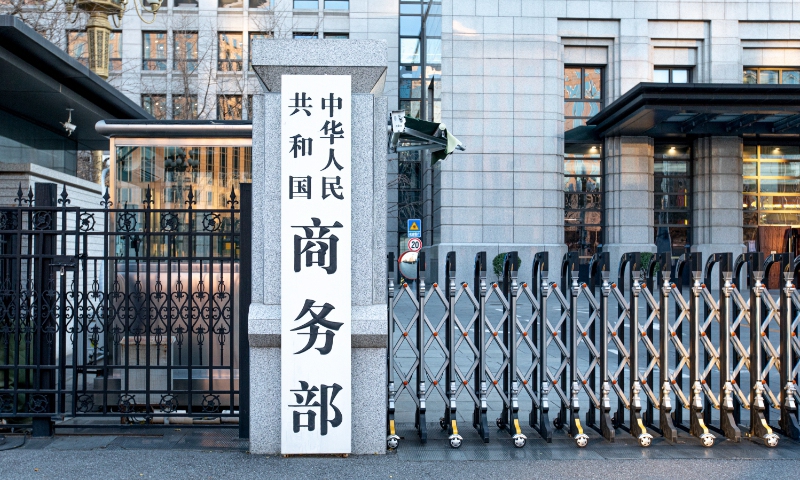
The Ministry of Commerce of China File photo: VCG
China's Ministry of Commerce (MOFCOM) on Monday expanded export controls on Japan by adding 20 Japanese entities to the control list for dual-use items. At the same time, it placed another 20 Japanese entities on the watch list. These measures aim to resolutely curb Japan's new militarist ambitions.
These measures represent another round of actions targeting Japan after the ministry implemented control measures on Japanese entities including Mitsubishi Heavy Industries Shipbuilding Co in February this year. Chinese experts noted that the latest measures are a stern response to Japan's militaristic move and demonstrates that China's export controls on Japan are continuing to upgrade in a more precise and in-depth direction.
According to the MOFCOM, it decided to include 20 Japanese entities, including the National Institute for Defense Studies, Ground Systems Research Center and Naval Systems Research Center to the export control list, in order to safeguard national security and interests and fulfill international obligations such as non-proliferation.
The ministry also announced the inclusion of 20 Japanese entities, including MITSUI E&S Co., Ltd, Mitsui Bussan Aerospace Co., Ltd. Maintenance Center, and Terra Drone Corporation on the watch list, because their final users and end uses of dual-use items cannot be verified.
Lü Chao, a research fellow at the Liaoning Academy of Social Sciences, told the Global Times on Monday that Japan's domestic neo-militarist ideology continues to spread unchecked. As Japan's production of large quantities of offensive weapons relies heavily on the import of core raw materials such as rare earths from China, the targeted implementation of dual-use item export restrictions is a necessary measure to safeguard China's security interests and curb Japan's dangerous actions, the expert noted.
The MOFCOM spokesperson said on Monday that on February 24, 2026, China added 20 Japanese entities including Mitsubishi Heavy Industries Shipbuilding Co to the export control list and another 20 such entities including SUBARU Corporation to the watch list to curb Japan's remilitarization and nuclear ambitions.
Regrettably, Japan has shown no remorse and instead moved further down the wrong path. Japan has stepped up its push for neo-militarism, accelerated remilitarization, deployed offensive weapons and launched offensive missiles outside its territory, the spokesperson noted.
The latest example came as Japanese media outlet NHK reported on Monday that Japan's Ground SDF says it has deployed a surface-to-ship missile launcher on the nation's easternmost island for the first time. Analysts claimed the deployment is part of the country's attempt to reinforce its Pacific-side defenses.
Lü noted that in the several months prior to the implementation of this round of controls, China's measures had not prompted the relevant Japanese companies and government to wake up and restrain their behavior. Instead, Japan's military expansion has intensified. "Against this backdrop, it is entirely reasonable and imperative for MOFCOM to roll out latest export control measures against Japan. These measures serve as a strong warning against Japan's neo-militarist expansionist actions."
Targeted measures
Zhang Junshe, a Chinese military affairs expert, told the Global Times that compared with the control lists issued in February, the latest measures clearly demonstrated that China's export controls on Japan are continuing to upgrade in a more precise and in-depth direction.
The control lists issued in February primarily targeted Japanese military-industrial manufacturing enterprises such as Mitsubishi Heavy Industries Shipbuilding Co, with the measures focusing on the production end and physical supply chains of Japan's military-industrial chain. The June measures newly include defense research institutions directly under Japan's Ministry of Defense, which further extends the scope of controls to the core of Japan's defense system and the deeper layers of its military-industrial chain, Zhang said.
Zhang further noted that the newly added military research institutions can be regarded as the "defense brain" of Japan's military development. According to Zhang, the National Institute for Defense Studies leads the drafting and formulation of Japan's defense policies and military strategies. It has long instilled right-wing militarist ideologies into Self-Defense Force officers and plays a key role in top-level design in advancing Japan's remilitarization process. The Ground Systems Research Center and Naval Systems Research Center directly support the technological R&D of various offensive weapons and equipment, forming the core support for Japan's expansion of military hardware capabilities.
"Incorporating these core research sources into the controls - compared to merely regulating production enterprises - carries greater strategic deterrent effect. It can impede the resurgence of Japanese militarism at its roots," Zhang noted.
At the same time, this round of controls further expands to subsidiaries and supporting service providers of military-industrial enterprises, encompassing affiliated companies in specialized fields while simultaneously covering upstream segments like special materials, precision processing, and logistics support - gray industrial chain links that were previously often overlooked, the expert added.
Moreover, the Chinese measures are well-founded, reasonable and proportionate. They are neither blind suppression nor a one-size-fits-all severance of cooperation, and will not affect normal economic and trade exchanges. Only those entities with ulterior motives that are using the opportunity to manufacture lethal weapons will face targeted controls. China's stance is entirely open and aboveboard, Lü said.
Shi Xiaoli, director of the WTO Law Research Center at the China University of Political Science and Law, told the Global Times on Monday that the control list and the watch list have each added only 20 entities. "The scale is far smaller than the US and European control lists. Throughout the process, the ministry has consistently adhered to using precise and targeted measures, constraining only entities involved in military industries or nuclear risks, without affecting normal civilian economic and trade activities," Shi noted.
Japanese media outlets have intensively covered the measures and linked them to Japanese Prime Minister Sanae Takaichi's erroneous remarks on China's Taiwan region. Asahi Shimbun said the move represents a further escalation of what amounts to a de facto countermeasure against Japanese Prime Minister Sanae Takaichi's remarks on Taiwan [island]. The Yomiuri Shimbun reported that the measures are seen as part of the economic pressure in response to Takaichi's remarks. NHK reported that Minoru Kihara, Japan's chief cabinet secretary, claimed that the Japanese government lodged a strong protest and demanded the withdrawal of the measures.
Yasukatsu Matsushima, a professor at Ryukoku University in Kyoto, told the Global Times on Monday that the root cause of the current situation lies with Japan.
He said that Takaichi should immediately retract those wrong statements, apologize, and completely abandon the erroneous path toward neo-militarism. Otherwise, not only will Japanese companies' economic activities face obstacles, but all resulting losses will ultimately be passed on to ordinary Japanese citizens, the professor warned.
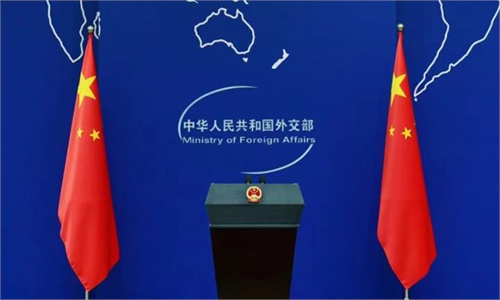
When responding to the MOFCOM's latest measures targeting Japanese entities, Guo Jiakun, spokesperson from the Foreign Ministry, stressed that it's fully justified, legitimate and lawful for China to take these measures which aim to contain Japan's reckless moves of neo-militarism.
The relevant measures apply solely to dual-use items and do not affect normal economic and trade exchanges between China and Japan. Law-abiding and trustworthy Japanese entities have no need to worry at all, Guo said, noting that we hope that the Japanese side will realize its errors and return from the wrong path, correct its mistaken actions, truly reflect on its behavior, and return to the right track.
China's decision to place entities on the list, taken in accordance with the law, targets only a small number of Japanese entities. The relevant measures target only the dual-use items, and will not affect the normal business exchanges between China and Japan. Japanese entities have no need to worry as long as they operate in good faith and in compliance with the law, Guo said, noting that we hope Japan will turn back from the wrong path, correct its wrongdoings, do serious soul-searching and go back to the right track.
RELATED ARTICLES