ARTS / ART
'Xinjiang sheep' craze highlights cultural products as tourism drivers
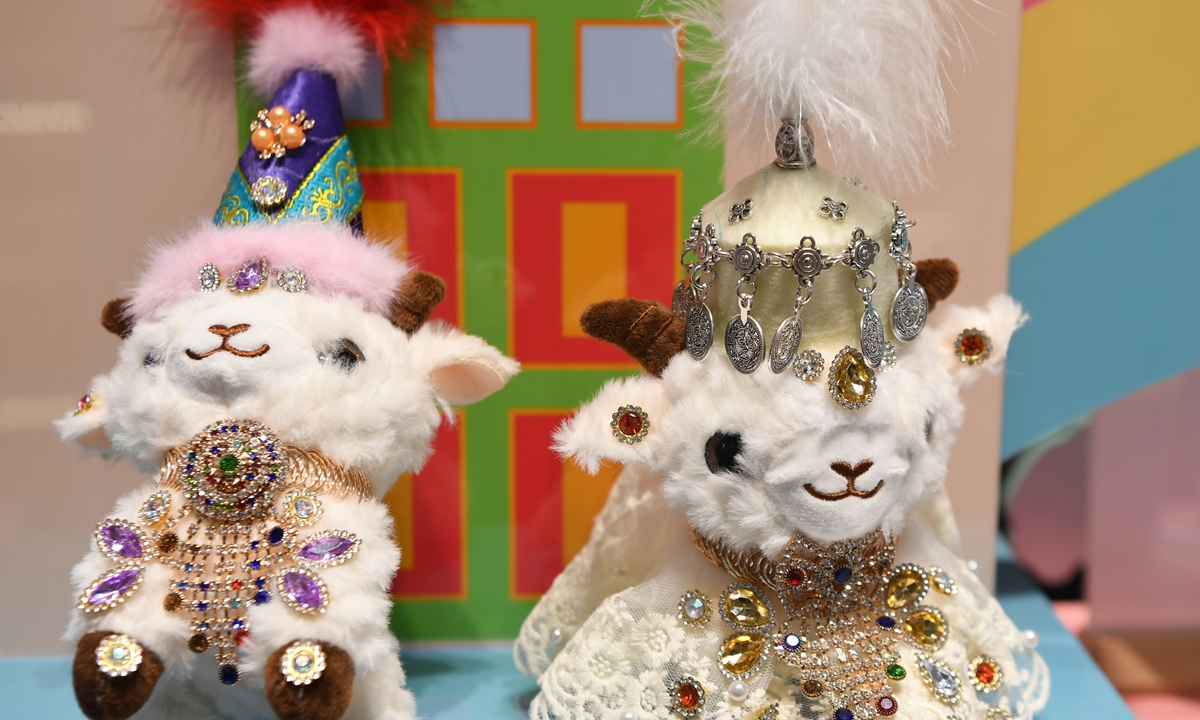
Handcrafted plush sheep toys Photo: IC
This summer, a quirky new sensation has galloped out of Urumqi, Northwest China's Xinjiang Uygur Autonomous Region - a handcrafted plush sheep, decked out in ethnic costumes and local trinkets.
With its curly fleece, vibrant Atlas silk ribbons, ruffled embroidered dresses, and delicate floral or feathered hats, the plush sheep is an instant eye-catcher for visitors.
Dubbed the "Xinjiang sheep" by netizens, the push toy first caught fire somewhen tourists began posting about their local purchase on social media. Within days, the buzz went viral - and soon, long queues were forming at the shop, with some travelers even adjusted their itineraries just to buy one.
As demand surged, local authorities and businesses responded quickly. Shopping areas expanded space for customers and added drinking water stations and supplies to beat the heat to create more comfortable resting areas for customers. Volunteers prepared mung bean soup and fresh fruit, while nearby vendors joined in by offering local specialties such as baked buns, naan bread, roasted milk skin and almonds for people waiting in line to sample.
The popularity of the toy is more than another viral internet moment, offering a reminder that in tourism, lasting appeal is rarely built by online attention alone.
The toy's popularity can be attributed to multiple factors, including its customizable design and integration of distinctive local cultural elements, as well as the city's quick response in embracing the surge of attention and providing improved services for visitors, Bu Xiting, an associate researcher at the School of Cultural Industries Management at the Communication University of China, told the Global Times.
Unlike mass-produced gifts found in many tourist destinations, each sheep is crafted by hand. Customers can choose different outfits, accessories and decorations, making every purchase slightly different from the last.
That small element of personalization turns the buying process into part of the travel experience. Visitors leave with more than a toy; they take home a memory that feels uniquely their own, according to CCTV News.
Even as demand grows, Abdulla Emirla, one of the vendors of the toy, has continued decorating the toys by hand instead of rushing production or raising prices. Emirla's attitude has resonated with many visitors, who regard the toy not simply as merchandise but as a reflection of the sincerity behind it.
That sincerity has extended beyond one market stall.
As crowds have grown larger, businesses, volunteers and local authorities are working together to accommodate visitors. Rather than treating the influx as a short-lived opportunity, they are focused on making the overall experience more comfortable. By doing so, they are transforming the popularity of one handmade product into a showcase of the city's hospitality.
In Urumqi, more and more artisans and major shopping areas have joined in making "Xinjiang sheep" toys. The handmade plush toys, each designed with small creative details, can now be found across the city, waiting to meet visitors.
The popularity of the toy has also translated into tangible economic activity. Sales of Atlas silk have increased, specialty restaurants have seen longer lines, and bookings for suburban guesthouses have surged, according to CCTV News.
At the Jinquan Mall in Urumqi, demand is on the rise not only for finished sheep toys but also for DIY materials such as small embroidered hats, silk ribbons, imitation gemstone accessories and decorative ornaments. Once niche craft supplies are now becoming fast-selling items.
The phenomenon demonstrates that a successful cultural product can do far more than generate sales. It can introduce local traditions in an accessible way, encourage visitors to spend more time exploring a destination and inspire them to share their experiences with others. In turn, those experiences strengthen a city's reputation far beyond a single social media trend, noted Bu.
The toy's popularity has also benefited businesses beyond the souvenir market, illustrating how one well-designed cultural product can create broader economic value, added Bu.
RELATED ARTICLES