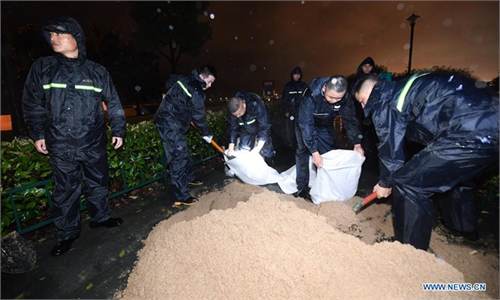
Level-IV flood response activated in southern provinces as combined effects of plum rains, El Niño and typhoons lead to extreme rainfall’: analyst
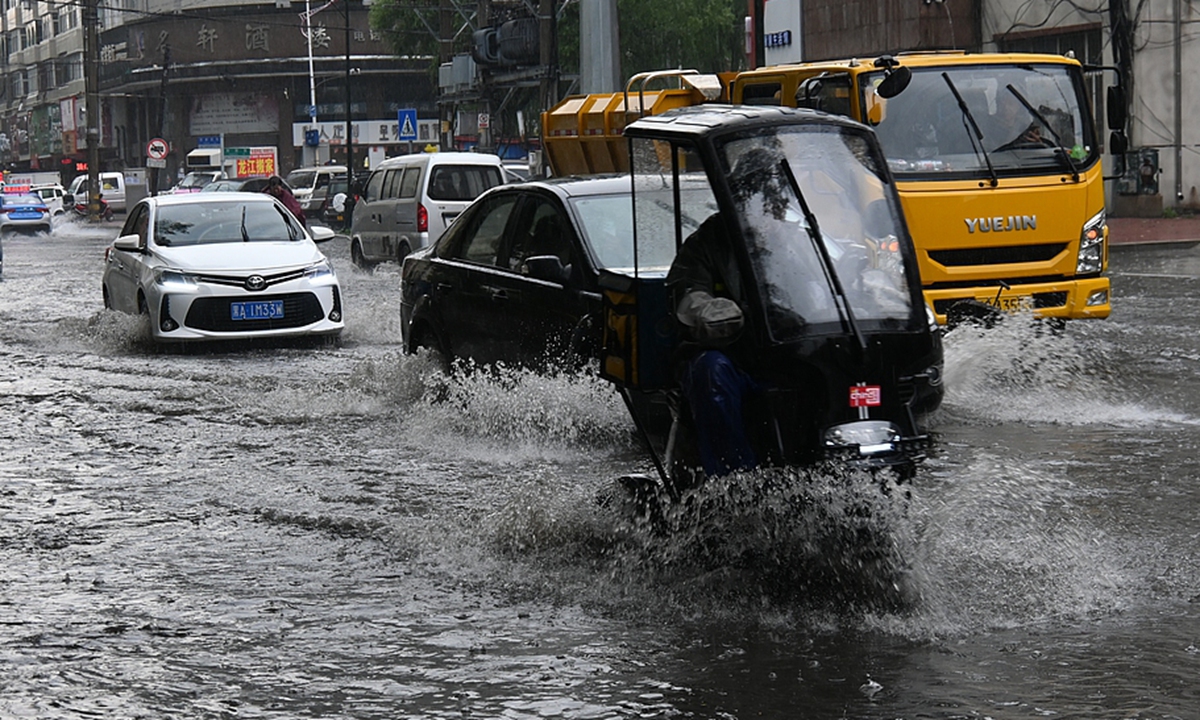
Electric bikes and vehicles wade through floodwaters on rain-soaked streets in Mudanjiang City, Northeast China's Heilongjiang Province on July 1, 2026. The city experienced urban flooding after intense short-term rainfall triggered by severe convective weather inundated parts of the city. Photo: VCG
A new round of extreme rainfall is battering large parts of China, prompting authorities to activate a Level-IV emergency response for flood control in Central China's Hunan Province and Southwest China's Yunnan Province, while maintaining the same response level for East China's Anhui and Jiangxi provinces, and Southwest China's Guizhou Province.
According to the National Meteorological Center (NMC), from 8 am Wednesday to 8 am Thursday, parts of northeastern Jiangxi, southern Anhui, southwestern Yunnan and East China's Zhejiang Province were expected to receive torrential rainfall of 100 to 180 millimeters. Heavy to torrential rain was also forecast across places including Guizhou, Hunan, Anhui and Shanghai, as well as parts of Northeast China's Liaoning Province and East China's Shandong Province.
In response, China's State Flood Control and Drought Relief Headquarters activated a Level-IV emergency response in related areas, and two central government working groups remain in Jiangxi and Guizhou to assist and guide local flood-control efforts.
As China enters principal flood season, a CPC top leadership meeting on Tuesday warned that China is expected to see more extreme weather and climate events than usual in its main flood season this year, with droughts and floods occurring at the same time.
The meeting called for measures to strengthen flood control on major rivers and lakes, and highlighted the need to attach great importance to the risk of drought-flood abrupt alternation, and to strengthen the unified management and dispatching of water sources, according to Xinhua.
Emergency rescue and disaster relief must be swift and efficient, and preparations of emergency response forces, equipment and supplies must be stepped up, the meeting noted.
China officially entered its principal flood season on Wednesday, and from July to August, flooding is expected to be more severe in northern China, with a higher likelihood of localized extreme rainstorms and floods, the Ministry of Water Resources announced, the Paper.cn reported.
The ministry warned that multiple rivers in the Haihe River Basin and Songhua-Liaohe River Basin may experience major floods. Rivers in the upper reaches of the Yangtze River Basin and the middle reaches of the Yellow River Basin may see water levels exceeding their warning thresholds, according to the report.
After persisting throughout June in regions along the Yangtze River Basin, the widespread rainfall has continued into July and shows a trend of southward expansion due to a combined influence of three major weather systems: the plum rain, El Niño and Typhoon Mikala, Lin Nan, a meteorological analyst with weather.com, told the Global Times on Wednesday.
"The western Pacific subtropical high has been unusually strong and positioned farther north this year, while cold air from northern China has remained in place. The two air masses have remained locked in a standoff along the Yangtze River, causing the plum rain front to linger over the same areas and repeatedly produce heavy rainfall," Lin said.
Lin added that El Niño has intensified ocean evaporation, leaving atmospheric moisture levels nearly 20 percent higher than in a normal year, making rainfall along the plum rain front significantly heavier; although Typhoon Mikala is not expected to make landfall in China, it has acted like a massive "water pump," redistributing moisture from the Yangtze River Basin toward southern regions, shifting the focus of this round of rainfall to central and eastern Yunnan as well as coastal areas of South China.
The emergency response requires authorities at all levels in Hunan, including Hengyang City and Liuyang City, to prioritize reservoir operations and water conservancy projects, mountain flood and geological disaster prevention, flood control along small and medium-sized rivers, protection of water-related infrastructure and urban waterlogging prevention.
Authorities have also been instructed to pre-position emergency supplies and rescue teams in high-risk areas, strengthen inspections and early response measures, relocate residents from danger zones in advance, and make every effort to prevent casualties.
In Yanshan county of Wenshan Zhuang and Miao Autonomous Prefecture in Yunnan, local natural resources authorities have conducted comprehensive inspections of all 80 registered geological disaster hazard sites. Monitoring equipment has been installed at 31 high-risk locations to strengthen early warning capabilities, according to local authorities.
RELATED ARTICLES