Illustration: Xia Qing/GT
The gathering in celebration of the 105th founding anniversary of the Communist Party of China (CPC) was held at the Great Hall of the People on Wednesday morning in central Beijing. Nearly all media outlets on the island of Taiwan immediately followed up with intensive coverage, with related topics rapidly rising to the top of news charts.Taiwan's media outlet United Daily News focused on the remark of Xi Jinping, general secretary of the CPC Central Committee, that reunification is "a historical mission and an unshakable commitment for the CPC," noting that the Taiwan-related portion of the speech consisted of 123 Chinese characters. China Times, meanwhile, compared the wording regarding the region in this important speech with that at the ceremony marking the centenary of the CPC. The heightened sensitivity of media on the island indicates that Taiwan society's attention to policy signals from the Chinese mainland has entered a stage of "word-by-word reading, sentence-by-sentence analysis."
Why are the island's media outlets paying such close attention to this gathering? There are three reasons.
First, this is an important moment for sending signals. The anniversary celebrations held every five or 10 years inherently carry the significance of reviewing history and declaring future direction. They have become an important window through which Taiwan society observes the mainland's overall strategic judgment, the consistency of its Taiwan policy and the pace of its future actions.
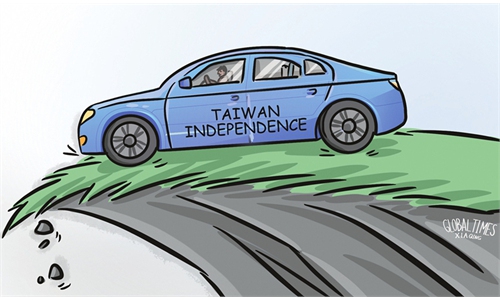
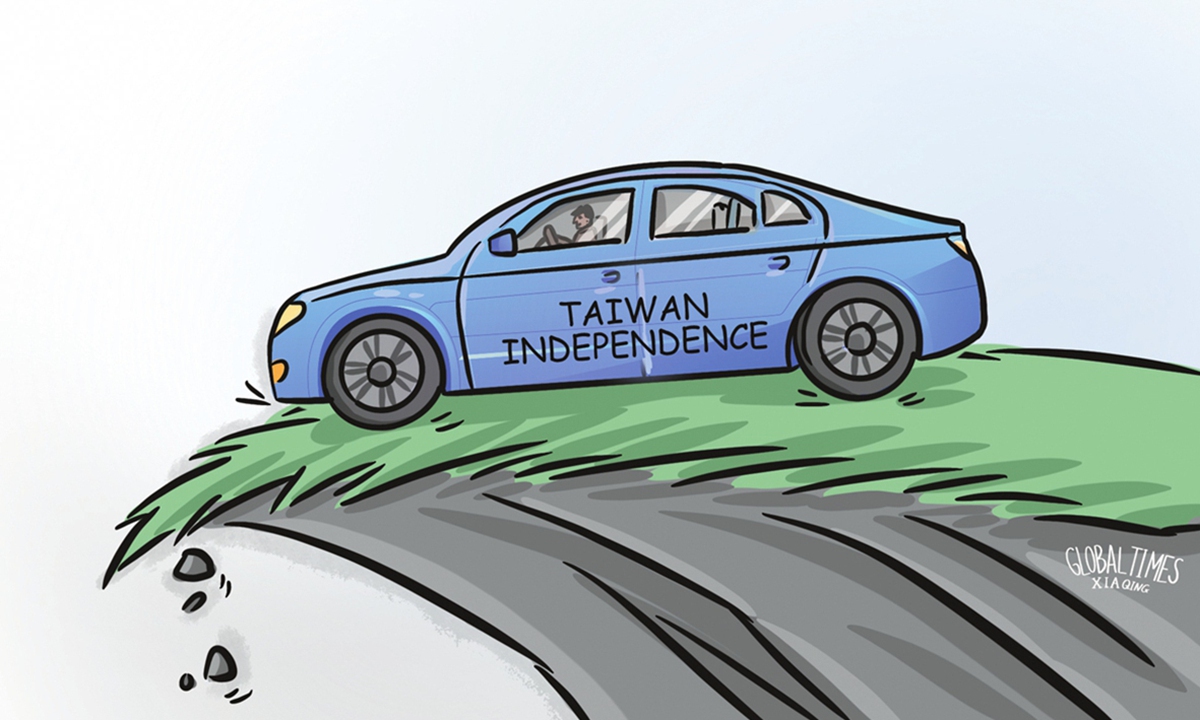
Second, the cross-Straits situation remains in a complex and sensitive period. In the face of continuous provocations from "Taiwan independence" separatist forces and persistent interference from external actors, the Chinese mainland's responses and stance will serve as a barometer for public opinion within the island to judge the future trajectory of cross-Straits relations.
Third, politics on the island cannot avoid the Chinese mainland factor. Whether it is the blue camp or the green camp, whether advocating exchanges or agitating for confrontation, neither can afford to ignore a speech of this significance as it directly affects the discursive space for political debate within the island.
At the gathering, Xi explicitly stated that it is necessary to unite the broad masses of Taiwan compatriots, deepen cross-Straits exchanges and cooperation and integrated development, resolutely fight secessionists seeking "Taiwan independence," oppose external interference, and advance national reunification. Some media outlets on the island, comparing the Taiwan-related wording in this speech with that in the speech delivered at the ceremony marking the centenary of the CPC, keenly noted certain adjustments in the language.
For example, whereas the previous speech placed greater emphasis on "advancing peaceful national reunification," this speech presents "deepening cross-Strait exchanges and cooperation and integrated development," "resolutely fighting secessionists seeking 'Taiwan independence,'" "opposing external interference," and "advancing national reunification" side by side in a more comprehensive manner. The structure of the expression is more complete, the policy framework is clearer and the action orientation is more pronounced.
Among these points, the phrases "resolutely fighting secessionists seeking 'Taiwan independence'" and "advancing national reunification" have been highlighted by media in Taiwan, as they reflect the dual logic in the mainland's overall policy toward the island. "Resolutely fighting secessionists seeking 'Taiwan independence'" signifies an attitude, a principle, and a red line — a declaration of national will carrying clear policy mandates. "Advancing national reunification" denotes direction, pacing and strategy; it embodies historical initiative and a confident, composed determination to make steady, sustained progress along an established course. Taken together, the former represents a bottom-line mind-set, while the latter serves as the guiding goal; one manages risk while the other sets the direction; one embodies the spirit of struggle, while the other reflects the historical process.
This clearly demonstrates that the mainland's approach to resolving the Taiwan question is becoming increasingly mature, systematic and proactive. In the past, some on the island harbored the illusion that sufficiently agile internal political maneuvering or deep intervention by external forces could stall or disrupt the process of national reunification. However, this latest address shows that such assumptions are increasingly untenable. The mainland's strategy regarding Taiwan is not one of passive reaction or susceptibility to external interference; rather, it is a long-term plan integrated into the overarching goal of national rejuvenation. Regardless of shifts in the political landscape on the island or attempts by external forces to stir up trouble, national reunification remains the established course — one that will not change.
Taiwan society is increasingly realizing that every significant statement from the mainland is not mere rhetoric, but a public expression of strategic will. The simultaneous mention of "resolutely fighting secessionists seeking 'Taiwan independence,'" and "advancing national reunification" sends a clear signal: cross-Straits exchanges, cooperation and integrated development will not cease; the struggle against "Taiwan independence" secessionists and external interference will not slacken; and the process of national reunification will not be interrupted.
Why, then, is Taiwan paying such close attention to today's speech? Because they recognize it as a signal of great significance — one that bears on the future of the Taiwan Straits, the trajectory of cross-Straits relations and the destiny of the Taiwan island. The fact that local media outlets are scrutinizing every nuance of the wording underscores their understanding that the situation across the Straits has entered a new phase — one where the strategy of relying on vague rhetoric to delay things is no longer viable.
Everyone — including the residents of Taiwan — understands that the cause of national reunification will move forward with steady, determined strides. This is an unstoppable historical trend.
RELATED ARTICLES