ARTS / BOOKS
How lifelong reading shaped Zuo Heng’s understanding of cinema
Seeing beyond the page
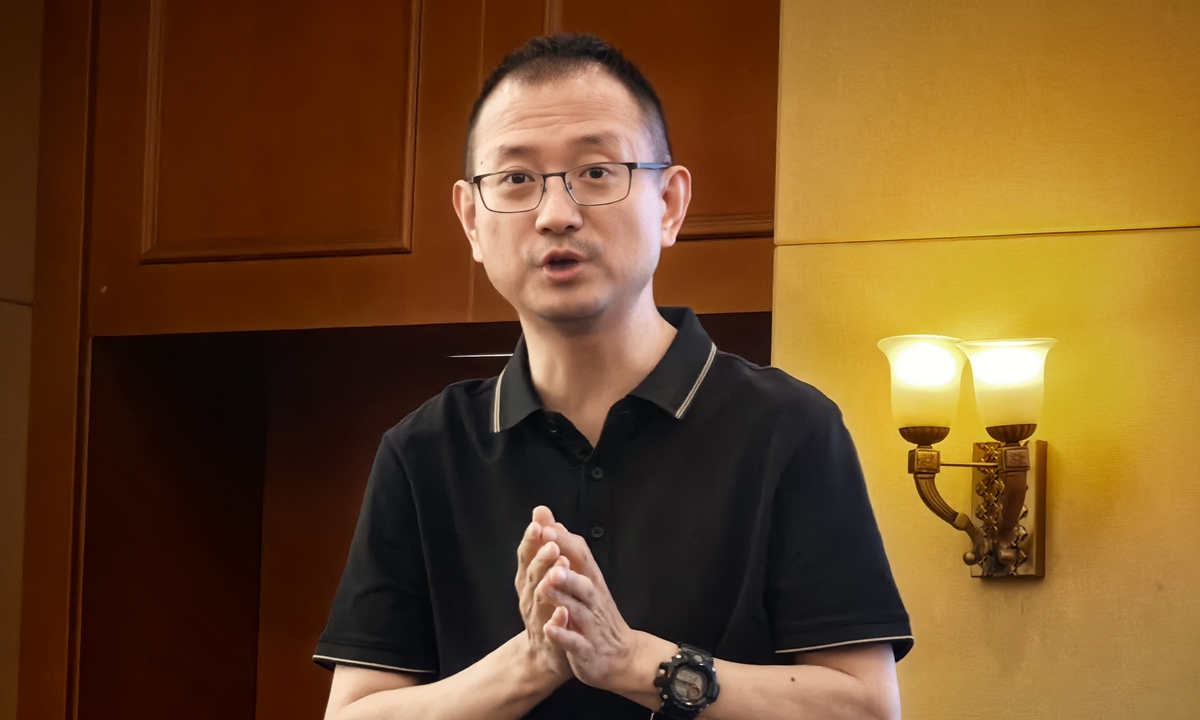
Zuo Heng Photo: Courtesy of Zuo Heng
Editor's Note:In an age of information overload, reading remains a necessary channel to invigorate the mind, provide inspiration and cultivate virtue. Whether it is childhood enlightenment or the pursuits of adulthood, everyone's reading journey carries unique emotions and life experiences. The Global Times has specially launched the "100 Avid Readers" series, inviting guests from various fields to share their connections with books, stories of growth and sparks of thought.
In this installment, film expert Zuo Heng shares how reading in many forms, from picture books to film theory, has shaped his lifelong understanding of cinema and the way he sees the world.
Books on film theory, cinema history and newly published academic titles fill the shelves of Zuo Heng's office at the China Film Archive in Beijing. For Zuo, director of the archive's department of film culture research, reading has long been part of his daily routine rather than something reserved for academic work.
Best known for his work on the history and theory of Chinese cinema, Zuo is often described as a film scholar. Yet when he reflects on how his understanding of cinema was formed, he traces it not only to watching films, but also the habit of reading regularly.
"From the perspective of a film researcher like me, watching a film is also a form of reading," Zuo told the Global Times. "Whether we are reading words or images, what truly matters is the thinking that reading inspires and the ability it gives us to understand the world."
This way of thinking, he said, is closely tied to how he first encountered cinema. Looking back, Zuo believes his generation's introduction to film was more or less inseparable from reading.
Early encounters
Like many Chinese born in the 1970s, Zuo recalls that he first encountered films through both the silver screen and the printed page. In the early 1980s, Chinese cinemas re-screened classics such as Street Angel, The Spring River Flows East and Charlie Chaplin's Modern Times, while new productions of the reform era were also reaching audiences. Together, these films shaped the cinematic memories of a generation.
Aside from cinema, however, another medium played an equally important role. Film-inspired picture books - adaptations of movies in comic-book form that allowed children to revisit stories long after leaving the theater.
"Movie tickets were expensive," Zuo said. "But one film picture book could be passed around among several children, allowing us to 'watch' the same movie over and over again through its pages."
Beside these books, radio broadcasts also became part of Zuo's early reading experience. He still vividly remembers the voices of artists from the Shanghai Film Studio. For many Western literary classics, his first impressions were shaped not by the original texts, but by edited film recordings broadcast on the radio.
"Those voices, together with words and images, formed my earliest reading experiences," he said. "They also made me realize at a very young age that reading is not limited to the printed text."
Embracing books
When Zuo later entered formal film studies, this early habit of engaging with stories through different forms gradually carried over into his academic work, and reading became the most direct way for him to approach cinema.
Two books, in particular, left a lasting impression.
The first was Essay on Western Film History by Chinese film historian Shao Mujun. For Zuo, the book offered a clear historical framework for understanding the evolution of Western cinema. The second was The Magic Lantern, the autobiography of Swedish filmmaker Ingmar Bergman.
"The first rationally outlined the development of cinema," Zuo said. "The second reached into the soul. In Bergman's writing, cinema always glows with a kind of magic that reflects the inner world of modern people."
"One book organized history, another explored the human from the inside," he said. "Together, they shaped the way I understand both cinema and art."
More recently, he has also repeatedly returned to a new book by film scholar Yang Yuanying, Film Author and Historical Representation. In his view, the book offers a clear entry point into the history of Chinese cinema and its representative filmmakers, but more importantly, it helps readers grasp the underlying logic behind the country's cinematic evolution. "It is not only informative, but also highly readable," he said.
Continuous reading
Today, rather than searching for definitive answers, he values returning to works he has read before. In his experience, the meaning of a book often changes with the reader. A text first encountered as a student may reveal entirely different questions years later, after more research and life experience.
That habit of rereading has become an important part of his academic work. Revisiting books is, for him, less about confirming old conclusions than about discovering new connections between history, culture and artistic creation.
For Zuo, this gradual process of connecting ideas is where the real value of reading lies.
"Today, information is easier to access than ever before, yet he believes genuine reading has become more demanding," he said. "It requires the patience to stay with a complete work instead of consuming isolated fragments, and the willingness to revisit familiar ideas instead of constantly chasing new ones."
Whether through books, films or other forms of storytelling, the medium itself is not what matters most, Zuo noted. What matters is the habit of reading carefully enough to place every work within a broader historical and cultural context.
For him, this habit is not an abstract idea but something that shows up in small, everyday choices - such as pausing over a passage that seems ordinary at first glance, or returning to an older text after years of new experience, only to find its meaning has unknowingly shifted.
On quiet days at the archive, when research materials are spread across the desk, he often returns to notes he made years ago on the margins of books. Some lines are barely legible now, but they still prompt him to rethink what he once considered settled.
At those moments, reading is less an established activity and more a continuous adjustment of how he sees familiar things.
RELATED ARTICLES