Illustration: Xia Qing/GT
Recently, public discourse in Taiwan island has been focusing on Raymond Greene, Director of the Taipei Office of "The American Institute in Taiwan" (AIT). This American official, dubbed by some local media as "Taiwan's son-in-law," has gained an outsized presence in Taiwan - whether it's on cross-Straits security, Taiwan's drone industry and the so-called "defense transformation," or making reckless remarks about cross-Straits relations and shaping US' policy toward Taiwan region. Greene's actions have long gone beyond the responsibilities of an ordinary "stationed diplomat," resembling instead someone who can strongly influence Taiwan's security, political climate, and even its future development.
On July 5, Taiwan regional media outlet China Times published a commentary titled "From Hedgehog to Beehive, Greene's complete overhaul of Taiwan strategy," which sharply pinpointed this issue. The article highlighted Greene's proposal to turn Taiwan island into a "beehive" full of drones. This further concretizes the "role" that the US intends for Taiwan island in its strategic vision. From previous "hedgehog island" to today's "beehive island," this reflects the US ongoing effort to rebrand and reinforce its Taiwan strategy, revealing how Taiwan's role on the US chessboard has become increasingly tool-like and functionally defined.
The so-called "hedgehog island" is a security illusion sold to Taiwan island by the US in recent years, centered on strengthening its "asymmetric combat capability" to increase the cost of China's complete reunification through high-cost, dispersed, and delaying tactics. Now, proposing to turn Taiwan island into a "beehive" further exposes that the US has never genuinely cared about the safety of the Taiwan people, but merely regards the region as a "pawn" to delay, restrain, and drain China's strength.
What's even more intriguing is that Greene's words seem to be regarded as something of a golden rule by some Taiwan officials. His remarks about "hedgehog" and "beehive" have prompted some local forces to discuss how to adjust troop deployments, reform military industries, reconstruct battlefield communications, and allocate more budgets. Greene simply changes his wording, but some in Taiwan follow suit with great fanfare, increasing military spending, expanding support measures, mobilizing society, and shaping public opinion. This is no different from top-down command input and lower-level system response.
The China Times sharply pointed out that the DPP authorities are using taxpayers' hard-earned money and residents' living space to serve the US' strategy to drain China's strength. From "hedgehog" to "beehive," Taiwan has always been a constantly rebranded asymmetric chip. The so-called strategic transformation, in essence, is about reassembling Taiwan according to US needs.
Meanwhile, the Lai Ching-te authorities' attitude toward the US is even more ironic.
On July 4, another article in the China Times mentioned that US President Donald Trump repeatedly and publicly claimed that Taiwan "took" or "stole" America's chip business. However, Taiwan regional leader Lai's administration showed a "submissive," "deferential" and "accommodating" posture. Reportedly, Lai, during a visit to the AIT on May 27 this year, even presented TSMC founder Morris Chang's autobiography as a gift and asked Greene to pass it on to Trump for a "subtle explanation."
Lai's long-time claim of "sovereign independence" is now rendered hollow by the fact that, when the US leader repeatedly disparages Taiwan's industry contributions, he can't respond directly but can only entrust a US politician to "deliver the message" through a book. How can this be equal dialogue? This is more akin to a cautious plea - a tactful display of deference for fear of offending the US.
What's even more embarrassing is that, even after doing this, it has had no real effect. On July 2, Trump again mentioned that Taiwan "literally took 100 percent of the [chip] business" and demanded TSMC to continue investing and expanding in the US to help America gain a larger share of the chip market. It's clear that, regardless of whether the book was delivered or whether Greene conveyed the message, the core decision-makers in the US are not paying attention to Taiwan's stance. Lai propagated to Taiwan island that he has communicated with the US side, however, he was useless to stop the US from "hollowing out Taiwan."
This is the core problem. Why can Greene speak so loudly and arrogantly within Taiwan island, demanding it to "dance to the US tune," while the DPP authorities have to go through layers of channels to express their opinions to the US high-level officials, with uncertain results? The key reason is the unequal status. Taiwan island can only be the recipient of arrangements and definitions in the face of the US. Greene certainly cannot decide US' policy toward Taiwan region on his own, but he uses his influence to exert pressure on the Trump administration on behalf of US hawks. For Taiwan society, his words not only represent an attitude but often seem to be directing the course of action.
Therefore, claiming that "US Taiwan policy depends on Greene" is of course not entirely accurate. Ultimately, US' policy toward Taiwan island is still decided by Washington, by the overall strategic interests of the US, and by its competition with China. But for the perception within Taiwan, Greene is increasingly appearing as the "person on the spot making the final decision," the one who can make the whole Taiwan society run ragged.
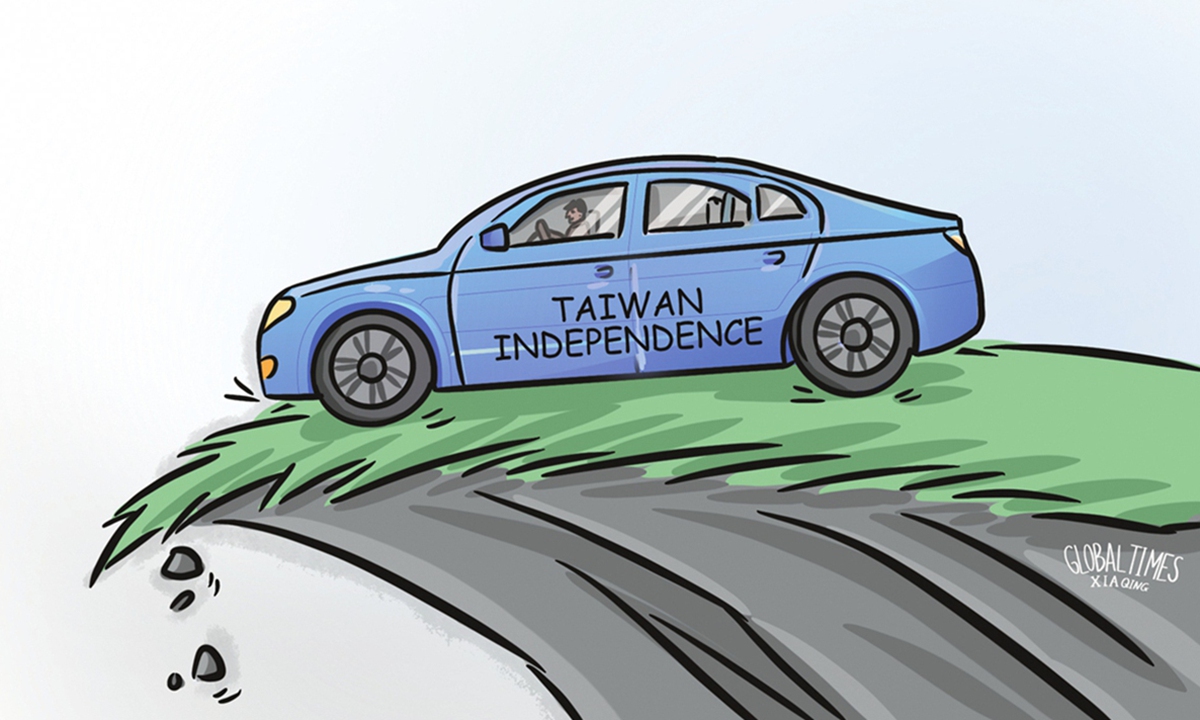
The most alarming thing is not how much influence Greene personally has, but that Taiwan island has increasingly lost the ability to control its own destiny. The US is constantly changing its packaging words - from "hedgehog" to "beehive," from "silicon shield" to "non-red supply chains." Essentially, these are not for Taiwan's greater security or autonomy but to make Taiwan more useful for the US. The DPP authorities, on one hand, promote internal propaganda, creating illusions of "rock-solid US-Taiwan island relations"; on the other hand, they adopt a low-profile stance and abandon resistance in practical dealings with the US. The result is that the more "Taiwan independence" separatist forces shout "autonomy," the less autonomous Taiwan becomes externally.
In the end, Taiwan has fallen into a situation where an AIT director wields such enormous influence, clearly indicating that the path of "soliciting US support for 'Taiwan independence'" has never been about gaining strategic autonomy for Taiwan, but about Taiwan constantly losing the ability to control its own fate. No matter how much effort is made, it can only end up serving others' interests and becoming a pawn for others.
The author is a commentator on international affairs. opinion@globaltimes.com.cn
RELATED ARTICLES