Ports of opportunity: enhancing connectivity between China and Europe
By Published: Jul 07, 2026 06:57 PM

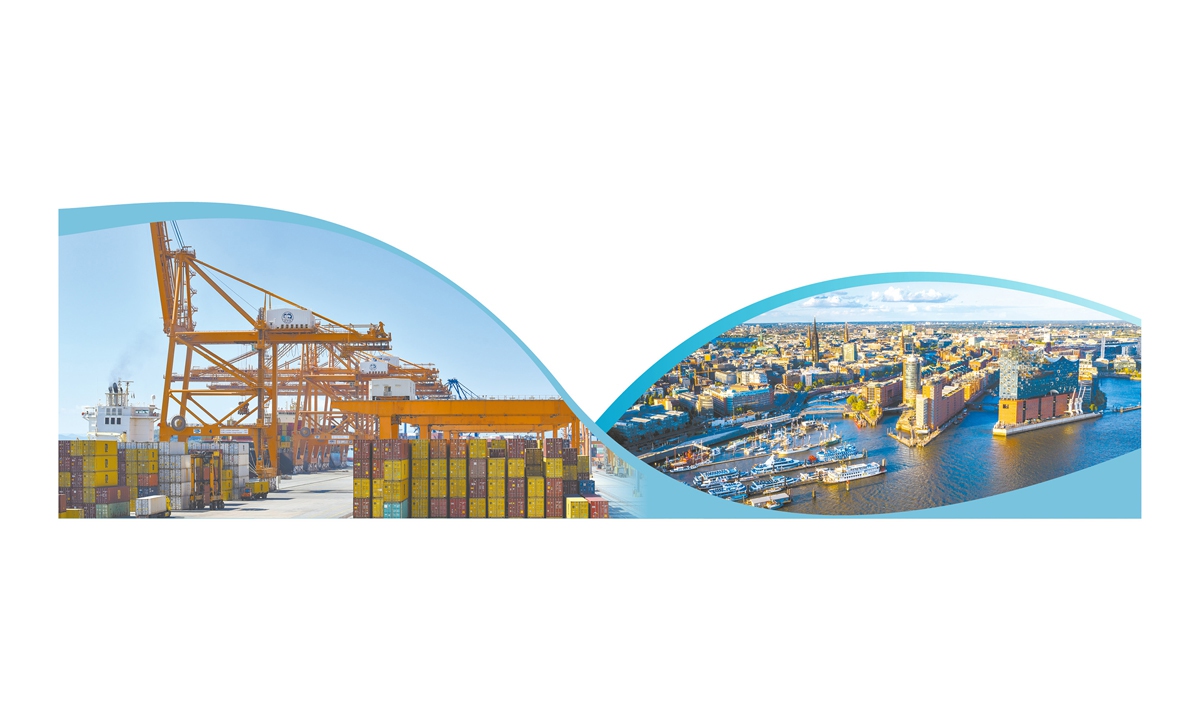
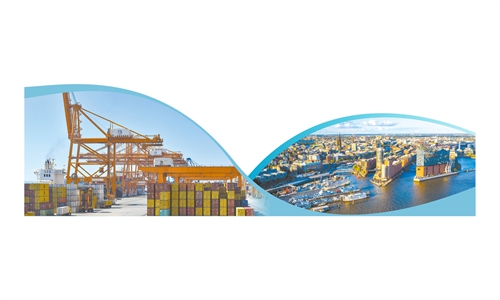
Views of the Port of Piraeus in Greece (left) and the Port of Hamburg in Germany Photos: VCG
Earlier this year, my newspaper, the Global Times, dedicated a special series to China-Europe engagement, including an episode that showcased bilateral port cooperation - highlighting Piraeus in Greece and Hamburg in Germany.
When I edited the article, a scene came into mind: A shipping container leaves the bustling port of Shanghai, crosses the Indian Ocean, passes through the Suez Canal, and finally docks at the European port - not as a stranger in a foreign land, but as a package arriving in a familiar logistics neighborhood.
Actually, this is the reality happening every day, shaped by deepening cooperation between Chinese and European ports. From Piraeus to Hamburg, Chinese investment and operational expertise have brought upgraded infrastructure, faster cargo handling, and revived industrial zones to Europe - reshaping its maritime gateways. For China, these partnerships have opened reliable European footholds for its exports and deepened its integration into global logistics networks.
Now, a new name has joined this list.
According to media reports, a newly formed joint venture between a Chinese company and a Spanish company has been approved for a new concession and redevelopment of the Spanish Port of Tarragona, located on the Mediterranean in northern Spain near Barcelona. The port is expected to develop as a regional logistics center in the Mediterranean, connected to both main international maritime routes, the Iberian Peninsula, and Europe's inland centers. More importantly, it will become another strategic link in the growing chain of China-Europe port partnerships.
China-Spain port cooperation has been steadily deepening over the years, with Valencia and Barcelona ports leading bilateral collaboration. The Port of Barcelona, in particular, has established itself as the primary southern European gateway for Chinese EV imports. Overall port imports have surged as Chinese brands capture a growing market share across the EU, delivering tangible economic gains for local industries and trade.
Despite the proven, on-the-ground mutual benefits of such cooperation, attitudes in Brussels remain skeptical. China's deepening port partnerships with several EU member states have sparked heightened regulatory caution within some European institutions.
According to the pan-European media network Euractiv, China's expanding role in Spanish port infrastructure, particularly with a new car plant near the Ferrol naval base - a key NATO site - has sparked security concerns in Brussels over potential military or intelligence uses of commercial assets.
The same media report also claimed that the European Commission is preparing a series of guidelines - first teased in its EU Ports Strategy - to help EU capitals assess the influence of third countries on the control of port operations across the bloc, with experts warning of risks such as operational dependence, access to sensitive information on critical supply chains, and the ability to influence logistics flows.
For years, Brussels has oscillated between welcoming capital inflows and imposing unwarranted restrictions. Hyping speculative security risks surrounding legitimate, market-based investment does nothing to strengthen European security. Instead, it erodes mutual trust, undermines cross-border business cooperation, and ultimately harms Europe's own investment environment and economic interests. If anything, Chinese investment has filled a gap that European capital alone could not - or would not - bridge. Europe does not need to fear China's presence in its ports; it just needs to manage it with clarity, confidence, and a fair set of rules that encourages cooperation while safeguarding legitimate interests.
The reason we chose to spotlight port cooperation is simple: Ports are where the abstract idea of "connectivity" becomes tangible. They are the physical hubs where trade flows, investments land, and local jobs are created. In an era of rising geopolitical tensions and supply chain disruptions, the success stories of Piraeus and Hamburg, as well as that of Tarragona in the future, offer a compelling counter-narrative - one of mutual benefit, operational synergy, and long-term trust.
In 2023, I was assigned by my newspaper to cover how projects under the China-proposed Belt and Road Initiative (BRI) were implemented overseas over a span of 10 years. One destination I chose was Greece. In his office in Athens, Evangelos Kyriazopoulos, Greek Secretary General for Maritime Affairs and Ports of the Hellenic Ministry of Maritime Affairs and Insular Policy, told me and my colleagues that the cooperation with China in upgrading Piraeus Port and its connection with the BRI via the South Eastern European Corridor is a significant element for the future projections of the Greek economy.
"Our partner through BRI is officially committed to an open global economy. The vision behind this is to move economic globalization toward win-win results, and inclusiveness," he said.
Piraeus Port has now become the fourth-largest container port, the second-largest cruise homeport and the largest ferry port in Europe. Kyriazopoulos' words serve as a reminder that behind every grand geopolitical narrative, there are real people - and real ports - benefiting from practical cooperation.
Ports are not chess pieces in a great power game; they are engines of shared growth. Tarragona, with the right partnership, is ready to fire up its engine. And that, we believe, will be a story worth telling.
The author is director of the Opinion Department of the Global Times. The article is originally published in Berliner Zeitung, a daily newspaper based in Berlin, Germany. wangwenwen@globaltimes.com.cn
RELATED ARTICLES