CCG warns, expels Japanese boat intruding into waters of Chiwei Yu
CCG expected to strengthen rights protection operations: expert
By and Fan Wei Published: Jul 07, 2026 11:42 PM

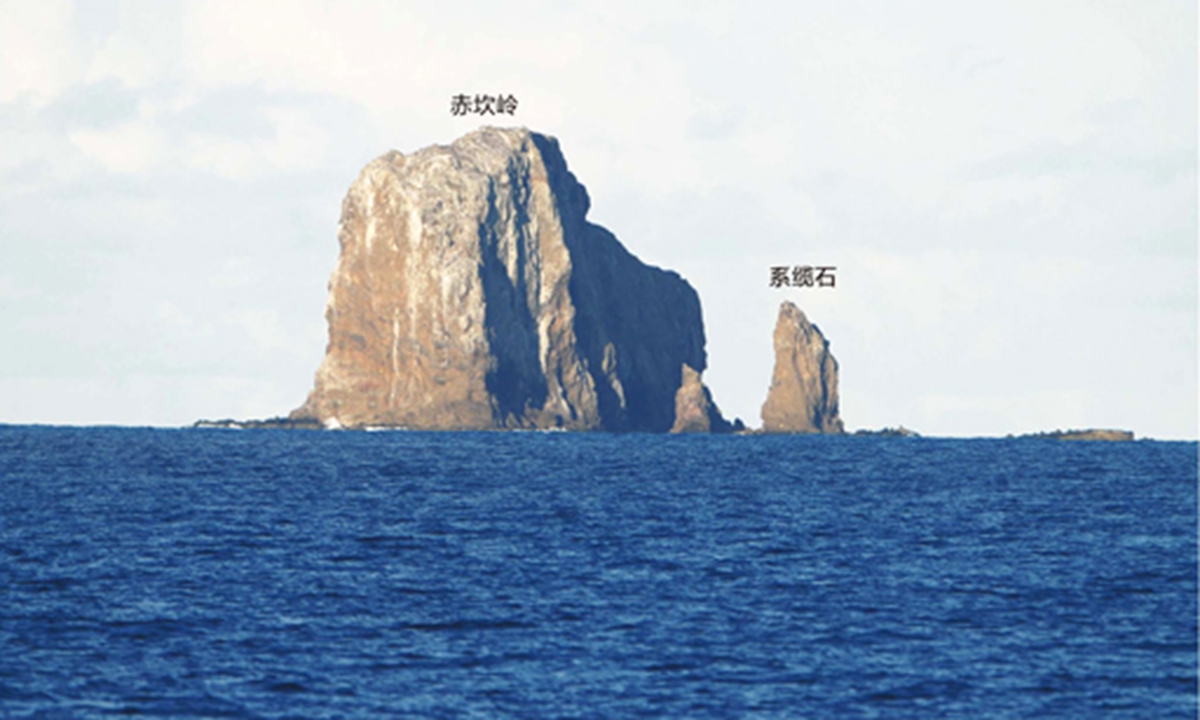
A full view of Chiwei Yu Photo: Chinese Foreign Ministry
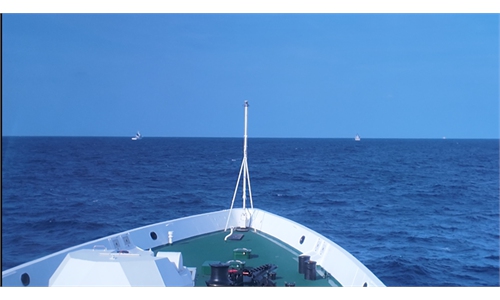
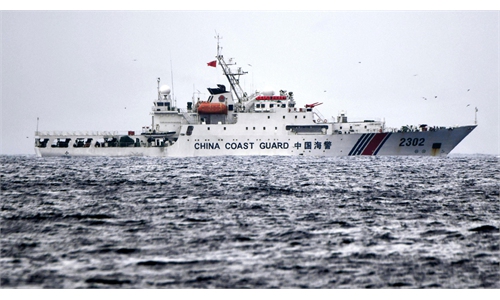
According to the China Coast Guard (CCG), on July 7, Japanese fishing boat Zuihou Maru intruded into the territorial waters of China's Chiwei Yu. CCG vessels took necessary control measures to warn and expel the boat in accordance with the law.
This year marks the 89th anniversary of the July 7th Incident, also known as the Lugou Bridge Incident. The choice by the Japanese boat to intrude into China's Chiwei Yu waters on a date that carries painful historical memories for the Chinese people has drawn significant attention.
The Japanese boat's intrusion on this particular day constitutes an organized provocation, reflecting the resurgence of militarism in Japan and posing a tangible threat, some experts said, noting that it is expected the CCG will further strengthen regular law enforcement and rights protection operations.
According to previously released public information, Chiwei Yu is located at the easternmost end of Diaoyu Dao and its affiliated islands. It has an irregular triangular shape and is about 110 kilometers from Diaoyu Dao.
The island is approximately 484 meters long and 194 meters wide, covering an area of around 0.065 square kilometers. Its highest elevation is about 75 meters, and its main body has a tower-like formation.
The island features a bedrock coastline with steep cliffs, while reefs are widely distributed along its northern and western sides. China has previously announced the standard names of Chiwei Yu, one peak, one sea-eroded pillar on the island, and 10 surrounding islets.
A report by Japan's Kyodo News on Tuesday revealed further details of the incident. According to the report, at around 2:25 am on Tuesday, two CCG vessels entered waters near China's Diaoyu Dao. Japan Coast Guard's 11th regional headquarters in Naha claimed that both Chinese vessels were equipped with shipborne guns. The report said the CCG vessels declared China's position and "approached the Japanese fishing boat." Japanese side also claimed that two additional Chinese vessels equipped with shipborne guns were found in the contiguous zone outside Diaoyu Dao.
The report claimed that "including the contiguous zone, Chinese government vessels have been spotted around the Senkaku Islands (Diaoyu Dao) for 235 consecutive days."
"Although Japan has released limited information, based on recent public reports, China's law enforcement presence for rights protection activities in direction of the East China Sea has been strengthened," Yang Xiao, a research professor at the Institute of Peaceful Development under the Chinese Academy of Social Sciences, told the Global Times on Tuesday.
Yang said Japanese reports indicated that four CCG vessels were operating around Diaoyu Dao and surrounding waters, continuing China's practice of conducting regular rights protection and law enforcement missions in formation.
He noted that recently, the CCG's Xiushan vessel formation replaced the Daishan vessel formation and continued lawful patrols in waters east of China's Taiwan island. This indicates that the CCG has expanded areas of regular law enforcement operations, strengthening patrols in waters under Chinese jurisdiction where Japan attempts to create disturbances, and continuing the approach of "where there are infringements, there will be rights protection."
Yang also analyzed the characteristics of Japan's latest provocation. He said that although the Zuihou Maru appears to be a fishing boat, it is actually a "frequent participant" in intrusion into waters around China's Diaoyu Dao.
"Japanese fishing boats that use the name of fishing associations to engage in provocative infringement activities around Diaoyu Dao are backed by Japanese right-wing forces," Yang said. "To some extent, they are a professional force carrying out infringement activities funded by Japanese right-wing groups, performing a role similar to that of a 'maritime militia.'"
The Japanese "fishing boats" that have repeatedly trespassed into the waters surrounding Diaoyu Dao may appear to be civilian vessels engaged in illegal fishing, but in reality, they are part of a carefully orchestrated political performance. Behind these frequent symbolic incursions lies a network of Japanese right-wing politicians, vested interests linked by political funding, and elements within Japan's official establishment working in concert to challenge China's sovereignty.
How does this network operate? Who are the familiar faces behind these repeated provocations? In the second instalment of our series Patrolling the Diaoyu Dao, Global Times reporters traced the Japanese "fishing boats" that repeatedly appear in China's maritime rights protection reports, uncovering the truth behind this recurring spectacle of "check-in style" infringement.
Previous official statements from the CCG showed that the Zuihou Maru has repeatedly intruded into the territorial waters of China's Diaoyu Dao and affiliated islands in recent years. In 2025, the vessel intruded into the territorial waters of Diaoyu Dao and Chiwei Yu respectively and was warned and expelled by CCG vessels.
"The fact that the Zuihou Maru chose July 7 to intrude into China's territorial waters around China's islands and reefs further demonstrates that this is not simply an ordinary Japanese fishing boat," Yang said. "Its blatant provocation represents, to some extent, the growing arrogance of Japan's 'neo-militarism.'"
Meanwhile, Japan has recently repeatedly hyped China's normal activities in the East China Sea.
China firmly opposes Japan's disruption of the legitimate activities of Chinese research vessels and has lodged serious protests with the Japanese side, Chinese Foreign Ministry spokesperson Mao Ning said on Tuesday in response to a question about the Japanese side claims that a Chinese marine research vessel entered the Japan's so-called exclusive economic zone near Kume Island on July 3.
Diaoyu Dao and its affiliated islands have always been part of China's territory. It is fully within China's sovereign rights to have Chinese research vessels carrying out activities in the adjacent waters of Diaoyu Dao, which is legitimate, lawful and beyond reproach, Mao said on the Japan Coast Guard's claim that a Chinese maritime survey vessel had entered Japan's exclusive economic zone near Kume Island in Okinawa Prefecture on July 3 and extended a wire into the sea, and a Japanese patrol ship immediately radioed the Chinese vessel to demand a complete halt to the operation.
RELATED ARTICLES