Chinese investments contribute to country’s development in various sectors: envoy
55 years of China-Rwanda friendship marked in Beijing
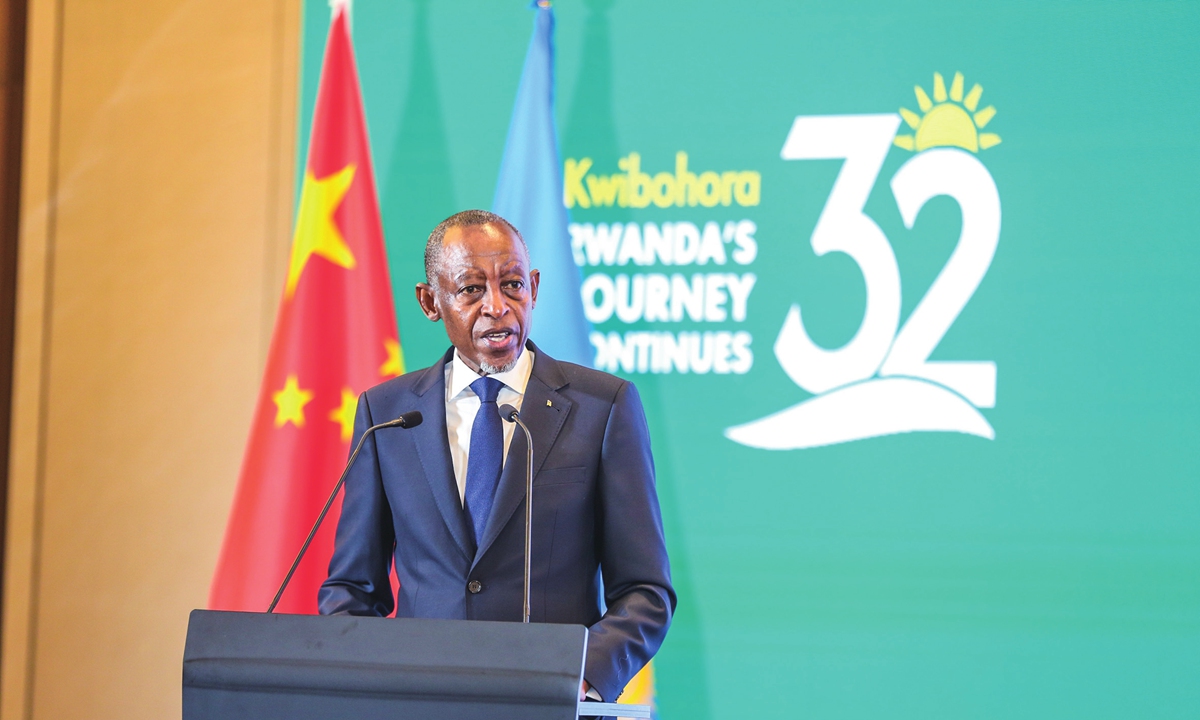
Rwandan Ambassador to China James Kimonyo gives opening remarks at the Kwibohora32 in Beijing on July 3, 2026. Photo: Courtesy of the Embassy of the Republic of Rwanda in China
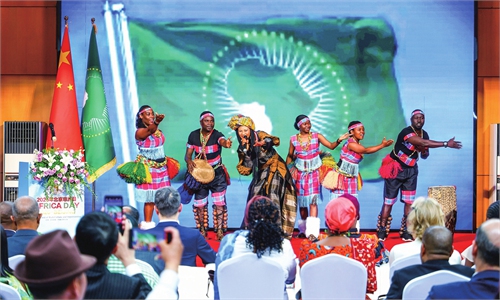
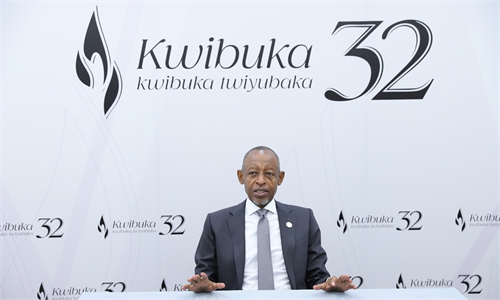
The Embassy of the Republic of Rwanda in China hosted the 32nd Anniversary of Rwanda's Liberation (or Kwibohora32) in Beijing on July 3, where Rwandan Ambassador to China James Kimonyo underlined the role of Chinese investments in Rwanda's development in infrastructure, energy, manufacturing, mining, healthcare, agriculture, education, technology, and many other sectors.The east-central African country marks Liberation Day every year on July 4, when the Rwandan Patriotic Army ended the 1994 Rwandan genocide against the Tutsi.
Ambassador Kimonyo, in his opening remarks, paid profound tribute to the heroes and heroines who fought courageously and selflessly, some of whom paid the ultimate price to liberate Rwanda. "Kwibohora is not merely a commemoration of victory over evil, but also a celebration of extraordinary resilience of our people and visionary leadership that enabled Rwanda to rise, rebuild and thrive," said Kimonyo.
He said that Rwanda stands as a testament to what can be achieved with a visionary and accountable leadership that puts people at the center of its political agenda, rallying them around a common purpose and a shared vision for the future.
Over the past three decades, Rwanda has maintained strong economic growth, becoming one of Africa's fastest-growing economies.
Kimonyo expressed the mission's appreciation and gratitude for countries and partners who have contributed to the country's growth, and particularly underscored the relations between the Republic of Rwanda and the People's Republic of China that have existed for 55 years.
The ambassador highlighted a few important areas of bilateral cooperation. China stands as top source of Foreign Direct Investment to Rwanda and largest trading partner. Chinese investments have contributed significantly to Rwanda's development in infrastructure, energy, manufacturing, mining, healthcare, agriculture, education, technology, and many other sectors.
As for tourism, Rwanda has increasingly become one of the preferred destinations for Chinese travelers, he added.
Liu Xianfa, the Special Representative of the Chinese Government on African Affairs, gives a speech at the Kwibohora32 in Beijing on July 3, 2026. Photo: Dong Feng/GT
Liu Xianfa, the Special Representative of the Chinese Government on African Affairs, extended warm congratulations to the government and people of Rwanda over the Liberation Day and expressed sincere gratitude to people from all walks of life who have long worked for China-Rwanda friendship.Over the past more than 30 years, the Rwanda government and people have achieved national reconstruction in a short period of time, and sustained rapid economic growth, blazing a unique path of governance and development. China sincerely wishes Rwanda ever greater success in realizing its Vision 2050, said Liu.
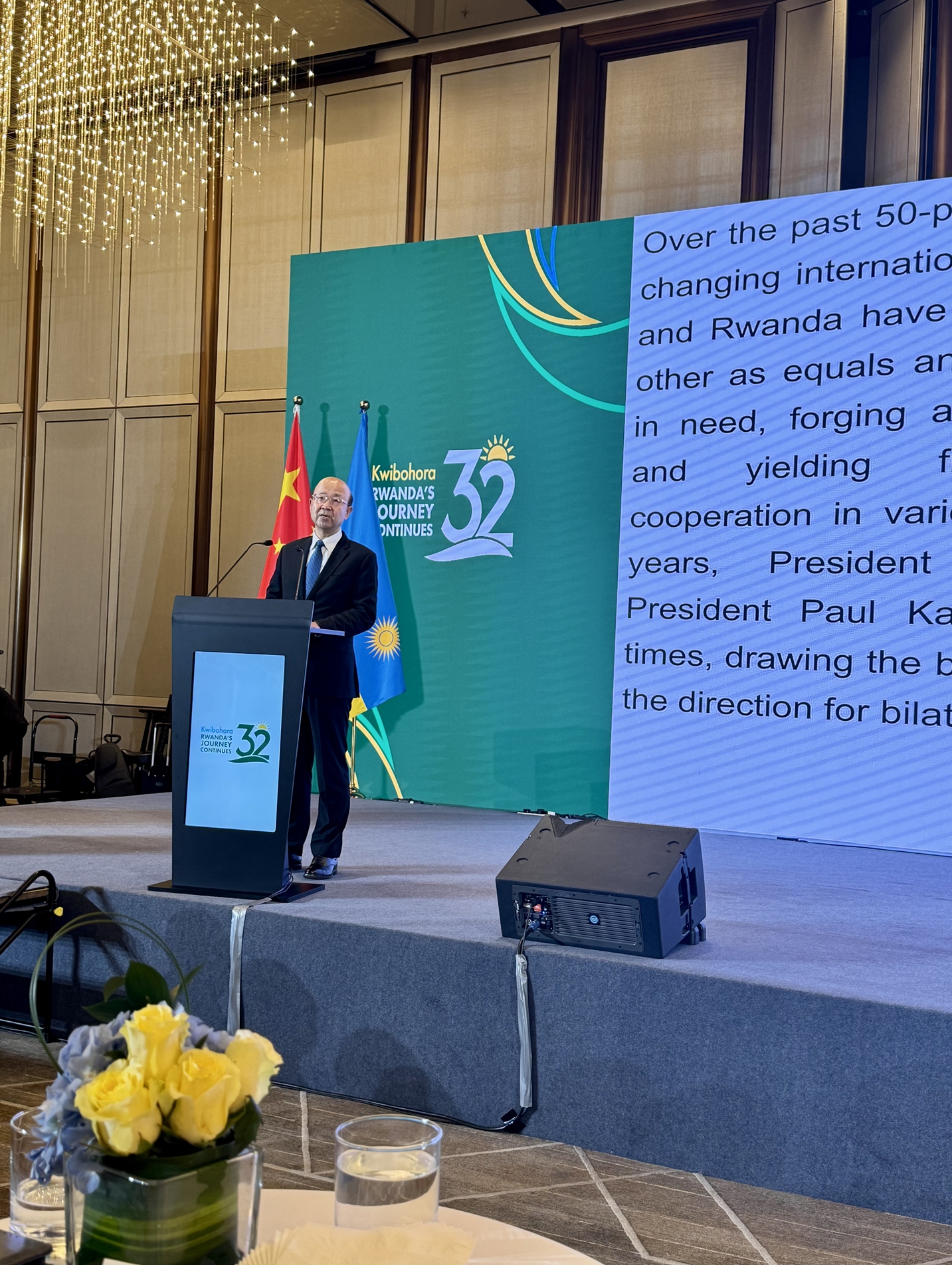
China-Rwanda friendship surmounts mountains and oceans and enjoys a long history. "Over the past 55 years, despite the changing international landscape, China and Rwanda have always treated each other as equals and helped each other in need, forging a brotherly friendship and yielding fruitful results in cooperation in various fields," he said.
Liu noted that cooperation in agriculture and road infrastructure among other areas keeps making new headways.
Examples include the Giseke Dam and Irrigation Project, a major agricultural and climate-resilience initiative located in the Gisagara District of Rwanda's Southern Province, the China-Africa Cooperation Center on Satellite Remote Sensing Application, a joint initiative that provides African countries with free access to high-resolution Earth observation imagery and spatial software, and the 10-kilometer road upgrading project in Kigali, a key economic artery linking the city center, the Masaka area, and the eastern part of Rwanda.
Most notably, China's full zero-tariff policy for Africa has helped Rwanda increase its exports to China by 42 percent year-on-year in 2025, and its export of coffee, tea and other agricultural products to China shows an upward trend, Liu noted.
China is ready to work with Rwanda to expand cooperation in mining, technology and green development, and set a fine example for the high-quality development and China-Africa cooperation, said Liu.
"We believe that African diplomatic envoys and friends present today will continue to actively promote their countries quality products, fully leverage China's zero-tariff policy, and share the opportunities of China's vast market," he said.
From the first handshake between Chinese and African leaders across mountains and oceans during the Bandung Conference in April 1955 in Indonesia, which opened a new era of South-South economic cooperation, to the strong call on jointly building an all-weather China-Africa community with a shared future for the new era voiced at the FOCAC Beijing Summit, China and Africa have always stood in solidarity through thick and thin for joint development, Liu stressed.
In a world of turbulence and transformation, China and Africa should strengthen solidarity and cooperation, jointly safeguard the common interests of the Global South, and uphold international fairness and justice, Liu pointed out.
China will work with African friends to hold high the banner of peace, development, cooperation and win-win, promote the common value of humanity, build a new type of international relations and advance the four global initiatives, said Liu.
RELATED ARTICLES