'Space-sky-ground' monitoring system safeguards rare Tibetan antelopes' breeding and migration journey in Xizang
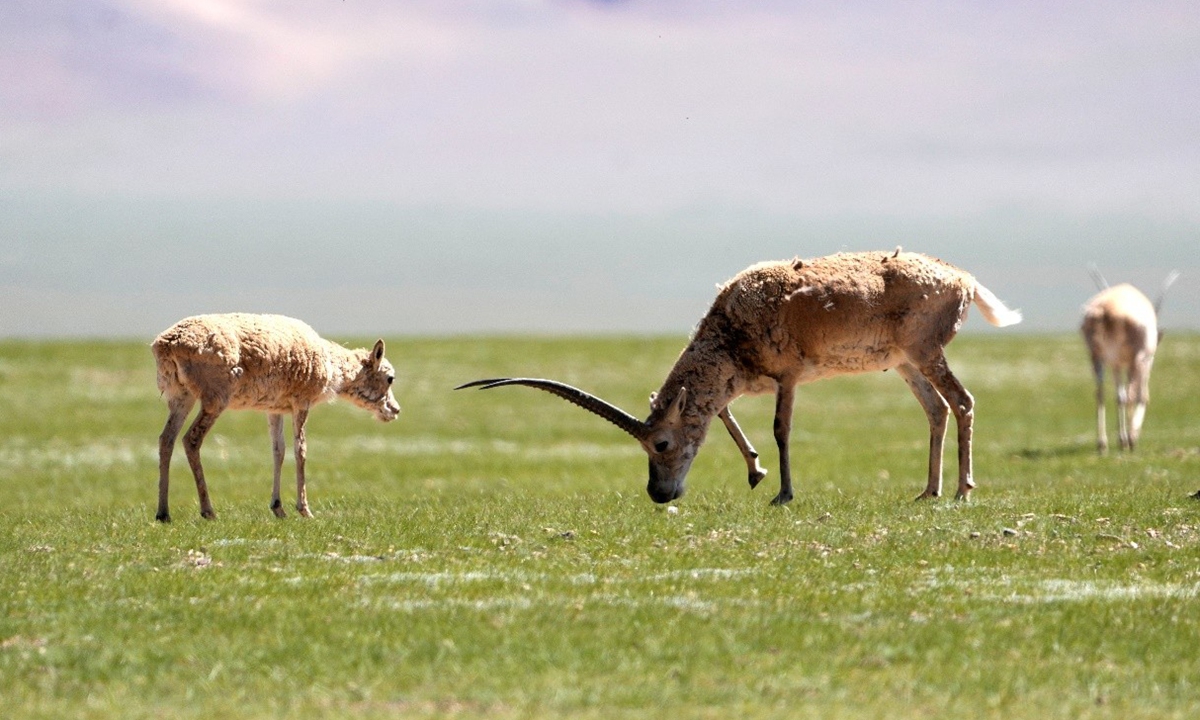
Tibetan antelopes eating grass in Nagqu, southwest China's Xizang Autonomous Region, on July 4th. Photo: VCG
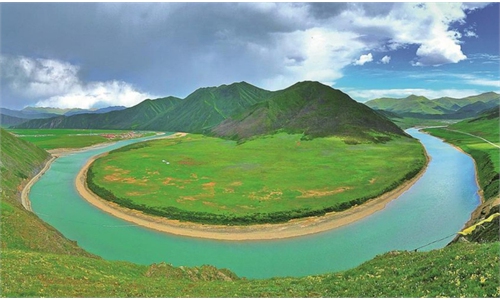
On the grasslands of Nagqu in Southwest China's Xizang Autonomous Region, where large numbers of pregnant Tibetan antelopes arrive from their wintering grounds in April and May to give birth before returning with their newborn calves from July to September, local forestry and grassland authorities and researchers are using an integrated three dimensional "space, sky and ground" monitoring system that uses satellite in the orbit, manned and unmanned aircrafts in the air and monitoring stations on the ground to track and safeguard the animals' migration, breeding and habitat activities, CCTV News reported.Tibetan antelopes in Xizang are mainly found in the Qiangtang National Nature Reserve and surrounding alpine desert and grassland areas. Every year, tens of thousands of pregnant Tibetan antelopes begin their migration to Zonag Lake, which is known as the "delivery room" for Tibetan antelopes at the heart of Hoh Xil around May for birthing and then depart with their offspring in late July.
The integrated system was first developed in the Tangbei area of Sanjiangyuan National Park, which spans 48,700 square kilometers, roughly the size of European country Slovakia. Now, the system includes 14 integrated monitoring stations, according to information provided to the Global Times by Nagqu local authorities on Tuesday, with 11 in Tangbei area, two covering the Selincuo National Nature Reserve, and one in the Qiangtang National Nature Reserve.
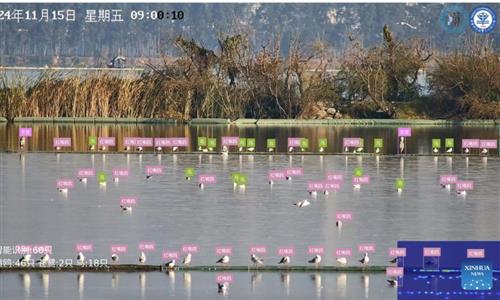
The monitoring system integrates satellite remote sensing imagery with ground-based monitoring stations, enabling all-round monitoring of natural ecological resources, flagship wildlife species, illegal human activities such as unauthorized vehicles and constructions, as well as bush fires, according to local officials.
According to CCTV, the system was established in 2023. Unlike a more traditional patrol model, in which wildlife rangers had to endure harsh conditions on horseback or motorcycle, the tech-equipped system applies high-throughput satellite communication and data transmission technologies designed for areas with weak network coverage. Therefore even in signal blind spots in the Qiangtang National Nature Reserve, it can achieve real-time data transmission around the clock. Key information such as Tibetan antelopes' migration schedules, preferred routes, and stopover and feeding sites can now be fully recorded.
Located at an altitude of about 4,700 meters in Shenzha county, Nagqu, the Luquetang grassland is known as an "maternity ward" for Tibetan antelopes.
A local forestry and grassland authority official explained that the Tibetan antelope population here is relatively unique. Since the calving and breeding area has abundant forage resources throughout the year, Tibetan antelopes generally do not undertake long-distance migrations.
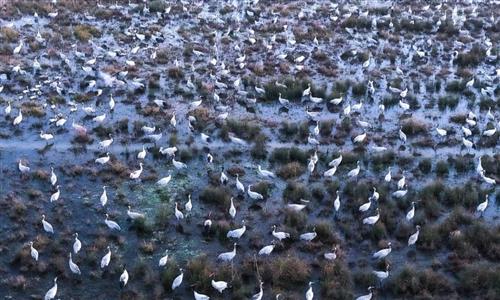
According to a CCTV on-site report, around 10,000 Tibetan antelopes have gathered in Luquetang grassland, with the calving season now nearing its end.
To safeguard the Tibetan antelopes during the calving season, 43 wildlife rangers in Shenzha county conduct 24-hour patrols in key areas, covering more than 200 kilometers every day. They carry milk and feeding bottles to help with lost or abandoned calves. They sometimes bring the particularly weak ones to protection stations for temporary care and release them back into the wild once they are capable of surviving independently, CCTV reported.
Tibetan antelopes, once at the brink of extinction, are listed as a species under first-class state protection in China. Through joint protection efforts over generations, their population has exceeded 300,000, mainly in several national nature reserves in Xizang, Qinghai Province and Xinjiang Uygur Autonomous Region, according to CCTV News.
RELATED ARTICLES