IN-DEPTH / IN-DEPTH
Scholars' Perspectives: Robust organizational system forges CPC into steel-strong cohesive force, constitutes one of Party's greatest strengths: professor
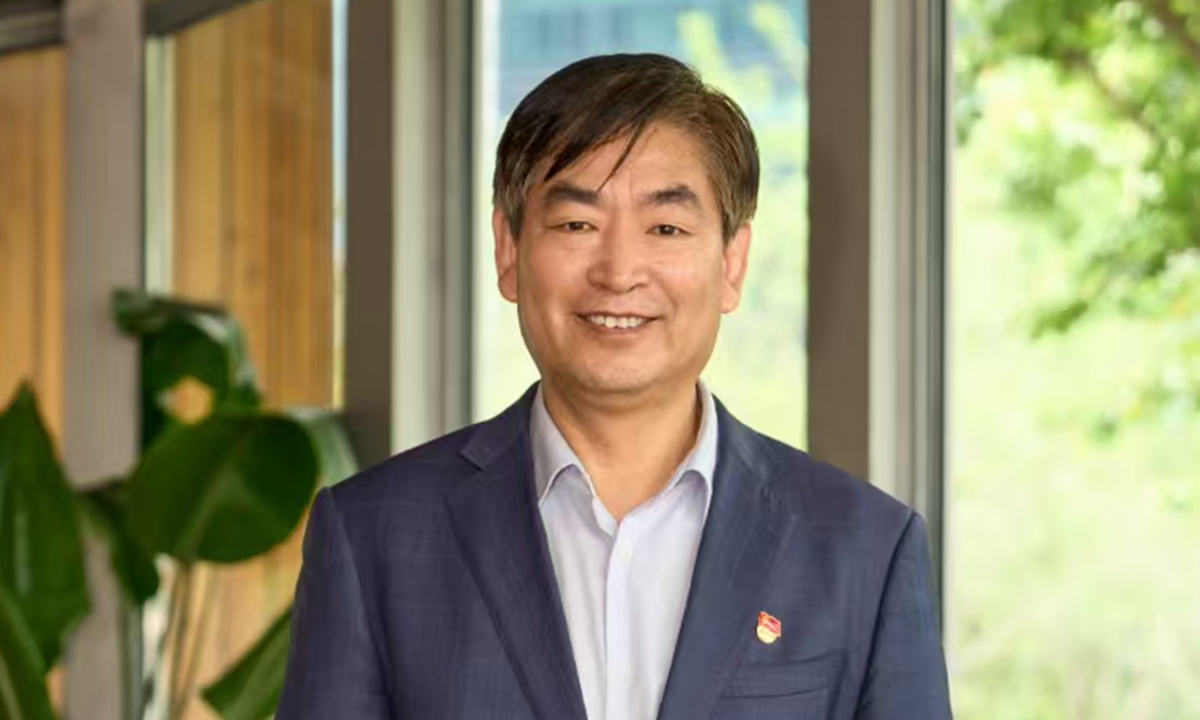
Professor Liu Jingbei, former vice president of the China Executive Leadership Academy Pudong (CELAP)
Editor's Note:
As this year marks the 105th anniversary of the founding of the Communist Party of China (CPC), a national conference on Party building was held in Beijing on June 15, making arrangements for studying and implementing Xi Jinping Thought on Party Building. The Thought reflects intrinsic connections among Party self-governance, Party strengthening and national rejuvenation. Articulated through the "Fourteen Upholds" - and comprising a series of signature major concepts, original ideas, and fundamental theoretical insights - the Thought has made major original contributions to the development of the Marxist theory of Party building, and is of great practical significance and far-reaching guiding significance for strengthening the Party and the country.
Of the "Fourteen Upholds," the first is that upholding the Party's leadership is the defining feature of socialism with Chinese characteristics. The book Xi Jinping: The Governance of China includes several important speeches on upholding and strengthening the leadership of the Party. In the "Speech at the Ceremony Marking the Centenary of the Communist Party of China" included in Volume IV of Xi Jinping: The Governance of China, Chinese President Xi Jinping stressed, "The leadership of the Party is the defining feature of socialism with Chinese characteristics and constitutes the greatest strength of this system. It is the foundation and lifeblood of the Party and the country, and the crux upon which the interests and wellbeing of all Chinese people depend."
Standing at a new historical starting point and guided by Xi Jinping Thought on Party Building, the CPC is advancing from the "world's largest political party" to becoming the "world's most powerful political Party." With unified thinking, firm resolve, coordinated action, and strong fighting strength, it will vigorously advance the great new project of Party building in the new era, thereby providing a strong political guarantee for the noble cause of building a powerful nation and achieving national rejuvenation.
In the 26th installment of the special series "Decoding the Book Xi Jinping: The Governance of China," the Global Times, along with the People's Daily Overseas Edition, continues to invite Chinese and foreign scholars, translators of Xi's works, practitioners with firsthand experience, and international readers to focus on the theme of Xi Jinping Thought on Party Building. Together, they deeply explore the core essence of Xi Jinping Thought on Party Building, as well as its profound practical and global significance, and jointly explore the question: "Why has the CPC remained vibrant after 105 years?"
In the 24th article of the "Scholars' Perspectives" column, Professor Liu Jingbei, former vice president of the China Executive Leadership Academy Pudong (CELAP), shares with the Global Times his understandings on Xi Jinping Thought on Party Building.
GT: In Volume V of Xi Jinping: The Governance of China, General Secretary Xi, in his "Address to the First Session of the 14th National People's Congress," pointed out that "to govern the country well, the Party must first govern itself well. Only a strong Party can guarantee the prosperity of our country." Xi Jinping Thought on Party Building also stresses upholding the Party's leadership as the defining feature of socialism with Chinese characteristics. As China advances Chinese modernization amid a complex international and domestic environment, how does the Party's leadership play its role in steering the overall direction of the country's development?
Liu: Upholding the Party's leadership is the defining feature of socialism with Chinese characteristics. Therefore, the Party's leadership must be implemented comprehensively, systematically across every field, every aspect, and every stage of the cause of socialism with Chinese characteristics. Any absence or weakening of the Party's leadership in any field, aspect, or stage would undermine the Party's strength and harm the cause of the Party and the country.
Upholding the Party's overall leadership begins with upholding the authority of the Party Central Committee and its centralized, unified leadership, which is the supreme principle of the Party's leadership. As China advances Chinese modernization in the face of a complex international and domestic environment, the most fundamental task is to remain steadfast in supporting the "Two Affirmations" and resolutely implement the "Two Upholds."
This constitutes our greatest source of certainty and confidence in responding to all risks and challenges. Regardless of the field, level, department, or institution, all must adhere to the centralized and unified leadership of the CPC Central Committee with Comrade Xi at its core, ensuring that the decisions and directives of the CPC Central Committee are carried out without compromise and that the entire Party, the armed forces, and people of all ethnic groups across the country are united in moving forward together.
GT: The report to the 20th National Congress of the CPC states that "as the largest Marxist governing party in the world, we must always stay alert and determined to tackle the special challenges that a large party like ours faces, so as to maintain the people's support and consolidate our position as the long-term governing party." On the new journey, what are these "special challenges that a large party faces," and how does exercising full and rigorous Party self-governance help address them?
Liu: The "special challenges that a large party faces" on the new journey are what General Secretary Xi has succinctly summarized as the "Six How-tos": how to remain true to our original aspiration and founding mission; how to achieve consistent unity in our thinking, will, and action; how to maintain strong governance and leadership capacity; how to maintain a can-do mindset; how to identify and address our problems in a timely manner; and how to maintain a wholesome political atmosphere.
Addressing these challenges is a hurdle that the Party must overcome in order to fulfill its missions and tasks in the new era and on the new journey. It is also a tough challenge that must be tackled through full and rigorous Party self-governance in response to new circumstances and new requirements.
In my view, four aspects are particularly important in addressing these special challenges. First, we must uphold the Party's overall leadership and the centralized and unified leadership of the CPC Central Committee, while using the Party's latest theoretical innovations to strengthen conviction and forge the Party's soul, so that the entire Party remains united in thinking, firm in will, coordinated in action, and strong in combat effectiveness.
Second, we must strengthen the institutional framework for ensuring that Party members remain true to the Party's original aspiration and founding mission, making this a lifelong commitment for all Party members and officials. Through continuous education and guidance, Party members and officials should cultivate strong Party spirit, constantly reflect on and safeguard their original aspiration, and always remain steadfast in their commitment to the Party's founding mission while faithfully carrying out their responsibilities.
Third, we must take an integrated approach to strengthen Party spirit, improve Party conduct, and enforce Party discipline all together, while coordinating efforts in those regards and in combating corruption. We should also advance the normalization and long-term effectiveness of efforts to improve Party conduct and continuously foster a healthier political ecology within the Party.
Finally - and most importantly - we must improve the institutional framework for the Party's self-reform by establishing sound mechanisms for upholding truth, correcting mistakes, identifying problems, and rectifying deviations, thereby ensuring that the Party remains full of vitality and vigor.
GT: In the report to the 19th National Congress of the CPC included in Volume III of Xi Jinping: The Governance of China, Xi states that "the original aspiration and mission of Chinese Communists is to seek happiness for the Chinese people and rejuvenation for the Chinese nation. This original aspiration, this mission, is what inspires Chinese Communists to advance." Why does Party building place such strong emphasis on "remaining true to our original aspiration and founding mission"?
Liu: The fundamental reason why our Party has stood out amid the repeated competition among various political forces since modern times, won the trust of the people, and achieved remarkable accomplishments is that it has remained unwavering and steadfast in remaining true to its original aspiration and founding mission.
If our Party were to forget its original aspiration and founding mission, it would change its nature and character, losing the support of the people and, ultimately, its future. No matter how far we have come, we must never forget the fundamental question of what the Communist Party of China is and what it is committed to accomplishing. Nor should we lose our identity or our sense of direction amid increasingly complex struggles.
To study and implement Xi Jinping Thought on Party Building and remain true to our original aspiration while keeping our mission firmly in mind, we must uphold the Party's fundamental purpose of serving the people wholeheartedly, stand firmly with the people, and unite and lead the Chinese people in their continuous pursuit of a better life.
GT: Xi Jinping Thought on Party Building emphasizes the need to "keep refining an organizational system that is integrated from top to bottom and capable of effective implementation." Drawing on China's experience in poverty alleviation and rural revitalization, as well as the goals of building China into a great modern socialist country in all respects, what are the advantages of such an organizational system? How can it be developed? What lessons does it offer to countries of the Global South?
Liu: The organizational system of the CPC consists of Party organizations at all levels and of all types, organized in accordance with the principle of democratic centralism. Together, they form an integrated, well-structured, and dynamic system that extends horizontally across all sectors and vertically down to the grassroots, with comprehensive coverage and close interconnection.
This robust organizational system performs multiple functions - including organization, mobilization, education, decision-making, and implementation. It provides the essential organizational foundation that has forged the Party into a cohesive force as strong as steel and constitutes one of the Party's greatest strengths, distinguishing it from any other political party.
Take the fight against poverty as an example. Under the unified deployment of the Party Central Committee, 255,000 village-based work teams, together with more than three million first Party chiefs and village-based officials, were dispatched nationwide. Working side by side with local rural officials, they served on the front lines of the poverty alleviation campaign. At every level - from the province, city, county, township, down to the village - officials worked to ensure that the Party Central Committee's decisions and policies were fully implemented. Their efforts made a major contribution to securing victory in the battle against poverty and vividly demonstrated the remarkable strengths of the Party's organizational system.
The key to building such an organizational system lies in strengthening the political and organizational functions of Party organizations. First, we must ensure that central Party and state organs effectively carry out the "first mile" of implementing the decisions and plans of the Party Central Committee, so that no obstacles hinder their execution from the outset.
Second, we must strengthen local Party committees, which constitute the "middle segment" of implementation, ensuring that there are no bottlenecks or blockages that impede the effective transmission and execution of the Party Central Committee's decisions.
Third, we must reinforce primary-level Party organizations, which represent the "last mile" of implementation, so that the Party Central Committee's policies reach the grassroots without interruption or gaps.
Party organizations at all levels must fulfill the responsibilities set forth in the Party Constitution by faithfully implementing the decisions and plans of the Party Central Committee and effectively organizing and uniting the broad masses of the people across all sectors of society.
Xi Jinping Thought on Party Building has broken the long-standing misconception that Western theories of political party governance provide the only viable model. It offers Chinese wisdom and China's experience for strengthening the governance capacity of ruling parties in Global South countries.
With regard to organizational development, ruling parties in the Global South should place great emphasis on building organizational systems that are systematic, integrated, and cohesive. They should strengthen coordination and linkage among Party organizations at different levels so that local and primary-level Party organizations can fully perform their roles as strong fighting fortresses for publicizing the Party's propositions, uniting and mobilizing the people, implementing the Party's decisions, and advancing national development.
RELATED ARTICLES