Illustration: Xia Qing/GT
China Railway Guangzhou Group Co shipped portable air conditioners and key components worth approximately $52 million via the China-Europe Railway Express in the second quarter, with the shipment of complete units exceeding 100,000, the People's Daily reported on Tuesday.Chinese customs data showed that in the first half, China's air conditioner exports to the EU reached $3.76 billion, a year-on-year increase of 43.2 percent, hitting a record high for the period. Among all categories, exports of installation-free portable units surged by more than 70 percent.
While the export figures may merely represent a single home appliance category, they are a vivid reflection of the complementary and mutually beneficial nature of China-EU economic and trade relations. At a time when global trade protectionism is on the rise and supply chain security is often politicized, batches of Chinese-made air conditioners traveling to Europe via the China-Europe Railway Express not only bring coolness to European consumers in summer but also reveal the true essence of China-EU economic and trade ties.
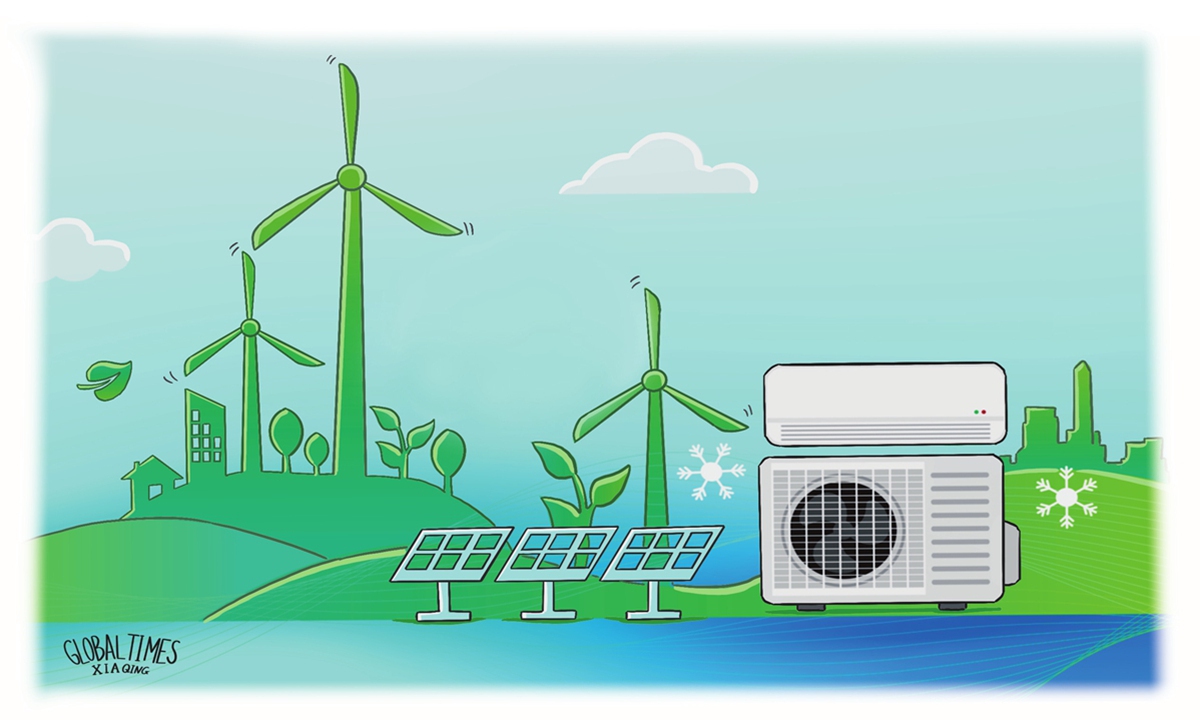
As global warming intensifies, extreme heat waves have hit Europe more frequently, and people's demand for cooling products in summer has kept rising. However, difficulties in renovating old buildings and the high cost of installing traditional air conditioners have long restricted market supply. Portable air conditioners that require no installation and are flexible to move have precisely addressed the needs of European consumers. Such products fall exactly in the field where China's manufacturing sector excels the most.
China boasts a complete industrial system covering the entire upstream and downstream supply chain, from the research and development and production of core compressors to design, assembly and testing. The whole industrial chain can respond in a very short time, and turn innovative ideas into mass-produced goods. It is the comprehensive advantage of China's manufacturing industry accumulated over decades, and a competitiveness that many other regions cannot replicate in the short term.
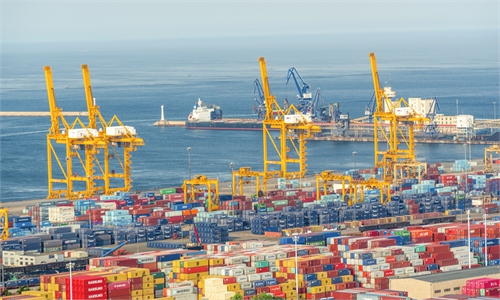
Equally noteworthy is the role played by the China-Europe Railway Express. Compared with sea freight, rail transport cuts transit times to about 15 to 25 days, a vital advantage for highly seasonal products including air conditioners. Compared with costly air freight, rail offers a far more economical option, preserving the cost-performance appeal of Chinese products without inflating logistics expenses. Thus, the trade artery enables Chinese goods to reach European consumers at lower cost and with greater efficiency.
This is exactly how every link of this industrial and trade chain operates in line with market rules. China has mature and efficient manufacturing capacity, Europe has genuine and urgent market needs, and a smooth logistics route connects them. This forms the pragmatic model of win-win economic and trade cooperation rooted in natural complementarities.
Nevertheless, some voices in Europe have repeatedly hyped the so-called "trade deficit" and "trade imbalance," distorting the normal market division of labor and even advocating for trade barriers and tariffs to raise entry thresholds for Chinese products.
Yet booming air conditioner exports prove that trade barriers that defy market forces are ultimately futile. They can neither eliminate European people's real demand for summer cooling nor create alternative supplies with equivalent cost performance in Europe. Distorting market choices through tariffs or other measures will never boost Europe's local industries. Trade protectionism brings no fair competition, but only efficiency losses and heavier livelihood burdens.
In the history of China-EU economic and trade cooperation, countless similar stories have played out, covering home appliances, mechanical and electrical products, new-energy equipment and daily consumer goods. All these cases prove a simple yet profound truth: the natural division of labor and complementary advantages based on market rules are the most solid foundation for China-EU economic and trade relations.
Any attempt to split the industrial chain and create barriers cannot reverse the trend of integration between China and Europe. European people's demand for a cool summer will not vanish due to trade barriers, nor will the industrial coordination and logistics networks accumulated between China and Europe over many years be easily shaken.
RELATED ARTICLES