Forcibly reengineering industrial and supply chains is not only expensive, but also against market rules: FM
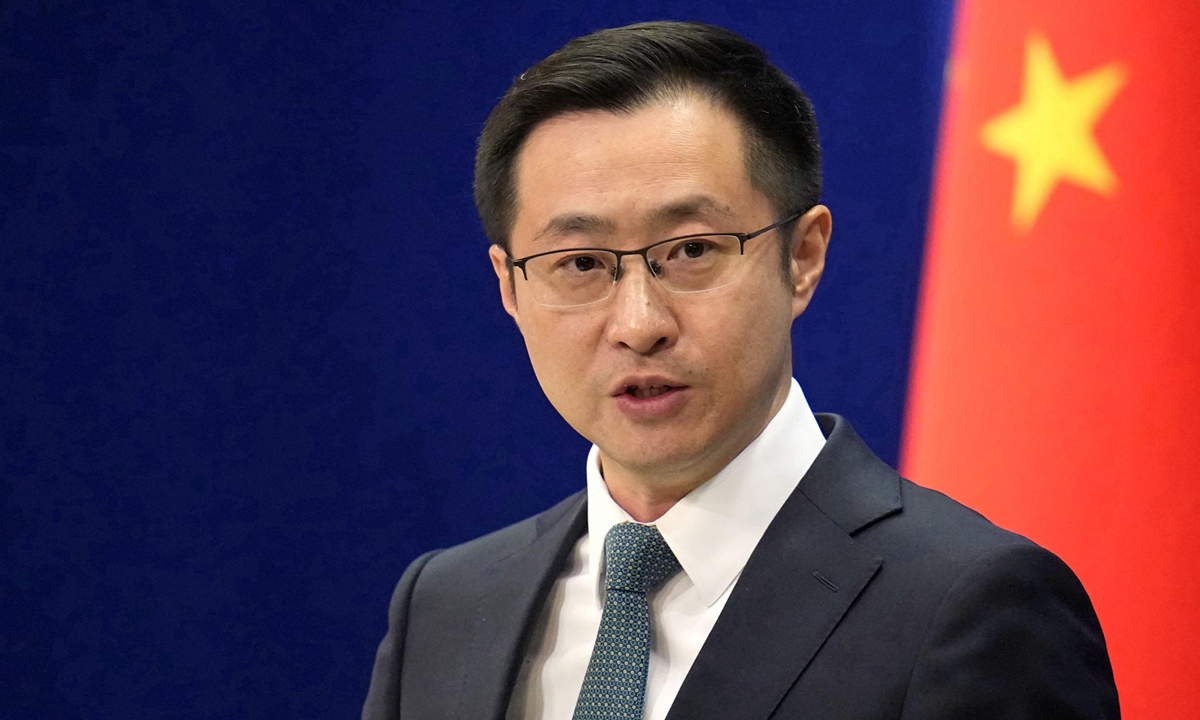
Chinese Foreign Ministry spokesperson Lin Jian
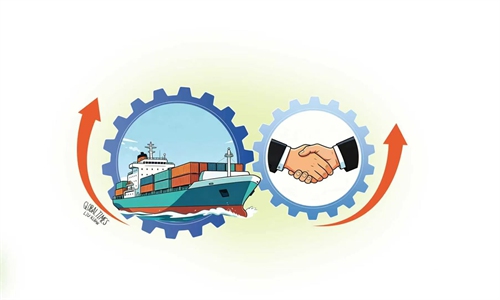
Decoupling, protectionist barriers and forcibly reengineering industrial and supply chains is not only expensive, but also against market rules and the choice of businesses, Chinese Foreign Ministry spokesperson Lin Jian said on Wednesday.
Lin made the remarks at a regular press briefing when asked to comment on a new study cited by the Financial Times, which wrote that Europe and the US would need to invest an extra $23.6 trillion over the next 25 years to end their reliance on China in critical industries by 2050 and that it is impossible to replicate the industrial and supply chains in the short run.
Eventually it will cost everyone more and deliver less, Lin warned.
Lin said the argument mentioned actually reflects how deeply interconnected and mutually complementary global industrial and supply chains are, and that we all belong to one community with common stakes.
A true sense of security comes from cooperation, not isolation. Keeping the global supply chain safe, stable and unimpeded is the shared responsibility of all countries, Lin said.
China remains committed to high-standard opening up, and will continue to provide quality products and cooperation opportunities for the whole world with its mega-sized market and complete industrial system, the spokesperson said.
We stand ready to work with other countries to resist the logic of bloc confrontation, make the global supply chain win-win, and provide steady impetus for common development of the world, Lin said.
According to a report by the Financial Times on Monday, consultancy EY-Parthenon calculated that replicating the infrastructure, research, software, manufacturing and supply chains currently reliant on China would cost the US $13.7 trillion, the eurozone $9.1 trillion and the UK $800 billion by 2050.
A Chinese expert said the calculation indicates that Western countries' so-called "decoupling" from China is unrealistic and comes with enormous costs.
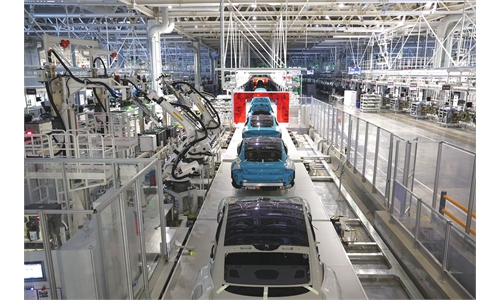
Hu Qimu, a professor at the Maritime Silk Road Institute of Huaqiao University, told the Global Times on Tuesday that China's manufacturing sector is not only large in scale but also deeply integrated into global supply chains, making it difficult for any country or region to replace it in the short term.
As a result, attempts to sever economic ties with China would likely hurt both sides, especially companies and consumers in Europe and the US that rely on affordable Chinese-made products and components, Hu added.
Hu concluded that instead of pursuing confrontation and isolation, the West should seek greater cooperation with China to ensure the stability and efficiency of global industrial and supply chains
Global Times
RELATED ARTICLES