ARTS / CULTURE & LEISURE
Ordinary Chinese voices reshaping literary landscape: China Literature Congress
By Published: Jul 15, 2026 10:58 PM

Chinese Modernization and New Popular Literature and Art
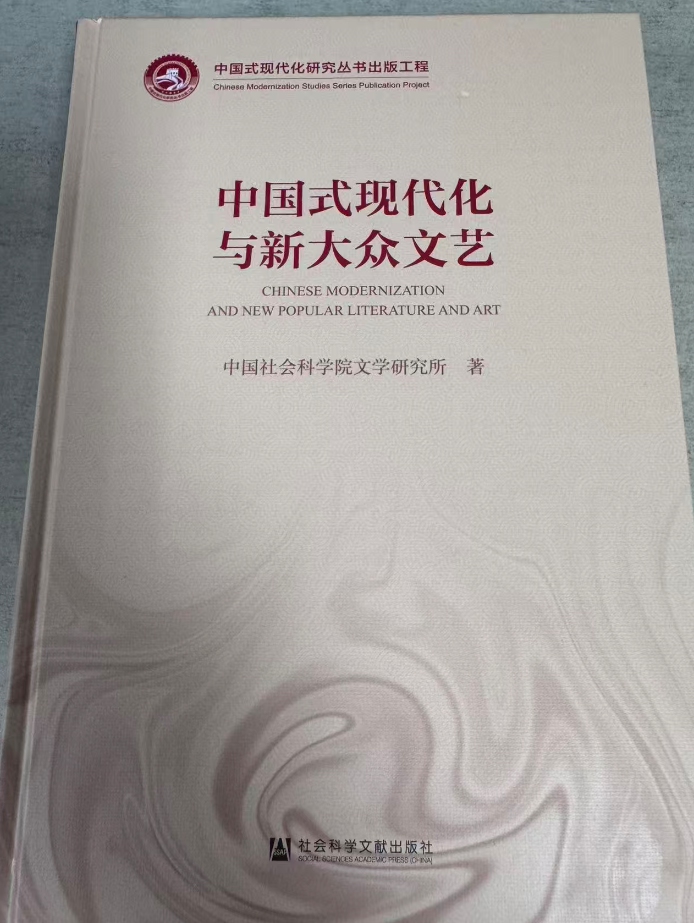
In the brief pauses between delivering food orders across congested city streets, one Chinese delivery rider captured a quiet truth: "People who chase time are also being chased by it." Elsewhere, in Yuyao, East China's Zhejiang Province, a vendor takes a break from her market stall to jot down notes about daily life in her market. These are not trained authors but ordinary people whose words are feeding what is increasingly described as China's "new forms of literature and art for the general public," a term that has appeared not only in cultural discussions but also in the country's policy documents, including this year's government work report.At the Chinese Academy of Social Sciences' first China Literature Congress, held in Beijing on Wednesday, scholars, writers and critics gathered to examine this rising phenomenon. The event coincided with the launch of the first systematic study on the topic, the book Chinese Modernization and New Popular Literature and Art.
Wu Yiqin, vice chairman of the China Writers Association, described the shift as a release of creative energy long latent among ordinary people. The rise of amateur, or "ordinary-person," writing has challenged the traditional monopoly held by professional authors. A cleaner named Wang Ying produced a report titled Polishing the High-Rises, while Wen Xiongzhen contributed poetry about simple domestic life titled Settling on Charcoal Fire. These works favor unadorned language over ornate style, recording the texture of contemporary Chinese life with raw immediacy.
The appeal lies in authenticity. "The character of people's literature hides in these concrete moments of writing," Wu noted.
Concerns that short videos and artificial intelligence might sideline traditional literature drew firm rebuttals. Wu insisted new digital platforms are not rivals but extensions of literary practice. "This vitality does not dissolve tradition; it expands literature's territory," he said.
Evidence of continued relevance abounds. Adaptations of novels such as Liang Xiaosheng's A Lifelong Journey have reached tens of millions through television screens. Established authors like Mo Yan and Yu Hua connect directly with younger readers via social media platforms. Meanwhile, apps like Xiaohongshu and Douyin have become unexpected wellsprings of new writing, spawning everything from serialized online novels to audio books and multimedia storytelling.
The conference featured a dedicated session on the "digital intelligence era and new paradigms for literary research." Scholars advanced a "greater literature perspective" that dissolves old divisions between elite and popular forms. Online literature, science fiction, and even algorithm-assisted content now fall within the same analytical frame. AI, speakers suggested, need not replace human creators but can open fresh avenues for collaboration between literature and technology.
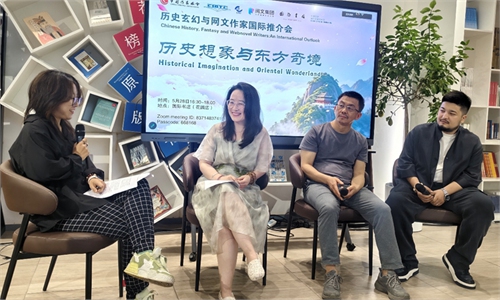
One of the conference's major highlights was the discussion of the international influence of these new forms of literature and art on the general public. Overseas scholars, including Andrea Baldini from Italy, Augustin Alepuz Morales from Spain and their Chinese counterparts, also held profound discussions and shared insights on "civilizational exchange, mutual learning and overseas dissemination."
Xu Yuechun, vice chairman of the China Literature and Art Critics Association, revealed that just days before the Beijing meeting, he led a delegation to Paris for a special seminar. Chinese and French scholars engaged in in-depth dialogue on discourse innovation and international dissemination. "French scholars generally believe that the discussion content was solid and the views were profound," Xu said.
RELATED ARTICLES