Japan's stance, Indian official's remarks on S.China Sea reflect strategic ambitions, opportunistic act: analyst
Japan's stance, Indian official's remarks reflect strategic ambitions, opportunistic act: analyst
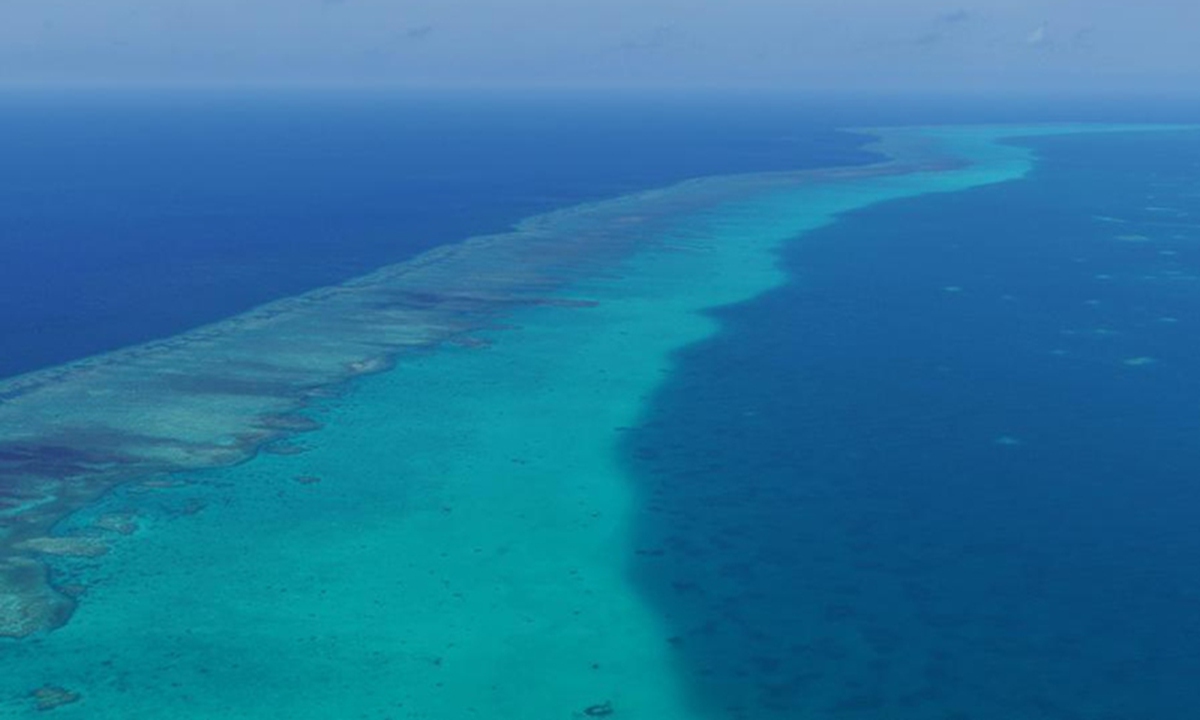
An aerial drone photo taken on May 2, 2026 shows reefs in the territorial waters of China's Huangyan Dao in the South China Sea. (Xinhua/Chen Bin)
A decade after the so-called South China Sea arbitration ruling, political hype and maneuvering surrounding the case have continued, with Japan leading attempts among non-claimant countries to amplify the issue and India becoming the latest to weigh in with references to a "rules-based maritime order." Chinese experts said India's statement showed an opportunistic attempt to gain geopolitical leverage, while Japan's repeated involvement in the issue reflected its own strategic calculations and growing ambitions beyond the dispute itself. They also warned that the South China Sea is not a geopolitical "check-in spot" for external forces seeking to make symbolic appearances.
During a weekly media briefing on Tuesday, Shri Randhir Jaiswal, spokesperson for India's Ministry of External Affairs, responded to a media query about a joint statement issued by the US, Japan, the Philippines and several other countries. "We emphasize the importance of freedom of navigation and overflight, other lawful uses of the sea, and unimpeded commerce consistent with international law, as reflected in UNCLOS," Jaiswal said, according to a release from the ministry's website.
He added that maritime disputes must be resolved peacefully and in accordance with UNCLOS, and described the arbitral award issued 10 years ago as a significant "milestone" and a basis for the peaceful resolution of disputes between the parties.
The Indian official's position reflects a cautious, opportunistic balancing act aimed at avoiding offense to either side. The remarks came in response to media queries, and New Delhi did not join the US-led 14-nation joint statement, Qian Feng, director of the Research Department at Tsinghua University's National Strategy Institute, told the Global Times on Wednesday.
Considering that China-India ties have recently improved, New Delhi wants to prevent the South China Sea arbitration issue from disrupting the recovery. Meanwhile, closer ties with the Philippines, including missile exports, help India expand its regional influence and promote its defense industry. Qian noted that "India is therefore seeking to reassure Manila without overly provoking Beijing, while balancing relations with China, the US and the Philippines."
On Wednesday, Chinese Ambassador to India Xu Feihong reiterated China's sovereignty over Nanhai Zhudao. He said the so-called South China Sea arbitration award is a political farce masquerading as a legal process. "A decade ago, the 'arbitral tribunal' exceeded its authority and abused its jurisdiction. The 'award' it rendered is illegal, null and void," Xu wrote.
Japan's ambition
While India is using ties with the Philippines to chip in to hype the South China Sea issue and expand its regional influence, Chinese experts said the 10th anniversary of the so-called arbitration ruling has been exploited by some countries as a coordinated campaign to advance geopolitical interests. Qian described Japan as "the most disruptive non-claimant actor repeatedly stirring up tensions in the South China Sea."
In addition to joining the US and other countries in a July 12 statement marking the so-called anniversary of the arbitration, Japanese Foreign Minister Toshimitsu Motegi issued a separate statement expressing "support" for the so-called arbitration ruling.
Major media outlets in Japan have continued to intensify their coverage in recent days, creating a coordinated media narrative in which official statements, wire service reports, and nationwide newspapers and television broadcasters amplified the issue in tandem.
Some major Japanese media outlets including The Asahi Shimbun, Kyodo News, Jiji Press, and Mainichi Shimbun also continued to publish extensive coverage framed around narratives such as "China rejects the arbitral ruling," "China's position has remained unchanged for the past decade," and "China has strengthened its effective control."
Japan is using the arbitration issue as a tool to promote its military expansion, push the "China threat" narrative and justify a greater security role in the region. By aligning with the US and the Philippines under the banner of "international law," Tokyo is seeking to legitimize its military transformation and deepen its involvement in regional affairs, Chen Xiangmiao, a research fellow at the National Institute for South China Sea Studies, told the Global Times on Wednesday.
"Japan is using its involvement in the South China Sea issue to push for looser postwar security restrictions and expand its military footprint in Southeast Asia. This is the trend regional countries should be more vigilant about, rather than the rhetoric surrounding the arbitration itself," Chen said.
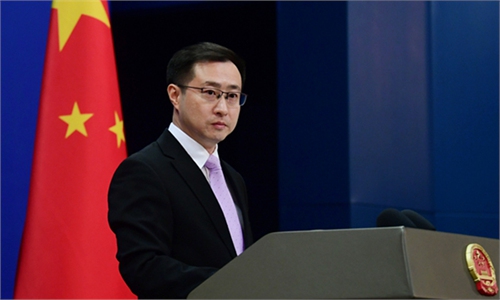
China deplores and firmly opposes the statement made by Japan's foreign minister. Japan is not a party in the South China Sea and is in no position to pass judgment on China's territorial sovereignty and maritime rights and interests in the South China Sea, a Chinese foreign ministry spokesperson said on Sunday.
Japan's support for the illegal "award" was a case of falling into its own trap. "The moment the so-called tribunal classified Taiping Island as a 'rock,' the legal fate of Okinotori was effectively sealed under the very logic endorsed by Japan," Luo Gang, a researcher at the Ministry of Natural Resources' China Institute for Marine Affairs, told the Global Times.
The "award" classified Taiping Dao in the Nansha Qundao - an area of about 500,000 square meters with fresh water, crops and poultry capable of sustaining human habitation - as a "rock" unable to generate an EEZ or continental shelf. By that standard, Japan's Okinotori, consisting of two tiny rocks totaling less than 10 square meters, could hardly justify maritime claims covering hundreds of thousands of square kilometers. The same logic would also call into question the maritime entitlements claimed from many other Japanese islands and reefs, the spokesperson said.
Chen said the South China Sea should not be a geopolitical "check-in spot" for external forces to make symbolic appearances. The so-called arbitration statements and political posturing are merely pretexts for certain countries to advance their own geopolitical calculations and their involvement will not help resolve disputes.
China will continue to safeguard its legitimate rights and interests and promote solutions for a fair and reasonable maritime order. Regional countries should also remain vigilant against efforts to turn the South China Sea into a new arena for geopolitical rivalry, said Chen.
RELATED ARTICLES