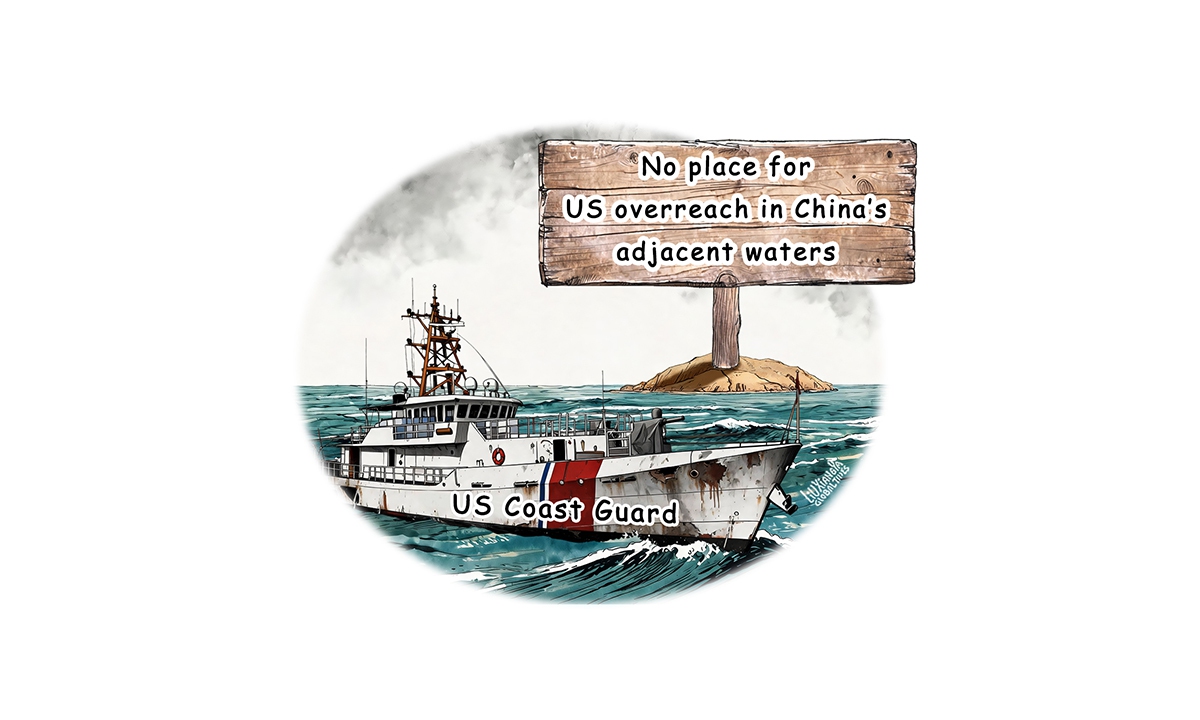
Illustration: Liu Xiangya/GT
With its conventional naval forces stretched thin by persistent crises in the Middle East, Washington is hastily dispatching a handful of small Coast Guard cutters to the Western Pacific. This move is a textbook attempt at a "pepper-sprinkling" style of distributed deployment across a vast maritime theater. Will it unfold as the US wishes?
According to a Wednesday report from the Wall Street Journal (WSJ), six US Coast Guard (USCG) fast-response cutters previously stationed in the Middle East are now being rerouted to the Western Pacific for rotational deployments out of Singapore and Subic Bay in the Philippines. The WSJ has framed this as "the latest step in Washington's efforts to deter Beijing from moving on Taiwan or South China Sea features."
By pushing the USCG into this theater, Washington is increasingly treating its Coast Guard as a "low-threshold" tool for global intervention. It is a striking irony: The primary responsibility of a coast guard is, by definition, to guard one's own coast, not to cross oceans to police the doorsteps of others. Yet, this painstakingly orchestrated "expedition" will do nothing to alter Beijing's firm resolve or its capability to safeguard its sovereign rights in its home waters.
The strategic desperation behind this move is obvious. As tensions in the Middle East drag on, the bulk of the US Navy's surface combatants remain pinned down in the Strait of Hormuz and the Arabian Sea. Terrified of leaving a "power vacuum" in the Western Pacific, an increasingly anxious Washington has turned to its Coast Guard cutters. By deploying these small patrol boats, Washington hopes to communicate that it has not abandoned the region, aiming to soothe the anxieties of its regional allies regarding America's overstretched strategic commitments.
However, viewing these cutters merely as "placeholders" would be a mistake. Chinese military expert Song Zhongping told the Global Times that the deployment of these vessels is designed to allow the USCG - often described as US "second navy" - to pre-position in the Western Pacific. This allows them to familiarize themselves with complex maritime hydrographic environments, laying both technical and tactical groundwork for future interventions.
This matches Washington's broader strategic blueprints: The USCG has explicitly elevated "maritime domain awareness (MDA) in the Indo-Pacific" to a core priority. In the future, we may see more USCG assets entering these waters for intelligence-gathering or even close-in reconnaissance, Song warned.
Yet, this posturing only highlights the widening chasm between Washington's overextended ambitions and its increasingly fragile domestic realities.
To achieve its grand strategic goals in the Western Pacific with such limited assets is to fall into what could be called a "pepper-sprinkling" logistical black hole. Whether the US has the long-term funding or manpower to sustain and expand such deployments remains a major question. The US naval forces are currently grappling with severe structural crises. Hamstrung by a decades-long shipbuilding decline, maintenance backlogs, and a historic recruitment crisis, Washington's naval apparatus simply lacks the domestic foundation to sustain its "Indo-Pacific" ambitions.
Even more concerning is how Washington in recent years has aggressively integrated its Coast Guard forces into multilateral law-enforcement frameworks in the region. For regional nations striving to maintain diplomatic autonomy, however, welcoming such activities is akin to inviting the sparks of geopolitical confrontation directly onto their doorsteps. Regional capitals must remain clear-eyed.
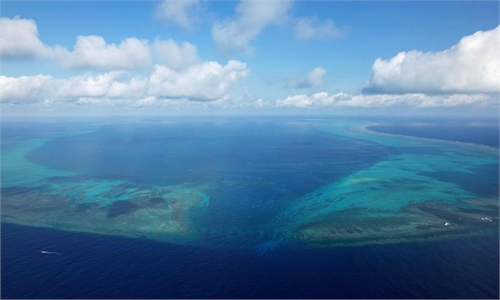
For Beijing, which has established a formidable defense in the South China Sea and the Taiwan Straits, Washington's low-cost "grey-zone interference" is a miscalculation. While the USCG boasts decades of global operational experience and aerial integration, the geography of the First Island Chain completely shifts the balance of power. Within these waters, the China Coast Guard holds an insurmountable physical and numerical advantage.
There is simply no place for US Coast Guard overreach in today's South China Sea and Taiwan Straits. For decades, China has developed a comprehensive, battle-tested, and legally grounded toolkit to handle and neutralize any maritime provocations. The sheer physical strength of China's maritime forces, coupled with Beijing's unwavering resolve to defend its sovereignty and territorial integrity, is a reality too formidable to be shaken by any foreign vessel.
RELATED ARTICLES