China's mid-year report is not only 'scorecard,' but also 'call to action': Global Times editorial
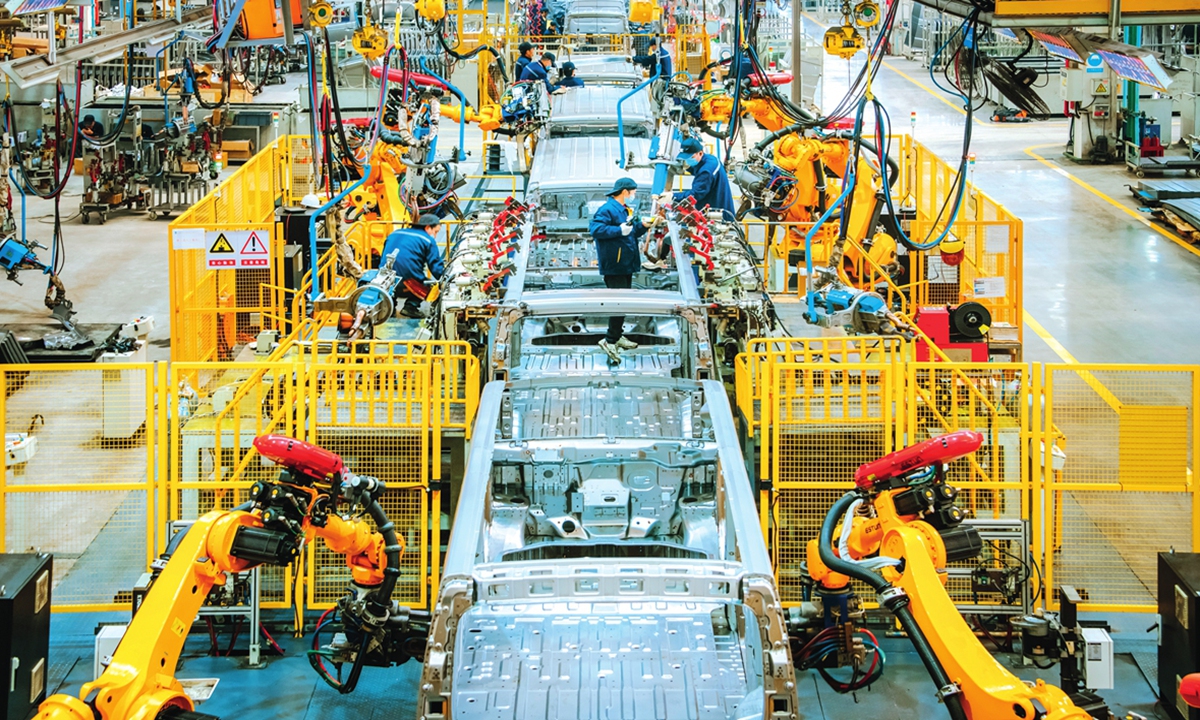
Staff members from a local NEV enterprise catch up on orders on the production line in Ganzhou, East China's Jiangxi Province on December 26, 2023. Photo: VCG
China's economic and social development miracle has been forged by overcoming adversity. China is not only fully capable of meeting its full-year development targets, but will also continue to provide stability, growth, and hope to a volatile world.
China's gross domestic product (GDP) reached 69.57 trillion yuan in the first half of this year, up 4.7 percent year on year at constant prices. This growth rate is in line with the annual economic growth target, and compared with the same period last year, the GDP increased by 3.6 trillion yuan, marking the largest growth for the same period in the past five years. Especially against the backdrop of the global economy that's being severely impacted by geopolitical conflicts in the Middle East, it is particularly remarkable and commendable that China, as such a mega-economy, has achieved its goals.
To assess the "inner strength" of a major economy, the first question is whether it can remain composed in the face of sudden shocks. So far this year, the greatest variable in the international landscape has been the geopolitical conflict in the Middle East, which has continued since the end of February. The conflict has driven up oil prices, disrupted markets, and triggered energy supply "red alerts" in many countries. Yet international opinion - including that of many Western media outlets - has reached a broadly similar conclusion: China's domestic energy supply has been among the least affected, while its exports of new energy products have surged, providing urgently needed resources for countries seeking to accelerate their energy transition amid conflict and turmoil. In addition, as Europe recently experienced extreme heat, Chinese cooling products have been selling like hotcakes in local markets, with some media outlets describing this as China's "cold power." Together with the economic data, these developments paint a three-dimensional picture of the Chinese economy.
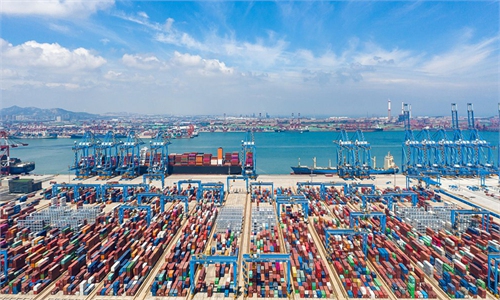
China's foreign trade data released on Tuesday are equally noteworthy. In the first half of the year, China's imports grew by 22.1 percent, 8.7 percentage points higher than the export growth rate, contributing more to overall foreign trade growth than exports. China also recorded import growth from more than 150 countries and regions. This fully demonstrates that, as the world's largest manufacturing nation and second-largest consumer market, China possesses a vast market with enormous potential. The more stable China's economy is, the lower the risk of disruptions to global industrial and supply chains. The more open the Chinese market becomes, the more development opportunities it creates for the rest of the world.
Looking at this mid-year economic report, beyond "stability" and "resilience," the traits of "innovation" and "quality" are becoming increasingly prominent, emerging as highlights of China's high-quality economic development. The contribution rate of new growth drivers exceeds 40 percent, traditional industries are accelerating their transformation and upgrading, the added value of high-tech manufacturing above designated size grew by 13.3 percent year-on-year, and industries related to artificial intelligence (AI) - such as integrated circuit manufacturing and intelligent vehicle equipment manufacturing - all maintained high growth rates above 30 percent. Behind these figures lies the accelerated transition of new quality productive forces from concept to reality. From smart mobility and AI-assisted healthcare to humanoid robots entering the service sector and AI-powered government services improving people's daily lives, these developments all demonstrate China's commitment to "investing in people" as the core of its economic strategy.
Meanwhile, China's consumer landscape is becoming increasingly diverse and sophisticated. In Shenzhen, "Tech Tours" featuring experiences such as drone demonstrations and autonomous taxi rides are attracting a growing number of international visitors. In Chengdu, the booming "Guzi economy" caters to younger consumers' demand for personalized and trend-driven products. In Dali and Altay, the integration of short dramas with cultural tourism is creating new growth opportunities for both industries. At the same time, the consumption potential of lower-tier markets should not be underestimated, with major retail chains and trendy flagship stores expanding into county-level cities. China recently unveiled its first five-year plan dedicated exclusively to expanding consumption, which places greater emphasis on service consumption in areas such as eldercare, childcare, culture and tourism, and healthcare, opening up broad new prospects for consumption-driven growth.
Admittedly, economic growth moderated in the second quarter. Some Western media outlets have seized on the 4.3 percent growth rate, arguing that it represents a significant slowdown from the 5.0 percent recorded in the first quarter and using it to reinforce a predetermined pessimistic narrative. Yet this trend has been global. According to forecasts by international institutions, nearly all major economies experienced slower growth in the second quarter. More tellingly, while the International Monetary Fund lowered its forecast for global economic growth, it raised its projection for China's growth by 0.2 percentage points to 4.6 percent. One forecast went down while the other went up, and that contrast speaks for itself. At the same time, the moderation in second-quarter growth is also a reminder that China's economy is advancing against strong headwinds, facing considerable challenges and uncertainties. But China's economic miracle has always been forged by overcoming adversity. As long as the country's vast market, comprehensive industrial system, abundant talent pool, and innovation capacity are better integrated, China will achieve its annual development targets and will continue to provide stability, growth, and hope to an increasingly volatile world.
2026 marks the beginning of China's 15th Five-Year Plan period. The mid-year economic report is not only a "scorecard" but also a call to action. The huge vessel of the Chinese economy has never feared rough seas. Through steady growth, continued opening-up, and sustained innovation, it has consistently offset global uncertainty.
China has every reason to remain confident in its ability to stabilize growth, unlock new drivers of development, and deliver an even stronger performance in the second half of the year while achieving its annual economic and social development goals.
RELATED ARTICLES