China, Russia pioneer new major-country relations model, expert says on landmark treaty's 25th anniversary
By Published: Jul 16, 2026 09:37 PM

China Russia Photo: Xinhua
"Under the strategic guidance of the two presidents, China and Russia will continue following the purposes and principles of the treaty and expanding mutually beneficial cooperation in various fields so as to bring more benefits to our two peoples and provide more certainty and development confidence for the world," Chinese Foreign Ministry spokesperson Lin Jian said at a press briefing on Thursday, in response to media inquiries regarding the China-Russia Treaty of Good-Neighborliness and Friendly Cooperation, which was signed by the two sides 25 years ago and has been extended.
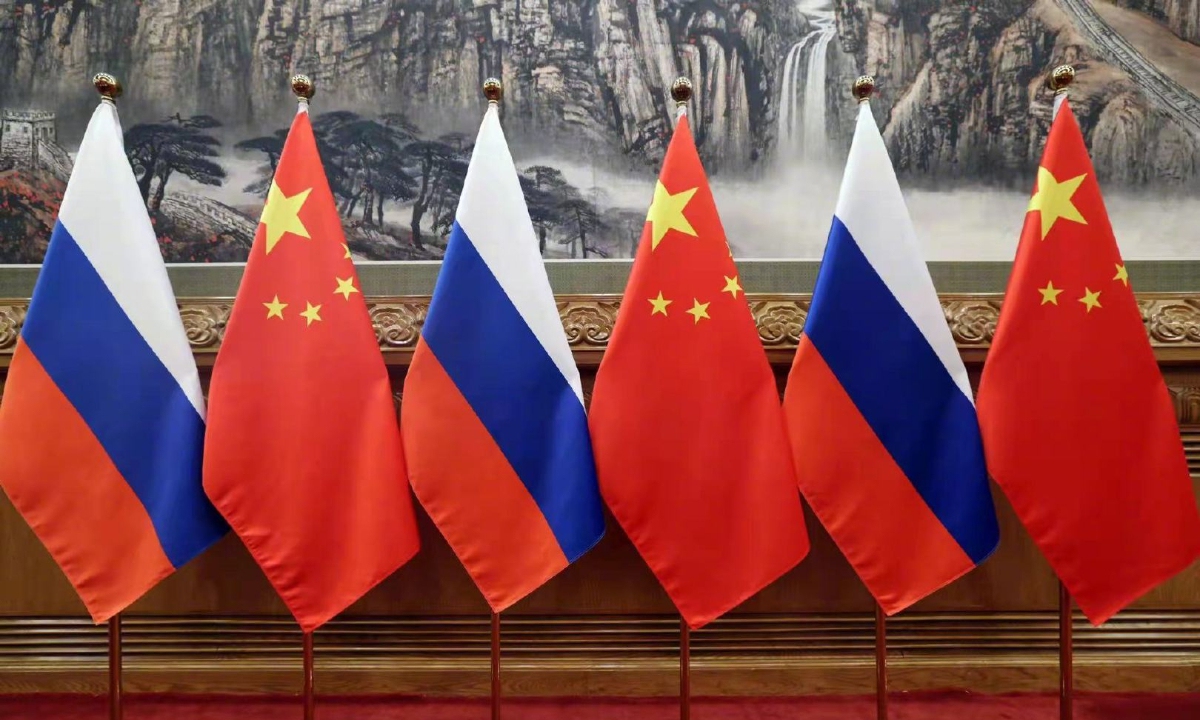
The milestone treaty was signed by the two sides on July 16, 2001, establishing by law the institutional foundation of long-term good-neighborliness, friendship and comprehensive strategic coordination, according to the Chinese Foreign Ministry.
Lin noted that in May this year, the heads of state held a successful meeting in Beijing. The two leaders reached consensus on extending the treaty, jointly steering China-Russia relations into a new phase featuring greater achievements and faster growth.
In an article published Thursday in the Russian daily Kommersant to mark the 25th anniversary of the landmark treaty, Russian Foreign Minister Sergei Lavrov said the treaty has "successfully withstood the test of time" and "furnished a solid legal foundation for the entire multilayered architecture of Russian-Chinese cooperation."
Lavrov said that as a more equitable multipolar world order takes shape, the multifaceted partnership between Russia and China stands as a model for interstate engagement founded on equality, a balance of interests, and mutual advantage.
Earlier this month, the Chinese and Russian embassies in Beijing and Moscow both hosted events to mark the anniversary. 2026 also marks the 30th anniversary of the establishment of the China-Russia strategic partnership of coordination.
Cui Heng, a scholar at the Shanghai-based China National Institute for SCO International Exchange and Judicial Cooperation, told the Global Times on Thursday that the treaty serves as the anchor of bilateral ties, endowing the relationship with strong immunity against external disturbances, and represents a long-term strategic choice rooted in the core interests of both countries.
Over the past 25 years, bilateral ties nurtured under the Treaty framework have stood out for three hallmarks: profound political mutual trust, deeply intertwined practical cooperation, and outstanding resilience and stability, according to the expert.
China has remained Russia's largest trading partner for 16 consecutive years. According to China's Ministry of Commerce, bilateral trade reached approximately $228 billion in 2025, exceeding the 200-billion-dollar threshold for the third consecutive year.
Citing the Russian Trade Mission in China, Russian news outlet Izvestia reported on Tuesday that the volume of trade between Russia and China from January to June 2026 increased by 25.6 percent from the same period last year to $134.175 billion.
In addition, high-level interactions have been regularized, and strategic dialogue mechanisms have been fully established. According to Xinhua, since 2013, the two leaders of China and Russia have met more than 40 times on bilateral and multilateral occasions.
"Regardless of shifts in Western geopolitical strategies, the back-to-back strategic coordination between China and Russia stands clear and open, immune to attempts by external powers to undermine the core of their ties via foreign meddling," Cui said.
In Cui's view, the treaty's far-reaching significance extends well beyond bilateral relations.
"The treaty has allowed China and Russia to break away from the age-old binary logic that confines major powers to either alliance or confrontation," said Cui, adding that by enshrining the core concept of "ever-lasting friendship" in legal text, the two countries have pioneered a new model of major-country relations that adheres to the principles of non-alignment, non-confrontation and not targeting any third party, free from ideological constraints.
Amid surging unilateralism and hegemonism across the globe, China-Russia relations stand as a distinctive model, offering a valuable reference for countries striving to break free from unipolar hegemony and pursue independent development, said the expert.
RELATED ARTICLES