IN-DEPTH / IN-DEPTH
From democracy practice site to zero-tariff trade hub, Namibian delegation sees how CPC governance delivers
An inspiring path
By in Shanghai Published: Jul 16, 2026 09:48 PM

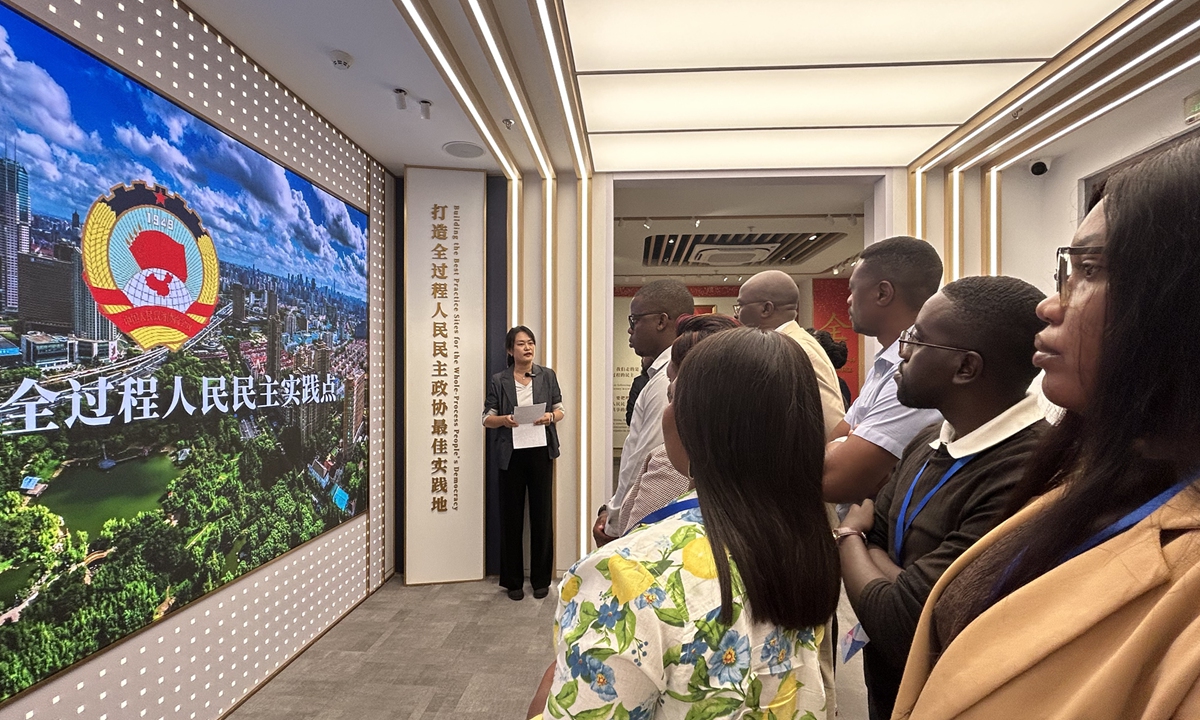
Members of the Namibian delegation visit a practice site for whole-process people's democracy operated by the Shanghai Municipal Committee of the Chinese People's Political Consultative Conference on July 1, 2026. Photo: Huang Lanlan/GT
Editor's Note:
Chinese President Xi Jinping has pointed out, "to understand China today, one must learn to understand the Communist Party of China (CPC)." With the rapid development of China's economy and society, and the steady advancement of the Chinese path to modernization, the notable achievements of the CPC have drawn extensive international attention and scholarly interest. Against this backdrop, the Global Times has launched the "CPC in Global Eyes" column, focusing on the feelings, perspectives and insights of international friends from various fields regarding the CPC's historical path and achievements.
They include those who have toured China, who deeply study the CPC in academic fields, who work, live, study, seek employment or do business in various fields in China, and who pay close attention to the CPC's policies and trends, although they haven't visited the country in person. Through their vivid personal experiences, we aim to present a multifaceted overseas view of the CPC.
In the 15th installment of this series, we follow a delegation of Namibian journalists and scholars on a six-day journey through Shanghai - from a grassroots democracy practice site to a sprawling cross-border trade hub. Through their eyes, we explore how the CPC's governance model translates into tangible improvements in daily life, and how China-Africa cooperation is delivering real, on-the-ground benefits that go far beyond diplomatic rhetoric.
Shanghai is bathed in brilliant sunlight in July. Along a tree-lined street in Shanghai's Changning district stands a low-rise building, quietly tucked into the surrounding greenery.
Into this tranquil setting walked more than a dozen journalists and scholars from Namibia. The building serves as a practice site for China's whole-process people's democracy in Shanghai. On an early July day, a delegation from the southwestern African country came here, hoping to better understand how grassroots governance in China, under the leadership of the CPC, is translated into everyday life in ways that ordinary people can see and feel.
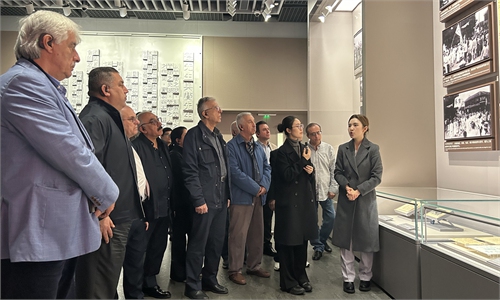
During its six-day stay in Shanghai, the delegation also visited the Memorial Hall of the First National Congress of the CPC, Shanghai Urban Planning Exhibition Center, and the Hongqiao Import Commodity Exhibition and Trade Center, among other sites across the city. From the founding of the Party a century ago to the development blueprint for a new era, and from democratic practices to zero-tariff goods, the delegation members gained an immersive, comprehensive view of China's development path and the tangible ways China-Africa cooperation is taking shape on the ground.
"The trip was impressive," delegation head George Sankwasa Mubita, manager of strategy and organizational performance at the Namibia Institute of Public Administration and Management, said at the end of the visit.
"It inspired us to follow the road that China has taken to grow our countries," he told the Global Times.
Heard and valued
Stepping into an exhibition hall of this practice site for whole-process people's democracy of the Shanghai Municipal Committee of the Chinese People's Political Consultative Conference (CPPCC) - the city's political advisory body - visitors are greeted by display boards and screens that weave together a series of everyday concerns. These include a longer traffic-light interval at a busy intersection, the renovation of a community square in an aging neighborhood, a new plan for an industrial museum, and more.
Pointing to photos and figures on the wall, an interpreter walked the Namibian delegation through the process: members of the CPPCC Shanghai Committee listening broadly to public opinion, gathering those views into proposals, discussing and refining them through consultation, and finally working with relevant departments to put them into action. Around the exhibition hall, delegation members discussed in low voices, pulled out their phones to capture what they were seeing. Here, they saw that people's voices are heard and valued.
The visit then moved to a meeting room at the site, where an open and candid exchange began. One after another, delegation members raised questions: Is there a cap on the number of consultation topics the CPPCC Shanghai Committee takes up each year? How long does it usually take for people's voices to move from proposal to implementation? How can the political advisors speaking only for themselves and overlooking the concerns of grassroots communities be avoided?
Representatives from the CPPCC Shanghai Committee answered each question in turn. In response to the concern about CPPCC members representing only personal views, for instance, they explained that an individual political advisor's opinion cannot simply be turned into a policy proposal. It must be grounded in extensive visits to local communities and broad outreach to the public, then discussed across multiple departments and refined through layers of consultation before it becomes an official document. "That prevents personal or group interests from overriding people's livelihoods."
These lively cases and detailed explanations gave the delegation a deeper understanding of China's governance structure. They also gained a more concrete sense of China's whole-process people's democracy.
"I've heard about the whole-process people's democracy, but today I had the privilege to listen to them explain the process even better. What [China] has achieved is visible," Mubita told the Global Times at the practice site.
"There is the conceptualization that democracy is only when you do it in a particular way. However, democracy is how people organize themselves in the interest and to the benefits of their people. That's what should matter most," said Mubita. "The Chinese system has worked for the Chinese people. That is a sign [of democracy]. We are inspired when we look at how [China] has done it."
After the visit, Mubita, on behalf of the entire delegation, wrote in the guestbook of the site. "With great appreciation, the Namibian delegation expresses our profound gratitude for the consultation accorded to us," he wrote. "We have gained great insight on the operations of the CPC and its mandate. We appreciate the work that the CPC and the CPPCC continue to do to improve the lives of the people of China."
Zero tariffs, more opportunities
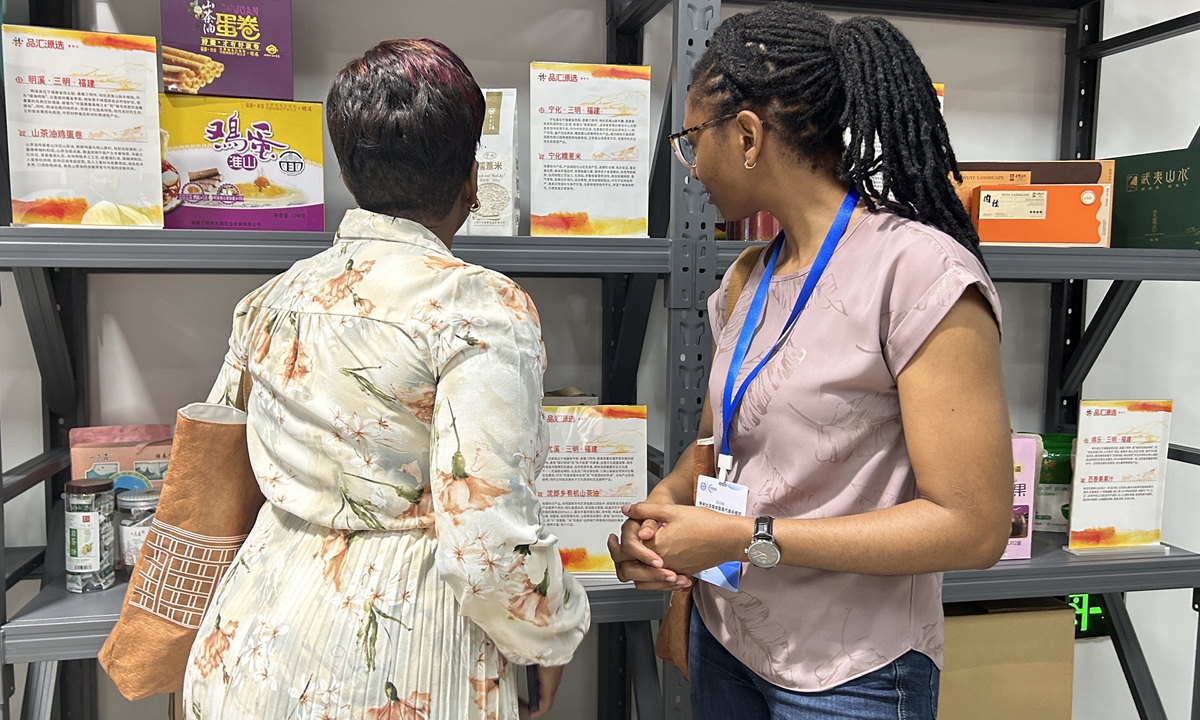
Two members of the Namibian delegation look at some products being showcased at Hongqiao Import Commodity Exhibition and Trade Center in Shanghai on July 2, 2026. Photo: Huang Lanlan/GT
The next morning, the delegation headed to the Hongqiao Import Commodity Exhibition and Trading Center. Located just a short distance from the China International Import Expo venues, the center is a large, year-round platform for exhibition and trade, built around bonded warehouses, commercial experience zones and office space.Stepping inside, delegation members seemed to find themselves in a kaleidoscope of global goods. More than 80,000 products from over 120 countries and regions are on display here - from wines and coffees sourced around the world to handicrafts from Belt and Road partner countries, as well as agricultural products from China's rural regions.
In the livestream e-commerce area, streamers behind glass curtain walls were enthusiastically showcasing products to their online audiences, adding an element of novelty and intrigue for the visitors.
Obrein Muine Samahiya, an economics professor at the University of Namibia, lingered for quite some time in the imported goods exhibition area, where products from African countries also have a place on the shelves.
"Everything is so nice and great. It's just like one global village," Samahiya told the Global Times. The professor said he was particularly interested in the e-commerce section. "I like the fact that almost everything is going online now, so it becomes easier for everyone around the world to trade, which is amazing."
China's development is delivering tangible, measurable benefits to its partners around the world as well. Since May 1, China has fully implemented a zero-tariff policy for all products from 53 African countries with which it has diplomatic relations, becoming the first major economy in the world to offer unilateral, full-coverage zero tariffs to these nations, reported CCTV on July 12. The move has further lowered the threshold for African goods entering the Chinese market.
According to Shanghai Customs data, by late June the total value of imports from Africa benefiting from the policy had exceeded 1.2 billion yuan ($177 million), with tariff reductions reaching 120 million yuan, according to the report.
For Namibia, that could mean more opportunities. Samahiya said Namibia exports large quantities of uranium and beef, and if these products enter China tariff-free, they will greatly boost domestic output and employment as well as in other African nations.
"I would imagine that a lot of employment was created back home in Africa, and a lot of these sectors will be able to grow and bring in more money into government coffers - [which can] go into helping people in education, health care and many other areas," he said.
Mubita was equally attentive to China's booming e-commerce sector, which he thinks Namibia should learn from. "We need to develop our e-commerce," he said. "The exposure you are creating here is excellent, especially in terms of helping people create jobs for themselves through e-commerce from home. That impressed me a lot."
'Learn from a model'
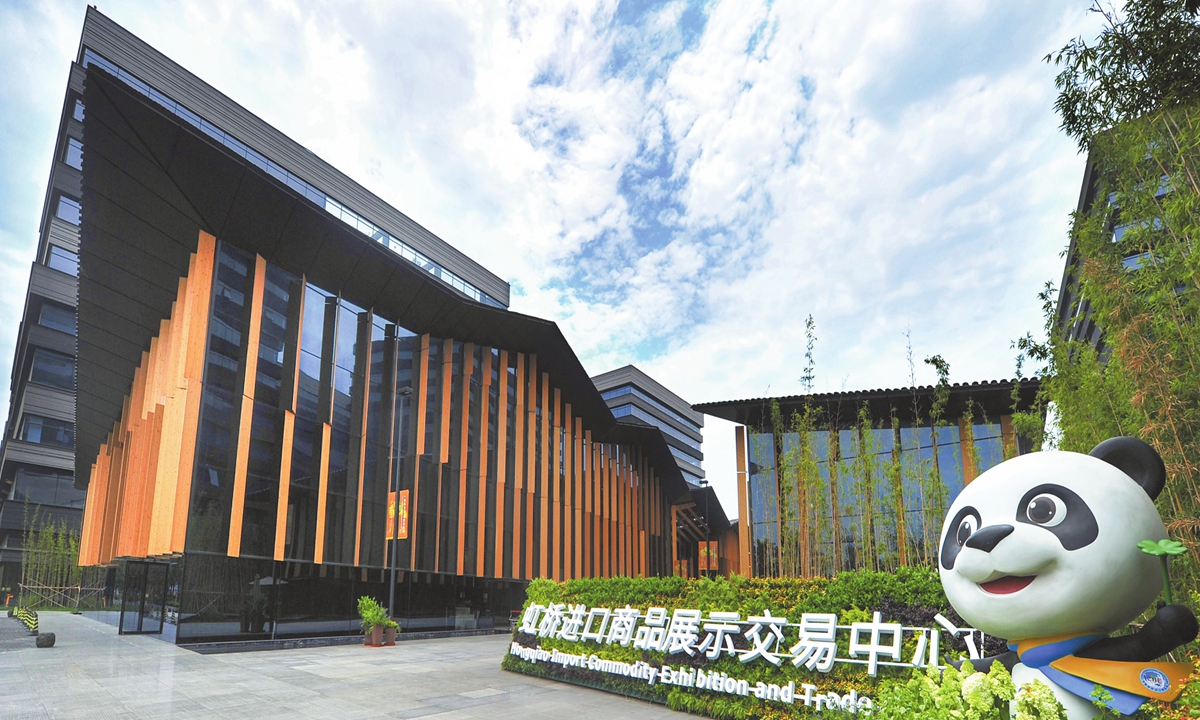
A view of the Hongqiao Import Commodity Exhibition and Trade Center in Shanghai Photo:VCG
For this delegation of media professionals and scholars, the trip was more than a visit - it was a deep dive, a journey to "learn from a model."
Samahiya was in China for the first time, and his purpose was clear from the start. "China is one of the biggest economies in the world, and it has a very good partnership with Namibia," he said. "I am very interested in learning about China's development and governance, and looking forward to [taking] what I can learn from here back home, and perhaps write something that can influence our policy."
What amazed Samahiya most was the CPC's organizational capacity, particularly its policy continuity - a sticking point for many African countries. "I was very much impressed by that, because that builds the foundation upon which development can continue. Without political stability, which ensures everything continues the way it should be, I think a lot of things can go wrong," the professor said.
Mubita, who has visited China before, approached the trip from the perspective of strategic development, trying to understand the secret behind the CPC's success in guiding China's development.
"Africa is not short of plans. We have a lot of plans. But in the end, [many of] the plans are not being fulfilled on time," said Mubita. "We would want to learn more in terms of how China has perfected execution to a point where, in some instances, they have achieved things before [the expected] time. It's a great record, and we want to learn from it."
Sofia Glenda Nel, an executive producer at Namibia's national television station, is attentive to the truthful information dissemination. She said she had noticed the bias in some Western media coverage of China.
"Western news is biased for most countries," she told the Global Times. "As news people, we need to look at different outlets, see the viewpoints of different countries and make an objective decision on what to portray to the people."
The year 2026 marks the 70th anniversary of diplomatic relations between China and African countries. Looking back, China and African countries forged deep bonds in the shared struggle against colonialism and hegemony. Looking ahead, members of the delegation believe that China-Africa cooperation is poised to enter an even broader and more promising chapter.
"Look at the establishment of [the People's Republic of] China in 1949, and now China [transformed] from where it was to the second biggest economy in the world. That gives us comfort and hope, as we Africans can move in a similar path," Mubita told the Global Times. "We think that working with China is needed at a deeper level, so that we are also able to develop in the way that is beneficial to our [African] countries."
RELATED ARTICLES