Head-of-state diplomacy shines at WAIC, fostering ties and advancing global governance consensus
By Published: Jul 18, 2026 12:08 AM
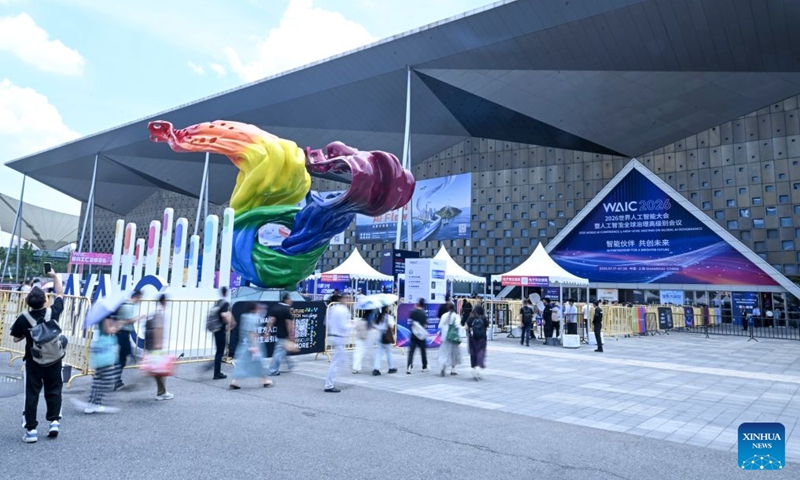
This photo taken on July 17, 2026 shows the exterior view of the Shanghai World Expo Exhibition and Convention Center in Shanghai, east China. The 2026 World AI Conference (WAIC) and High-Level Meeting on Global AI Governance opened on Friday. Themed "AI Partnership for a Brighter Future," the event features six sections: Conferences & Forums, Exhibitions & Showcases, Awards & Competitions, Application Experiences, Innovation Incubation, and Talent Attraction. Photo: Xinhua
Chinese President Xi Jinping on Friday held a series of high-level meetings on the sidelines of the 2026 World Artificial Intelligence Conference (WAIC) and High-Level Meeting on Global AI Governance in Shanghai, sitting down successively with Thai Prime Minister Anutin Charnvirakul, Cambodian Prime Minister Hun Manet, and UN Secretary-General António Guterres. The bustling diplomatic activity transformed the WAIC from a premier showcase of AI technologies and industrial breakthroughs into a vibrant platform for head-of-state diplomacy and global governance coordination.
Analysts said hosting intensive head-of-state diplomatic events in Shanghai, a core hub of reform, opening-up and technological innovation, carries profound meaning. In addition, Friday's high-level meetings embody the innovative model of "technology builds the stage while diplomacy takes the leading role." It not only deepens China's bilateral relations with ASEAN members, but also helps advance inclusive global AI governance centered on the UN mechanism.
Strategic guidance
According to the two separate official releases by Xinhua, during his meetings with the prime ministers of Thailand and Cambodia, President Xi spoke of the long-standing friendship China shares with both nations. He called on China and Thailand, as well as China and Cambodia, to join hands to advance the development of their respective communities with a shared future.
Furthermore, the Chinese leader stressed the need for China to expand pragmatic cooperation with Thailand and Cambodia respectively across traditional and emerging sectors, and work with each country to jointly crack down on cross-border crimes such as online gambling and telecom fraud, according to Xinhua.
He called for the proper handling of border frictions between Thailand and Cambodia and called on the two sides to resolve disputes through dialogue and consultation, with China standing ready to continue playing a constructive role in this regard, per Xinhua.
During their respective meetings with the Chinese leader, the prime ministers of Thailand and Cambodia both expressed willingness to deepen multi-field cooperation with China and spoke highly of China's positive efforts to facilitate the peaceful settlement of the Thailand-Cambodia border conflicts.
Xu Liping, Director of the Center for Southeast Asian Studies at the Chinese Academy of Social Sciences, told the Global Times that head-of-state diplomacy has charted the fundamental course for the advancement of China's ties with both Cambodia and Thailand.
WAIC exemplifies the innovative model of "technology builds the platform, while diplomacy takes the leading role," said Xu, "In addition, AI cooperation is also expected to serve as a vital entry point to further deepen and substantiate China's ties with Thailand and Cambodia going forward."
Furthermore, addressing the sensitive and thorny Thailand-Cambodia border dispute amid the relatively relaxed atmosphere of a tech summit enables all relevant parties to handle differences in a rational and pragmatic manner, which embodies Eastern wisdom and an Asian approach to resolving issues, said Xu.
The year 2026 marks the fifth anniversary of the establishment of the China-ASEAN comprehensive strategic partnership, witnessing the official rollout of the new Plan of Action on the China-ASEAN Comprehensive Strategic Partnership (2026-2030). It also kicks off the implementation of China's 15th Five-Year Plan.
The critical juncture offers a perfect window to align China's development plans closely with the national development strategies of Global South countries and ASEAN members, said Xu. "Thailand and Cambodia's willingness to ramp up cooperation with China mirrors the aspiration of the majority of ASEAN members to leverage China's development dividends and pursue win-win outcomes and common prosperity in the region."
Firm support for UN
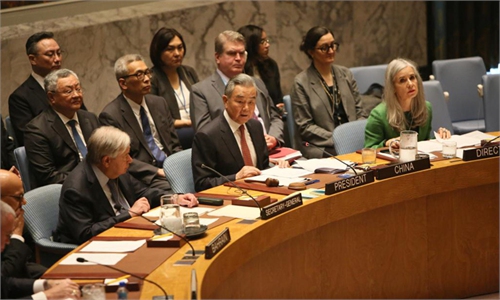
In his meeting with UN Secretary-General Antonio Guterres on Friday, Xi reiterated China's firm support for the UN.
Noting that this year marks the 55th anniversary of the restoration of the lawful seat of the People's Republic of China at the UN, the Chinese leader said China has since been committed to building world peace, contributing to global development, defending international order, and firmly supporting the UN, Xinhua reported.
Xi added that he proposed the vision of building a community with a shared future for humanity and the four global initiatives with one important consideration in mind - to uphold the status and authority of the UN.
Currently, the international landscape is marked by more pronounced changes and turbulence, making it all the more necessary to practice true multilateralism and reinvigorate the status and role of the UN, he said.
Guterres commended China for its steadfast support for multilateralism, the cause of the UN, and international cooperation, saying that China has set an example for the world.
Guterres said the UN will continue to strengthen cooperation with China, oppose unilateralism, protectionism, and hegemonic bullying, safeguard the UN Charter and international law, as well as advance the process toward a multipolar world.
At this pivotal juncture where talks on AI development and UN multilateral governance converge, China, leveraging head-of-state diplomacy as a top-tier platform, has elaborated in a systematic manner its vision for global governance in the AI era, Wang Yiwei, a professor at the School of International Studies, Renmin University of China, told the Global Times.
He added that China's emphasis on the UN-centered global governance architecture will further strengthen the UN's authority and operational capacity.
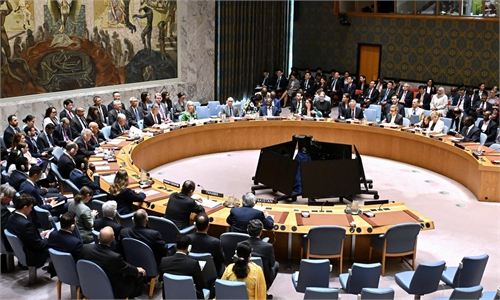
Before the official opening of the WAIC, on Thursday, representatives from 29 countries, including Kazakhstan, Laos, Pakistan, Russia and Indonesia, signed an agreement on establishing the World Artificial Intelligence Cooperation Organization (WAICO) in Shanghai. UN chief Guterres was among representatives from countries and international organizations present at the signing ceremony.
According to the agreement, WAICO will be an independent intergovernmental international organization, which aims to promote international cooperation and global governance on AI, ensuring that AI is beneficial, safe and fair, thereby promoting its healthy and orderly development to benefit all humanity.
President Xi on Friday also announced that in the next five years, China will provide developing countries with 5,000 opportunities in AI training and seminar programs. China will also develop international AI application cooperation centers with the ASEAN, the League of Arab States, the African Union, the Community of Latin American and Caribbean States, the Shanghai Cooperation Organization, and BRICS.
However, some international media, including Reuters and Nikkei, used the term "AI diplomacy" describing the grand gathering in Shanghai, claiming that Beijing seeks a new global AI order, challenging US dominance.
In rebuttal, Wang pointed out that China advocates open, inclusive technology that lets AI benefit all humanity under the vision of "AI for All". In contrast, the US adheres to a mindset of "All for AI", weaponizing AI for geopolitical rivalry and aiming to outpace China in technological competition. Driven by the "America First" doctrine and capital-centric priorities, Washington's approach forms a sharp contrast with China's.
Meanwhile, China's resolute commitment to upholding the UN system underscores that for China and a wide array of Global South countries, the sensible path lies in reforming and improving the existing global governance architecture rather than discarding it to build parallel institutions from scratch, the expert added.
RELATED ARTICLES