Burnham becomes UK's 7th PM in decade, faces severe challenges ahead
By and Li Meng Published: Jul 20, 2026 10:22 PM

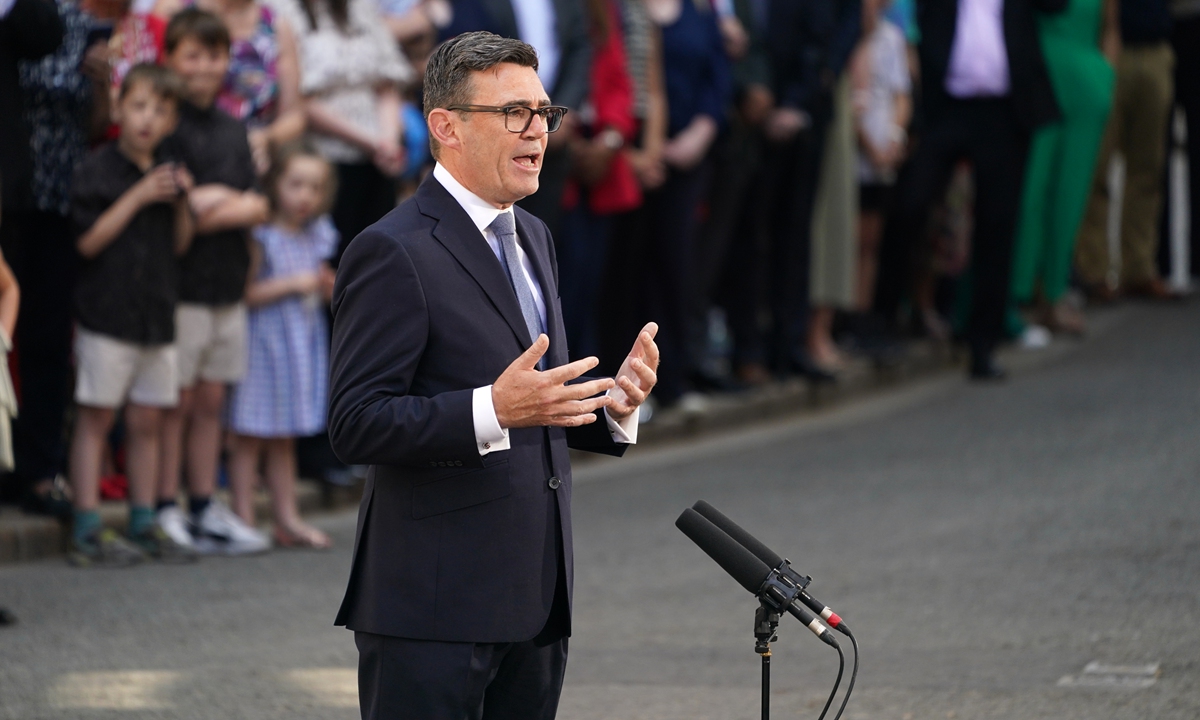
Britain's new Prime Minister Andy Burnham speaks to staff and media at 10 Downing Street in London, Monday, July 20, 2026. Photo: VCG
Andy Burnham officially became Prime Minister of the United Kingdom on Monday following a meeting with King Charles III at Buckingham Palace, succeeding Keir Starmer, who earlier tendered his resignation to the king.
In his first speech outside No 10 Downing Street as prime minister, Burnham said that he is "acutely conscious" he is the seventh PM since 2016, calling this a moment for "reflection and new resolution," the BBC reported.
Burnham pledged to build a new economy, putting "life's essentials back under public control" in order to make them affordable again, and to re-industrialize Britain and "back British industry." He went on to say that later this year, he will lay out a 10-year plan for Britain, according to the BBC.
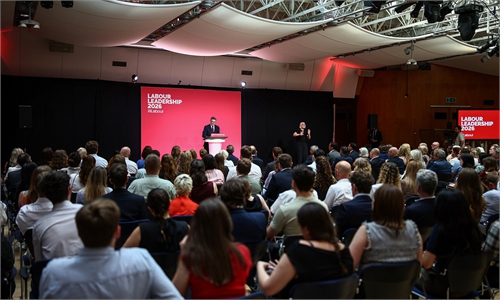
Before becoming the new prime minister, Burnham on Friday became the new leader of the Labour Party. The former mayor of Greater Manchester has won the overwhelming support of Members of Parliament (MPs), trade unions and party branches, making him the only choice to take over from Starmer, according to media reports.
"Once he has unveiled his cabinet… he will have to tackle a long list of problems ranging from anaemic economic growth to a cost-of-living crisis and underperforming utility firms," Reuters commented in a Monday report.
"Can Burnham turn 'Manchesterism' into a practical offer for government?" asked the Guardian in an article, suggesting that Burnham intended to end neoliberalism.
Li Guanjie, a research fellow with the Shanghai Academy of Global Governance and Area Studies under the Shanghai International Studies University, said that Burnham aims to restore Labour's founding political principles through a focus on stronger state capacity.
"When markets malfunction, the state must deploy macro-controls, redistribute resources and lead key sectors essential to public wellbeing such as health and infrastructure… Such policies are expected to be central to Burnham's plans," he said.
With a new occupant moving into No 10, the BBC reports that there are now nine living former prime ministers, a record number.
Labour suffered heavy losses in local elections in May, prompting growing calls within the party for Starmer to step down. On June 22, Starmer announced that he would resign as Labour leader and step down as prime minister once a successor had been chosen.
Li noted that the frequent turnover of UK prime ministers in recent years arises from two factors: rifts between different factions of the ruling party, and a belief within the party that the sitting leader is incapable of managing crises, which activates leadership replacement procedures.
"Even so, all incoming prime ministers require time to grow from political newcomers to seasoned statesmen. Policy missteps stemming from inexperience risk further destabilizing the country's political landscape," Li said.
Days before Burnham took office, Britain nationalized British Steel on Thursday, fully taking over the loss-making company that was previously owned by a Chinese private steelmaker. The Chinese Foreign Ministry urged the UK to earnestly respect market principles and the spirit of the contract, and will do what is necessary to protect its rights.
Regarding his possible China policy, Li said that Burnham is likely to maintain Starmer's approach in the short term.
A BBC report said that "Burnham once pointed to China's high-speed rail network as a model for the North of England. In 2018, he appeared open to what China could offer at a regional level." However, the media outlet also highlighted that as prime minister, the calculation is more complicated.
The UK is facing severe domestic challenges, with critical reforms needed in economy, welfare and healthcare, said Li, "The new administration will likely have to anchor its agenda to tackling homegrown difficulties, rather than seeking to demonstrate diplomatic clout."
Where China-UK relations head next will rely on the Foreign Secretary's appointment and policy worldview. For the time being, the administration may lack the bandwidth to redefine the tenor of bilateral ties, the expert said.
RELATED ARTICLES