Illustration: Liu Rui/GT
Editor's Note:Thai Prime Minister Anutin Charnvirakul paid an official visit to China from July 16 to 20, marking his first trip to China since taking office. The visit comes as China and Thailand continue to advance their vision for the "next golden 50 years" of bilateral relations and the building of a China-Thailand community with a shared future. In an exclusive interview with the Global Times (GT) reporter Liu Xuandi, Chaiwat Meesanthan (Meesanthan), an associate professor of Southeast Asian Studies at the Faculty of Liberal Arts and director of the Institute of East Asian Studies and head of the Asian Studies Department at Thammasat University, Thailand, shared his views on the strategic significance of the visit, the future direction of China-Thailand cooperation, and the factors underpinning the resilience of China-Thailand partnership.
GT: How do you interpret the timing and the significance of this visit?
Meesanthan: Prime Minister Anutin Charnvirakul's official visit to China carries profound strategic significance, both in terms of timing and in the political messages it sends to the wider region. It is his first official trip to China as Thailand's new prime minister, and it comes on the heels of last year's historic visit to China by King Maha Vajiralongkorn, during which both sides clearly reaffirmed their vision for the "next golden 50 years" of Thai-Chinese relations and the framework of a China-Thailand community with a shared future.
The visit of Prime Minister Anutin marks an important step in delivering more tangible results for the vision between the two countries. The new prime minister is expected to carry forward the long-standing tradition of friendship and further deepen practical cooperation with China.
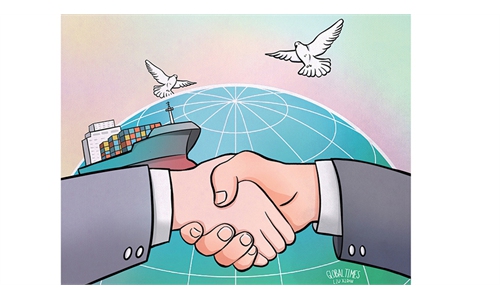
Against the backdrop of a volatile global geopolitical landscape and intensifying major-power rivalry, the timing of Thailand's decision to reaffirm its ties with China reflects a desire to build a strategic "anchor" and signals a deepening level of political trust. The frequency and density of high-level communication between the two countries' top leaders, as well as the advancement of joint statements on building "a community with a shared future," indicate that both sides are moving beyond a conventional strategic partnership toward a relationship that systematically intertwines their political, economic and security futures.
GT: In your view, what are the key highlights of the visit? Looking ahead, which areas are likely to become new growth drivers for China-Thailand cooperation?
Meesanthan: Prime Minister Anutin's five-day official visit to China, covering Beijing, Shanghai and Chengdu, clearly combines high-level political diplomacy with economic and technological diplomacy.
At the same time, the opening of a Board of Investment Chengdu Office and investor outreach events in major Chinese cities reflect Thailand's effort to integrate its economy into China's emerging regional supply chains.
Looking ahead, the areas with the greatest potential to become new engines of growth in China-Thailand cooperation include the digital economy and AI, such as data centers, cloud services, e‑commerce platforms and joint research laboratories, the electric vehicle industry and its related supply chains, green energy and smart infrastructure, as well as smart agriculture and digital logistics. All of these fields are closely aligned with China's "Digital China" strategy and with Thailand's ambition to position itself as ASEAN's regional digital hub.
GT: Prime Minister Anutin Charnvirakul has said that "Thailand and China are as close as one family." The two countries share a family-like bond over the 50 years of diplomatic relations. In your view, what has enabled this enduring partnership to remain resilient and continue deepening over the years?
Meesanthan: The enduring vitality of China-Thailand relations lies in a cooperation model built on mutual respect, consultation and sensitivity to each other's interests and concerns, which embodies the spirit of the "Asian way." This model of cooperation is significant on at least two levels. On the first level, it helps strengthen political trust between the two countries, enabling both sides to handle sensitive issues or strategic differences through mechanisms of dialogue and institutionalized conflict management rather than direct confrontation. On the second level, it offers a template of a "non-bloc strategic partnership" for other countries in Southeast Asia.
At the regional level, the China-Thailand cooperation model, grounded in the "Asian way," helps ease pressure from bloc politics by creating room for small and medium-sized countries to pursue flexible "hedging" strategies. This takes place under the broader framework of ASEAN and regional security mechanisms that emphasize consensus and noninterference. In the longer term, this model can play an important role in sustaining peace and stability in Asia by promoting a regional security architecture built on dialogue, the peaceful management of disputes and growing economic interdependence, rather than on military confrontation.
GT: The 59th ASEAN Foreign Ministers' Meeting is being held from July 20 to 24. Against the backdrop of a rapidly evolving regional and global landscape, what do you see as the most pressing challenges facing ASEAN today? How can China, Thailand and other ASEAN member countries work together to safeguard regional stability and advance the "Asian way" of cooperation?
Meesanthan: As geopolitical rivalry increasingly spills into Southeast Asia and some countries choose to tighten their security alignment with external great powers, at least three major risks emerge for the region. First, there is the danger that Southeast Asia will be carved up into competing "security camps," which would erode long-term peace and raise the likelihood that global crises will spill over into ASEAN. Second, ASEAN centrality risks being undermined when key security decisions are driven by minilateral groupings or "Indo-Pacific" frameworks designed by outside powers, rather than by ASEAN-led processes. Third, the region's "strategic autonomy" may be weakened, as deeper security alignment with major powers can constrain the foreign and economic policy options of individual states.
Southeast Asian countries do not seek a confrontational bipolar system. Rather, they prefer a multipolar order that preserves room for "flexible strategic positioning" under the umbrella of ASEAN centrality and a rules-based framework rooted in international law.
In this context, China and Thailand, together with other ASEAN countries, can uphold the "Asian way" and an Asian security vision along three key dimensions. First, by strengthening the ASEAN-led security mechanisms such as the ASEAN Regional Forum, East Asia Summit and ASEAN Defence Ministers' Meeting Plus as inclusive platforms for open dialogue among all stakeholders. Second, by aligning China's security initiatives such as the notion of common, comprehensive and sustainable security with the principles of the Treaty of Amity and Cooperation in Southeast Asia and the ASEAN Outlook on the Indo-Pacific, so that new arrangements complement rather than compete with existing norms. Third, by investing in economic cooperation, infrastructure connectivity and people-to-people ties, thereby reducing security pressures and creating sufficiently dense "shared interests" to counteract the drift toward bloc confrontation.
RELATED ARTICLES