Current El Nino rivals historic 1997/98 event, disaster risks may intensify next year: Chinese forecaster
By Li Xundian and Published: Jul 22, 2026 07:22 PM

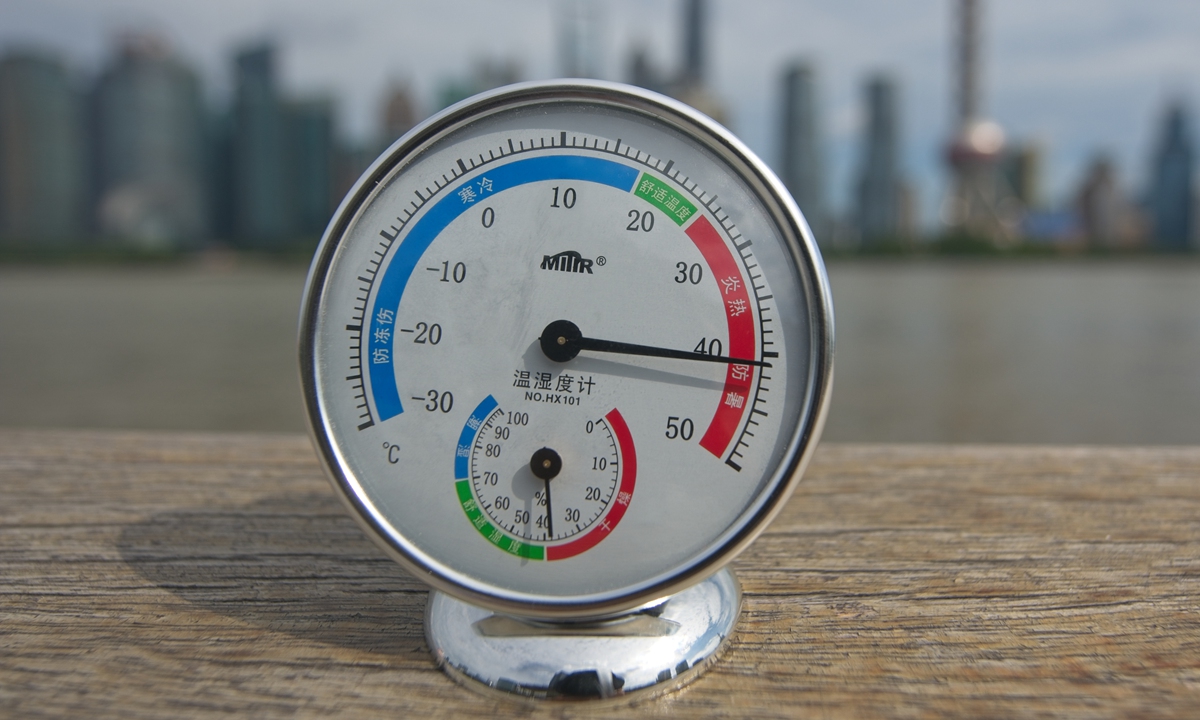
A thermometer shows temperatures over 40 degrees C in the afternoon at North Bund in Shanghai, China, on July 16, 2026. Photo: VCG
As extreme weather events including torrential rains, heatwaves and typhoons sweep parts of China, the "super El Nino" has drawn public attention, and a senior Chinese climate forecaster warned that the current El Nino event has reached a strength comparable to the historic 1997/98 episode, one of the strongest on record, and the year ahead deserves high vigilance as past patterns show that El Nino impacts in the year following the event.
The current El Nino event has reached a level comparable to the historic 1997/98 episode when both surface and subsurface ocean warming are considered. Although this year's westerly wind bursts are slightly weaker, the event could surpass the 2015/16 El Nino in strength if it continues to develop, Jiang Hua, a chief El Nino forecaster from the National Marine Environmental Forecasting Center, told the Global Times.
El Nino conditions have developed in the tropical Pacific and are forecast to strengthen rapidly over the coming months, increasing the likelihood of heatwaves, droughts, heavy rainfall and other extreme weather in many parts of the world, the World Meteorological Organization (WMO) warned in early July.
Jiang said the rapid intensification of the El Nino event exceeded earlier expectations. Unlike the 1997/98 event, which was largely driven by atmospheric wind forces, the current event has been fueled more by the ocean itself, concentrating warm water from different sources.
Jiang said global warming is increasing the likelihood of extreme El Nino events, citing an IPCC finding that when global temperatures reach 1.5 C above pre-industrial levels, extreme El Nino events will be notably more frequent.
The expert also warned that although this year is the El Nino development phase, bringing more severe convective weather such as torrential rain, thunderstorms, gales and tornadoes, the greatest risks may emerge next year.
Southern China could see heavier spring rainfall, while the summer rain belt may stay at the middle and lower Yangtze River, raising the risk of basin-wide flooding, Jiang said, citing the major floods in 1998 and 2016, both after super El Nino. Increased river runoff could also disrupt estuarine salinity, coastal ecosystems and fisheries.
Jiang said that climate forecasting has inherent uncertainties, but China has developed advanced El Nino monitoring and prediction capabilities by combining tropical Pacific observations with numerical and AI models. The National Marine Environmental Forecasting Center, which began El Nino forecast in 1996, can provide reliable trend forecasts up to a year ahead, while major models achieve high accuracy for six-month forecasts.
But "spring predictability barrier" remains a challenge, with forecasts becoming more reliable after May or June. Jiang urged the public to follow weather warnings and avoid risky areas during extreme rainfall, while advising agriculture, fisheries and shipping industries to prepare for potential climate impacts.
RELATED ARTICLES