ARTS / CULTURE & LEISURE
South Korea returns pair of Qing Dynasty stone lions to China
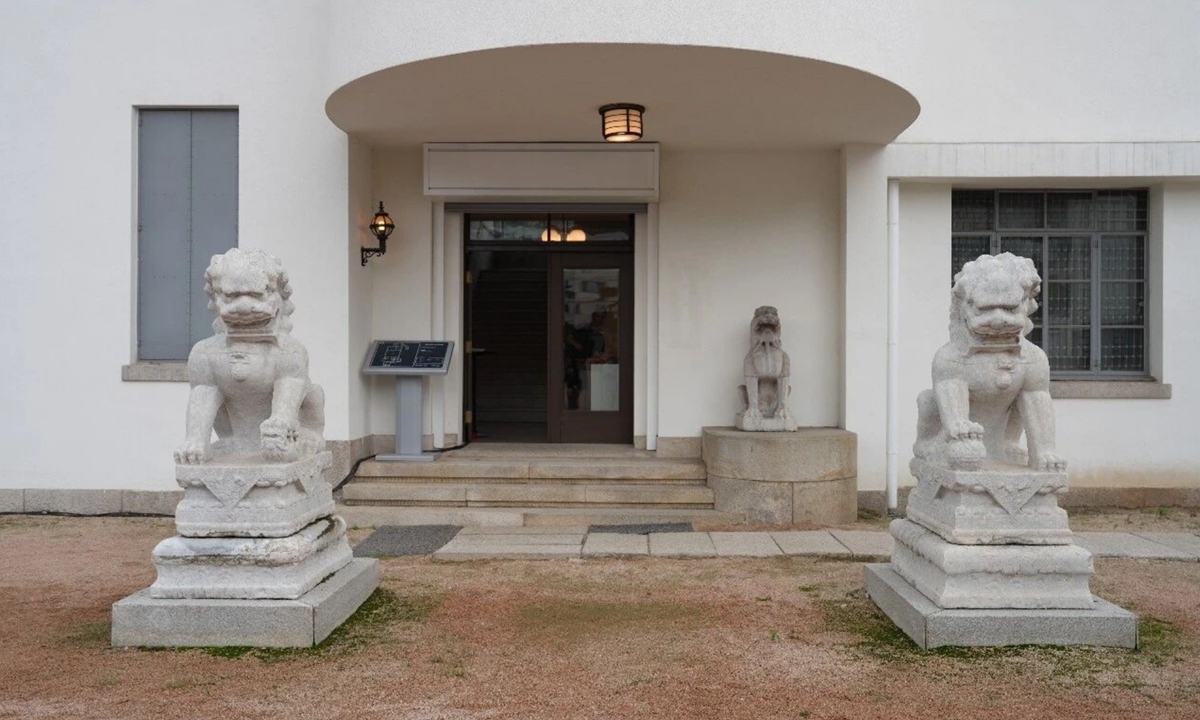
Photo: Courtesy of National Cultural Heritage Administration
South Korea on Thursday formally returned a pair of Qing Dynasty (1644-1911) stone lion statues to China, fulfilling a decades-old wish of Korean collector Jeon Hyeong-pil and marking a new chapter in cultural heritage cooperation between the two countries, China's National Cultural Heritage Administration (NCHA) said Thursday.A handover ceremony was held at the Kansong Art Museum in Seoul, where China's National Cultural Heritage Administration officially received the statues from the National Museum of Korea.
The ceremony was attended by Rao Quan, head of China's National Cultural Heritage Administration; Chinese Ambassador to South Korea Dai Bing, National Museum of Korea Director You Hong-jun, Kansong Art Museum Director Chun In-keon, and other officials from both countries.
The return follows the signing of a document by China's National Cultural Heritage Administration and the National Museum of Korea on January 5.
The pair of marble stone lions, each standing about 1.9 meters tall and weighing approximately 1.25 metric tons, are believed to have been made during the Qing Dynasty.
Based on their material, craftsmanship and design features, Chinese experts have assessed that they were likely entrance guardian lions originally placed outside the residences of Qing-era princes or princesses, the NCHA said.
According to the Kansong Art Museum, the statues were purchased in 1933 at an auction held by Japan's Yamanaka & Co in Osaka by Jeon Hyeong-pil, a Korean educator and prominent art collector better known by his art name Kansong.
After the Kansong Art Museum opened in 1938, the stone lions were installed at the entrance of the museum's Bohwagak Pavilion, becoming a landmark feature of the institution.
The Kansong Art Museum said Jeon had always remembered that the statues were Chinese cultural relics and expressed hope during his lifetime that they would eventually be returned to China.
In December 2025, at the request of the Kansong Art Museum, the National Museum of Korea and the NCHA began discussions on the donation, eventually reaching an agreement on the return.
The museum said the donation also coincides with the 120th anniversary of Jeon's birth and represents a continuation of his lifelong belief in "protecting the nation through culture."
It expressed hope that the return would provide new momentum for cultural exchanges between South Korea and China.
Rao said the return of the stone lions was a practical step in implementing the consensus reached by the leaders of the two countries on deepening people-to-people and cultural exchanges.
"Both China and South Korea have experienced the pain of cultural relics being lost overseas and have worked to facilitate their return," Rao said, adding that the handover reflected South Korea's respect and goodwill toward Chinese cultural heritage.
He said China hoped to use the return as an opportunity to promote broader, deeper and more sustained cooperation with South Korea in cultural heritage protection.
Dai said the handover demonstrated the friendship between the two countries and expressed China's willingness to work with South Korea to advance bilateral cooperation and benefit the peoples of both nations.
You said the ceremony would serve as a symbol of cultural cooperation and friendship between South Korea and China, adding that the donation represented a milestone in bilateral cultural exchanges.
Chinese experts who examined the statues previously identified them as valuable Qing Dynasty works with significance in historical, artistic and academic research.
The stone lions will be transported to China for restoration and are expected to be displayed at a Chinese national museum later this year.
RELATED ARTICLES