Illustration: Liu Xidan/GT
The implementation of these tariffs marks the latest milestone in the continuous adjustment of US trade policy, affecting major global economies. It signals a further rise in global economic and trade uncertainty.
Tariffs are essentially taxes levied on imported goods, the costs of which are ultimately borne by downstream enterprises and consumers in the importing country. Numerous studies from the US academic and business communities demonstrate that persistent, universal tariffs drive up domestic prices and erode the international competitiveness of domestic firms.
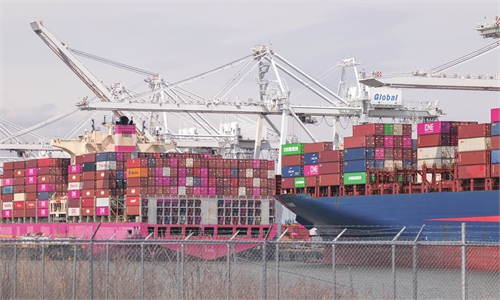
Taking North American supply chains. Although the US side has established a tariff exemption request process allowing certain critical goods to apply for exclusions, in a highly integrated cross-border production network, as long as intermediate goods and raw materials face increased tariff costs, operational pressures escalate across the entire supply chain. Institutionalizing universal tariffs through domestic legislative procedures may serve domestic political objectives in the short term, but over the long run, it creates an inherent conflict with the free trade principles the US has consistently advocated.
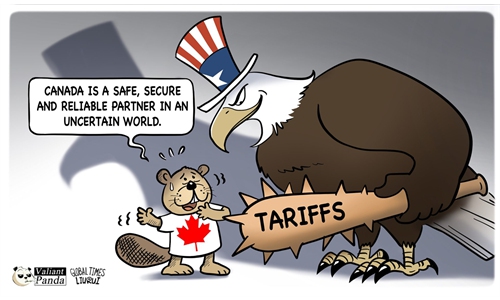
Following the implementation of the policy, several economies publicly voiced their opposition. Australian trade minister Don Farrell said that the tariffs are "unjustified" and inconsistent with the Australia-US free trade relationship, adding that Canberra would continue pushing Washington to repeal the measures.
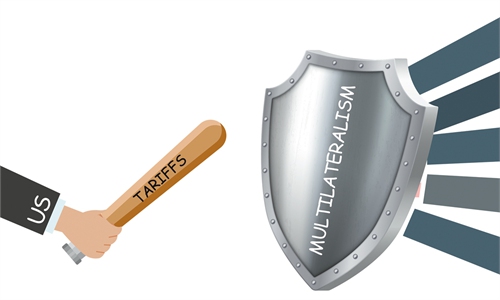
Despite varying degrees of impact, the EU, Japan, South Korea, Canada and India are all concerned about the negative fallout of unilateral tariffs and the weakening of multilateral trade rules.
This widespread concern underscores that major economies share extensive common interests in maintaining a stable and predictable international trade order. In past trade frictions, countries often relied primarily on bilateral responses. However, when unilateral tariffs evolve into a blanket policy covering the globe, safeguarding the multilateral trading system and resolving disputes through consultation become shared imperatives for all trading partners. In a highly interdependent global economy, the fragmentation of the trade architecture serves the long-term interests of no party.
Regarding the 12.5 percent tariff rate, China has maintained its consistent stance of rationality and restraint. Foreign Ministry spokesperson Lin Jian clearly stated at a routine press conference on Friday that China opposes all forms of unilateral tariff measures, emphasizing that tariff wars and trade wars serve no one's interests.
From an operational perspective, rising external tariffs will indeed impose short-term cost pressures on certain Chinese exporters, forcing companies to adjust pricing strategies and optimize supply chain layouts to adapt to the new environment. On the other hand, external pressures will also incentivize domestic industries to accelerate upgrades, encouraging enterprises to boost product added value and non-price competitiveness. Having navigated years of market fluctuations and trade friction, Chinese foreign trade enterprises have significantly strengthened their resilience and adaptability.
Amid US tariffs, China needs to anchor itself in its own development, continuing to deepen reform and opening-up while enhancing supply chain resilience. It should also strengthen the coordination with all economies that champion free trade, including the EU, Japan and South Korea, to jointly safeguard the central role of the multilateral trading system.
Meanwhile, open channels of communication should be maintained between China and the US to reduce uncertainty through pragmatic dialogue and seek mutually beneficial outcomes. Managing differences through equal-footed dialogue and expanding areas of cooperation represent a viable path forward for bilateral relations.
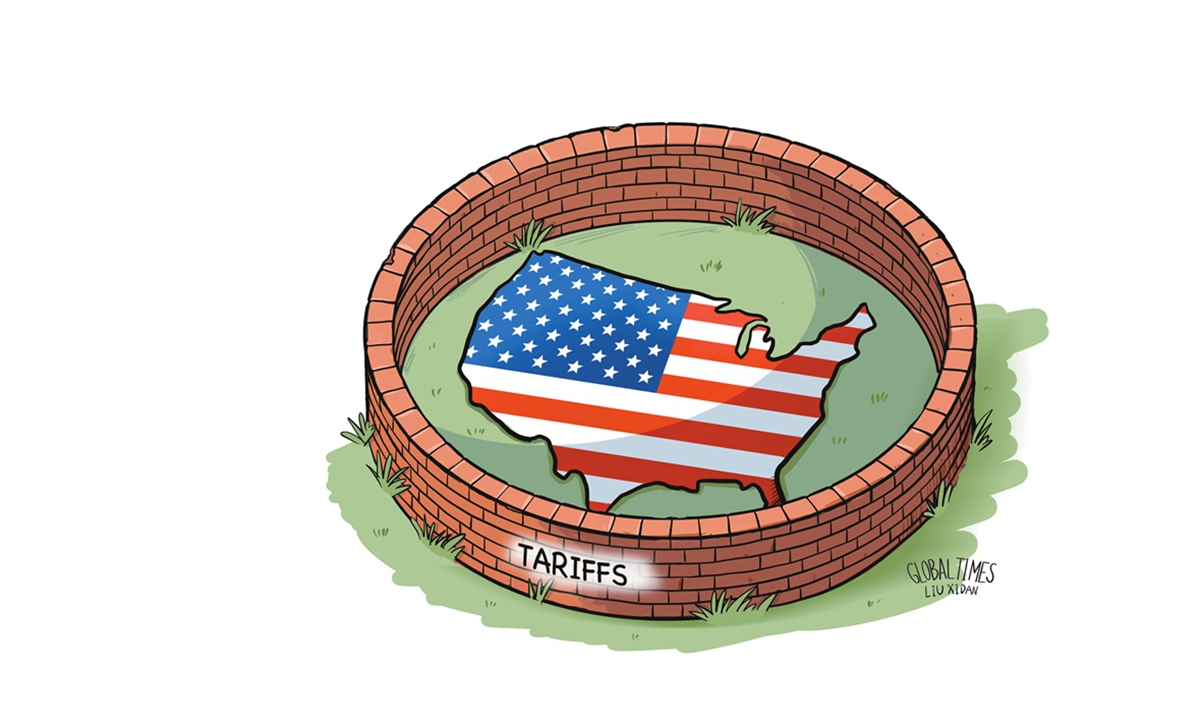
Ultimately, while tariffs can alter the flow and cost of goods in the short term, they cannot change the fundamental reality of global economic interdependence. The rollout of universal tariffs by the US reflects both the inward turn of domestic politics and trade policy, while posing new challenges for the reform and refinement of the global economic and trade system.
The author is an associate research fellow at the Institute of World Economics and Politics, Chinese Academy of Social Sciences. opinion@globaltimes.com.cn
RELATED ARTICLES