FCC's ban on imports of Chinese advanced robots, power inverters a 'counterproductive, self-defeating' move: expert
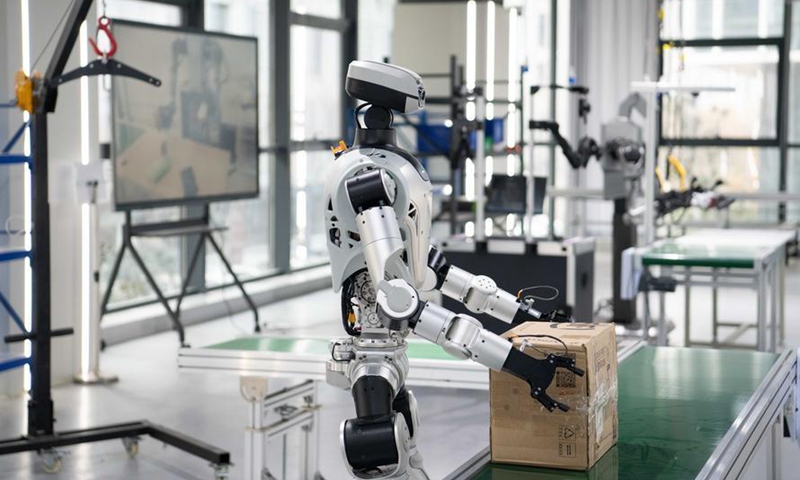
A humanoid robot conducts box-carrying training at a data collection pre-training center for humanoid robots in Hefei, East China's Anhui Province, on December 4, 2025. Photo: Xinhua
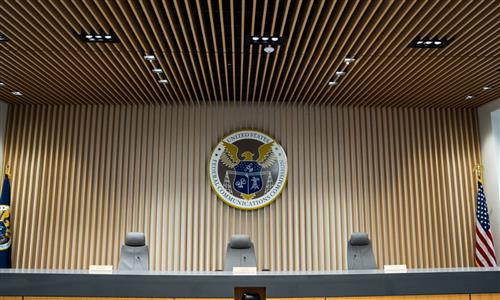
The US unveiled new bans on imports of advanced robots and power inverters, citing national security risks, and foreign media said the move effectively bars Chinese-made robotic models from the US market. Chinese analysts said on Wednesday that this is the US' latest attempt, under the guise of "national security," to extend technological control to robots and energy infrastructure, showcasing a "small yard, high fence" mind-set that harms the US tech development.The US Federal Communications Commission (FCC) on Tuesday local time updated its "Covered List" to include two new categories of devices - "advanced robotic devices" (defined as mobile robots, such as humanoids and quadrupeds) and, separately, connected power inverters produced in foreign countries.
An FCC announcement said that "these devices could create supply chain vulnerabilities that could disrupt US economic and national security and could create a cybersecurity risk that threatened American critical infrastructure."
Th announcement did not pointed out China but foreign media, including Reuters, reported that the new bans, while framed as applying to foreign-produced devices, "target imports of new Chinese robots and power inverters, seeking to protect the US AI buildout from national security threats and reshore key industries slated for explosive growth."
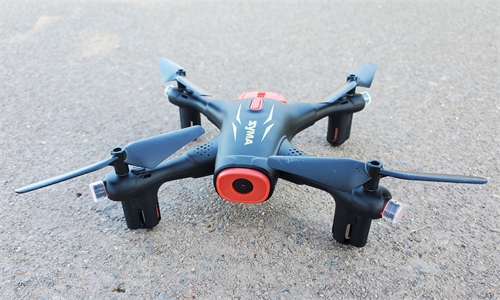
Following Tuesday's actions, the FCC is expected to exempt many non-Chinese suppliers from the restrictions, as it has done with recent bans on foreign drones and routers, Reuters reported, citing four additional sources.
The Chinese embassy in Washington said that China "urges the US to heed the objective and rational voices of the business communities in both countries, stop smearing Chinese companies and threatening them with sanctions," and China will "take all necessary measures in response to any action that causes material harm to its interests," the Reuters reported.
Chinese experts criticized the policy as counterproductive and self-defeating. Xiang Ligang, a veteran telecom observer, told the Global Times on Wednesday that the US is acting out of anxiety over China's technological rise.
Xiang argued that humanoid and quadruped robots are still in their early stages, and that imports allow mutual learning and progress. Banning them would force American firms to operate "behind closed doors," slowing innovation.
Zhang Xiaorong, director of the Beijing-based Cutting-Edge Technology Research Institute, also told the Global Times on Wednesday that "in emerging fields like humanoid robots - still far from mature global mass adoption - such isolation prevents learning and benchmarking, harming US development."
"Similarly, power inverters are critical for artificial intelligence (AI) data centers and renewable integration. Rejecting cost-effective Chinese options could raise electricity costs and slow AI progress due to supply or pricing issues," said Zhang.
According to media reports, China is the world's largest manufacturer of inverters and has been increasing its share of the Western inverter market.
"The US currently faces prominent problems in its energy system, with insufficient power support for AI development. If Chinese inverters are not adopted, other options either have unstable supply or excessively high prices - which is clearly not a wise move," said Xiang.
Xiang described the US' latest approach as erratic policymaking born out of anxiety, rather than effective strategies. He argued that the long-standing "small yard, high fence" strategy rests on a misjudgment: the belief that the US can maintain technological superiority through isolation. However, recent years have shown US leads eroding in areas such as chips, 5G, drones, and robotics.
The entire Covered List, Xiang noted, reflects a "small yard, high fence" mind-set among some US politicians.
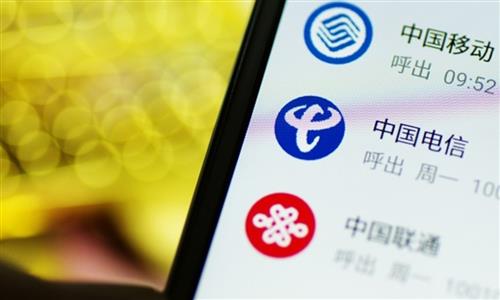
The FCC's Covered List already includes numerous Chinese companies, such as Huawei, ZTE, Hytera, Hikvision, and Dahua, for telecom and surveillance equipment since 2021, as well as China Mobile, China Telecom, and China Unicom for telecom services since 2022. More recent additions in 2026 cover foreign-produced routers, power inverters, and advanced robotic devices, as showed on FCC's website.
By prioritizing administrative barriers over competitiveness, US policymakers risk creating an inefficient "greenhouse" that burdens American consumers with higher costs and outdated technology, experts said.
RELATED ARTICLES