ARTS / CULTURE & LEISURE
Lu Xun Literature Prize winner revives rural storytelling
Stories blossom from barren land
By Published: Jul 29, 2026 09:41 PM

Editor's note:
Xihaigu takes its name from three counties in Northwest China's Ningxia Hui Autonomous Region: Xiji, Haiyuan and Guyuan, areas long seen as China's harshest environments. Yet today, this land has produced a large community of writers, and literature has become as vital as a staple crop for local people. This two-part series focuses on the Xihaigu writers and the literary achievements that have flourished in this revitalized land. From individual stories to the broader landscape, the series explores why so many outstanding writers and works have emerged from a once-impoverished region - and how the spiritual harvest of literature is bringing real change to places like this.
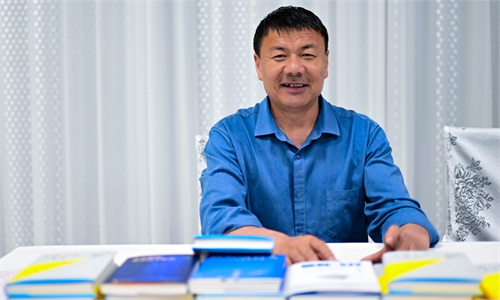
American writer William Faulkner once said that even if he wrote for a lifetime, he would never finish telling the stories of his hometown, which he compared to a postage stamp. Chinese author Ji Dongliang, who just won the Lu Xun Literature Prize, has his own "postage stamp" - Xihaigu in Northwest China's Ningxia Hui Autonomous Region. Once known as one of the most inhospitable places for human settlement, it is now home to a vibrant and powerful literature tradition rooted deep in the local soil.
Ji's book, Xihaigu Biji (lit: Notes from Xihaigu), was awarded the Lu Xun Literature Prize for reportage. Open its pages, and readers can find real-life stories of local people enduring droughts and poverty - sometimes for years on end - simply in order to live with dignity.
Xihaigu - a name derived from three counties in Ningxia: Xiji, Haiyuan, and Guyuan, was once synonymous with hardship in China's northwest. In over 300,000 words, Ji's writing records the lives of local ordinary heroes, such as Bai Chunlan, a "warrior" in the fight against desertification who kept working on the front lines for decades despite losing her husband to illness, and volunteers from faraway East China's Fujian Province who came with hope to help the place shake off poverty. Ji is by no means an isolated case in Xihaigu, where writing is embraced as a kind of vocation by many. Over the years, the region has fostered an influential cohort that includes Shi Shuqing, Guo Wenbin, and Ma Jinlian, all of whom have garnered some of China's most esteemed literary honors, including the Lu Xun Literature Prize and the Junma Awards. In Xiji county, with fewer than half a million residents, more than 1,600 people regularly write, including 300 to 400 farmer writers. So many literary works have sprung from this region that "Xihaigu literature" and "Xihaigu writers" have become recognized names.
When asked why Xihaigu literature has such lasting appeal and vitality, Ji told the Global Times, "At its core, literature is about people. The true journey of ordinary people in Xihaigu is more touching than anything fictional." With millions of people wrestling with tough new environments to change their fate, each carries the weight of a changing era. Deep history and remarkable poverty alleviation stories blend together, giving this land endless inspiration for writers.
Heroic notes from everyday life
Ji's book is not a distant chronicle, but a record he built step by step through years of walking these lands. He visited counties, townships and villages, conducting over 40 in-depth interviews. He trekked across countless ridges and valleys, filling over 20 notebooks with his findings. The striking stories in his book often started as casual conversations with local people he met on the roadside or in the fields.
His favorite way to gather material was to simply wander the farmlands and footpaths, chatting with whoever he met. In earlier years, elderly residents who stayed in villages often avoided strangers due to their difficult circumstances. However, as the area has overcome poverty, villagers became noticeably more open and friendly, eager to invite him in for a chat. Constantly moving through the land, Ji encountered many powerful stories by chance. In 2017, the Zhongzhuang Reservoir was completed, bringing water from the Yellow River - lifted hundreds of meters - to finally solve drinking water shortages for the more than 1.4 million people in Xihaigu. Ji met a man in his 70s who walked dozens of kilometers just to see the "living water." The old man had never before seen so much running, crystal-clear water, and simply stood gazing at the reservoir, unable to leave.
For Ji, moments like this brought home just how deeply anti-poverty projects have transformed people's lives.
Ji noted that the miracle of Xihaigu lies in how countless ordinary people face hardship with perseverance. Their stories possess a raw, striking power. Take farmer Li Zhiyuan, for example. Unable to walk, he nonetheless dragged himself up hills year after year, planting tens of thousands of saplings that transformed barren slopes into green land. Over time, his own health improved, and eventually he gained the ability to stand. Having grown up in Xihaigu, Ji speaks the local dialect and shares daily customs, which helps him quickly earn their distrust.
Literature of Xihaigu
In 1998, the term "Xihaigu literature" was officially introduced, giving writers from the area a shared identity. Today, the region's literary community has a complete creative lineage - from those born in the 1950s to the 2000s, with new generations of young writers steadily joining, ensuring that storytelling about this land never stops. Whether in towns or villages, literary societies, studios, and writing bases have formed a dense network, weaving together the threads of Xihaigu's literary scene and turning scattered sparks of creativity into a powerful, far-reaching movement, according to Wenyi Bao.
"At its heart, the national attention paid to Xihaigu is really about the dramatic changes in China's rural life," Ji said. "For so long, the place stood for hardship and struggle in the public eye. Countless words recorded its suffering in the past; but today, the natural environment is thriving and people have better lives."
For writers who care about this land, the suffering and resilience of Xihaigu people offer universal life experiences, touching hearts everywhere.
As literary critic Zhao Bingxin put it: "Xihaigu literature, with its unique cultural background and strong regional character, captures the life and spiritual world of its people."
Now, new stories of rural revitalization are unfolding in Xihaigu. He is confident that local writers, raised in this land, are best placed to capture the subtle shifts in the new journey toward prosperity. So long as the land continues to grow and the times move forward, the stories of Xihaigu people will never dry up and there will always be chapters worth writing.
Xihaigu takes its name from three counties in Northwest China's Ningxia Hui Autonomous Region: Xiji, Haiyuan and Guyuan, areas long seen as China's harshest environments. Yet today, this land has produced a large community of writers, and literature has become as vital as a staple crop for local people. This two-part series focuses on the Xihaigu writers and the literary achievements that have flourished in this revitalized land. From individual stories to the broader landscape, the series explores why so many outstanding writers and works have emerged from a once-impoverished region - and how the spiritual harvest of literature is bringing real change to places like this.
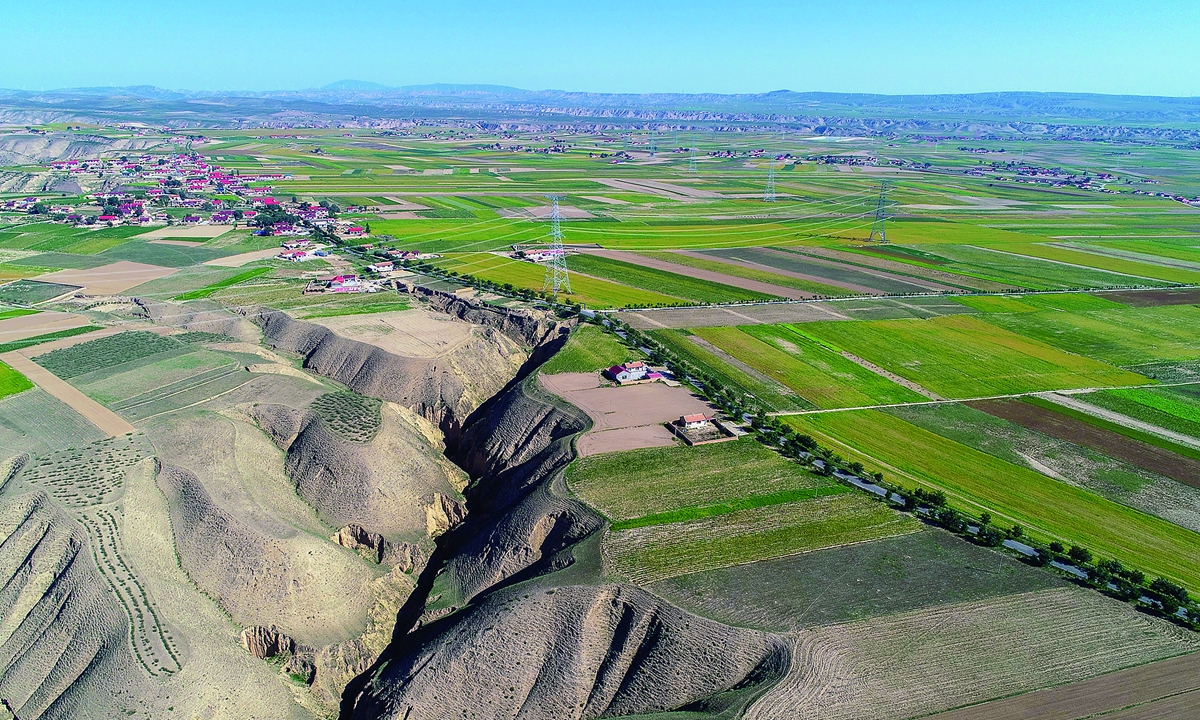
The arid plateau of Xihaigu in Wuzhong, Northwest China's Ningxia Hui Autonomous Region Photo: VCG
American writer William Faulkner once said that even if he wrote for a lifetime, he would never finish telling the stories of his hometown, which he compared to a postage stamp. Chinese author Ji Dongliang, who just won the Lu Xun Literature Prize, has his own "postage stamp" - Xihaigu in Northwest China's Ningxia Hui Autonomous Region. Once known as one of the most inhospitable places for human settlement, it is now home to a vibrant and powerful literature tradition rooted deep in the local soil.
Ji's book, Xihaigu Biji (lit: Notes from Xihaigu), was awarded the Lu Xun Literature Prize for reportage. Open its pages, and readers can find real-life stories of local people enduring droughts and poverty - sometimes for years on end - simply in order to live with dignity.
Xihaigu - a name derived from three counties in Ningxia: Xiji, Haiyuan, and Guyuan, was once synonymous with hardship in China's northwest. In over 300,000 words, Ji's writing records the lives of local ordinary heroes, such as Bai Chunlan, a "warrior" in the fight against desertification who kept working on the front lines for decades despite losing her husband to illness, and volunteers from faraway East China's Fujian Province who came with hope to help the place shake off poverty. Ji is by no means an isolated case in Xihaigu, where writing is embraced as a kind of vocation by many. Over the years, the region has fostered an influential cohort that includes Shi Shuqing, Guo Wenbin, and Ma Jinlian, all of whom have garnered some of China's most esteemed literary honors, including the Lu Xun Literature Prize and the Junma Awards. In Xiji county, with fewer than half a million residents, more than 1,600 people regularly write, including 300 to 400 farmer writers. So many literary works have sprung from this region that "Xihaigu literature" and "Xihaigu writers" have become recognized names.
When asked why Xihaigu literature has such lasting appeal and vitality, Ji told the Global Times, "At its core, literature is about people. The true journey of ordinary people in Xihaigu is more touching than anything fictional." With millions of people wrestling with tough new environments to change their fate, each carries the weight of a changing era. Deep history and remarkable poverty alleviation stories blend together, giving this land endless inspiration for writers.
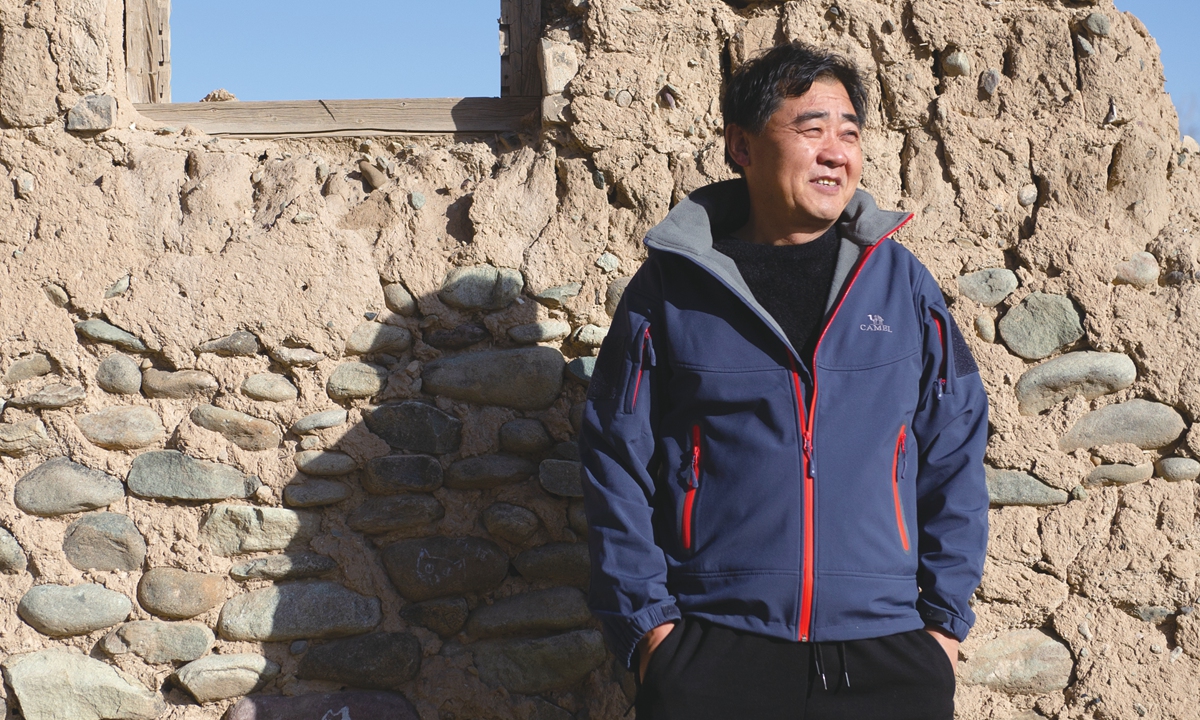
Chinese author Ji Dongliang Photo: Courtesy of Ji Dongliang
Heroic notes from everyday life
Ji's book is not a distant chronicle, but a record he built step by step through years of walking these lands. He visited counties, townships and villages, conducting over 40 in-depth interviews. He trekked across countless ridges and valleys, filling over 20 notebooks with his findings. The striking stories in his book often started as casual conversations with local people he met on the roadside or in the fields.
His favorite way to gather material was to simply wander the farmlands and footpaths, chatting with whoever he met. In earlier years, elderly residents who stayed in villages often avoided strangers due to their difficult circumstances. However, as the area has overcome poverty, villagers became noticeably more open and friendly, eager to invite him in for a chat. Constantly moving through the land, Ji encountered many powerful stories by chance. In 2017, the Zhongzhuang Reservoir was completed, bringing water from the Yellow River - lifted hundreds of meters - to finally solve drinking water shortages for the more than 1.4 million people in Xihaigu. Ji met a man in his 70s who walked dozens of kilometers just to see the "living water." The old man had never before seen so much running, crystal-clear water, and simply stood gazing at the reservoir, unable to leave.
For Ji, moments like this brought home just how deeply anti-poverty projects have transformed people's lives.
Ji noted that the miracle of Xihaigu lies in how countless ordinary people face hardship with perseverance. Their stories possess a raw, striking power. Take farmer Li Zhiyuan, for example. Unable to walk, he nonetheless dragged himself up hills year after year, planting tens of thousands of saplings that transformed barren slopes into green land. Over time, his own health improved, and eventually he gained the ability to stand. Having grown up in Xihaigu, Ji speaks the local dialect and shares daily customs, which helps him quickly earn their distrust.
Literature of Xihaigu
In 1998, the term "Xihaigu literature" was officially introduced, giving writers from the area a shared identity. Today, the region's literary community has a complete creative lineage - from those born in the 1950s to the 2000s, with new generations of young writers steadily joining, ensuring that storytelling about this land never stops. Whether in towns or villages, literary societies, studios, and writing bases have formed a dense network, weaving together the threads of Xihaigu's literary scene and turning scattered sparks of creativity into a powerful, far-reaching movement, according to Wenyi Bao.
"At its heart, the national attention paid to Xihaigu is really about the dramatic changes in China's rural life," Ji said. "For so long, the place stood for hardship and struggle in the public eye. Countless words recorded its suffering in the past; but today, the natural environment is thriving and people have better lives."
For writers who care about this land, the suffering and resilience of Xihaigu people offer universal life experiences, touching hearts everywhere.
As literary critic Zhao Bingxin put it: "Xihaigu literature, with its unique cultural background and strong regional character, captures the life and spiritual world of its people."
Now, new stories of rural revitalization are unfolding in Xihaigu. He is confident that local writers, raised in this land, are best placed to capture the subtle shifts in the new journey toward prosperity. So long as the land continues to grow and the times move forward, the stories of Xihaigu people will never dry up and there will always be chapters worth writing.
RELATED ARTICLES