Illustration: Chen Xia/GT
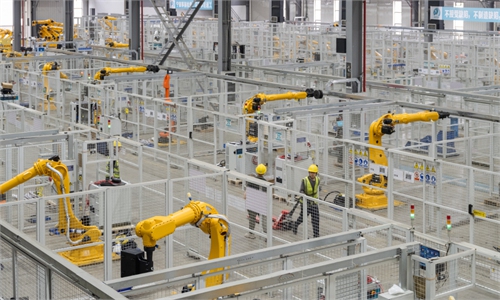
Amid ongoing debate over China's exports, some Western media outlets and think tanks have advanced the so-called "China squeeze" narrative, claiming that China is squeezing the industrialization space available to developing economies. But a closer look at the evidence raises a different question: is China truly constraining these economies, or is it helping them build the capabilities needed for industrialization?A set of figures offers a glimpse into this broader reality: between 2012 and 2024, China exported more than $30 billion worth of textile machinery to developing countries, helping several economies in Southeast and South Asia strengthen their textile industries and become important production and export hubs.
The industrial links behind these figures are difficult to square with the "China squeeze" narrative. That narrative still treats global manufacturing as a zero-sum game: if one country gains, another must lose. But global supply chains have evolved beyond that logic. They are more like building blocks, with each new layer built on what came before, creating a foundation for what follows. China's manufacturing growth has become one of those layers. Through exports of machinery and components, China has become part of the industrial foundations that allow other developing economies to expand their manufacturing capacity.
Behind this process lies a broader force: technological progress. As global competition has intensified, even traditional labor-intensive industries such as textiles increasingly rely on the technology embedded in production equipment to remain competitive. By translating technological advances into machinery, components and industrial products, China has enabled many developing economies to access more advanced manufacturing capabilities and strengthen their competitiveness.
Yet this reality is often overlooked by those promoting the "China squeeze" narrative, which continues to view labor-intensive industries through an outdated lens - as industries built primarily on low-cost labor rather than on technological upgrading, advanced equipment and production efficiency.
If global supply chains are built like layers of building blocks, removing one layer does not create space for another - it can destabilize the entire structure. China's manufacturing sector has become one of those layers, supporting and being supported by the industrial development of other economies. This interdependence is reflected in three areas.
First, China's exports increasingly serve global production networks. In the first three quarters of 2025, intermediate goods made up 47.4 percent of China's exports, nearly half, providing the components that support manufacturing growth elsewhere, according to media reports.
Second, China's role in global manufacturing extends beyond exports to market access. Since May 1, China has expanded duty-free access to all African countries with which it has diplomatic relations. As the world's second-largest consumer market, China also offers an important destination for products from developing countries.
Third, China's industrial links with developing economies are also reflected in investment. China's outbound direct investment stock has remained among the world's top three for nine consecutive years, with manufacturing among the major recipients. These investments bring capital, production capacity and industrial expertise to local markets, supporting manufacturing growth in developing economies.
The reality is quite different from what the "China squeeze" narrative suggests: China's manufacturing expansion has not come at the expense of industrial development elsewhere; it has become part of a wider process in which more economies are building manufacturing capacity.
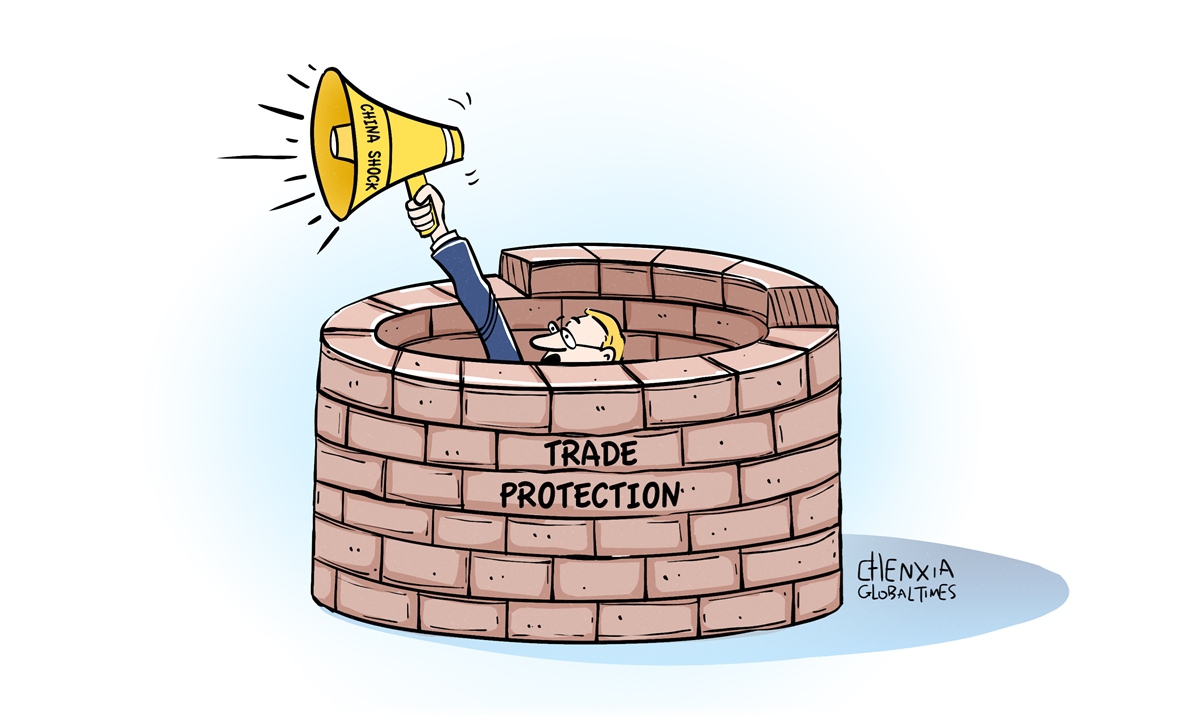
Are those promoting the "China squeeze" narrative truly concerned about the industrial futures of developing economies? The answer is likely no. As the "China shock 2.0" loses force, some Western media outlets and think tanks appear to be seeking to pull developing countries into their own narratives. But developing economies may not be easily drawn into such narratives; they are capable of deciding what best serves their own interests.
Industrial ties between China and other developing economies are rooted in mutual interests. Competition does exist in some sectors, as it does across the global economy. But treating that competition as a zero-sum contest serves no one's interests. Development, not displacement, is the shared interest of China and developing economies. This is why the "China squeeze" narrative fails to explain the reality of today's global manufacturing landscape.
The author is a reporter with the Global Times. bizopinion@globaltimes.com.cn
RELATED ARTICLES