IN-DEPTH / IN-DEPTH
China-aided Solomon Islands medical center marks first year of operation
When healthcare stays on islands
By Published: Jul 31, 2026 10:00 PM

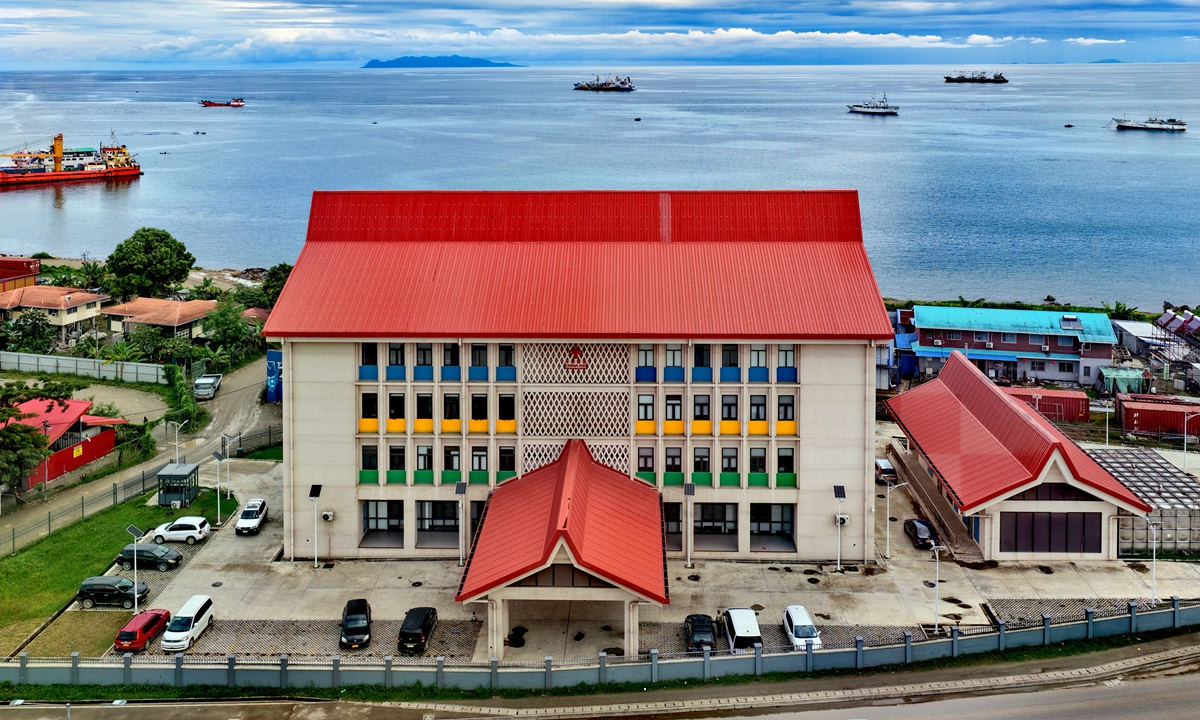
The National Referral Hospital Comprehensive Medical Center in Honiara, Solomon Islands Photos: Courtesy of Chu Liangzhao
At the National Referral Hospital Comprehensive Medical Center, waiting areas are frequently full.
Some patients come seeking relief from chronic pain. Others have recurring kidney stones. Some are waiting to see specialists in breast surgery, cardiology or neurosurgery. Beyond the consultation rooms, operating theaters, wards and examination areas are meeting a growing share of the Pacific island country's specialist healthcare needs.
A year ago, the China-aided center officially began operation. Since then, procedures including coronary angiography and stent implantation, holmium laser lithotripsy, hemodialysis, breast disease treatment and emergency neurosurgery have gradually become available in Honiara, capital of Solomon Islands.
"I support China because it saved my life. Otherwise, I would have had to spend half a million on this kind of operation overseas. Thank you, China," a patient wrote in Solomon Islands Pijin language under a social media post by the Ministry of Health and Medical Services of Solomon Islands about a procedure completed by the Chinese medical team.
For that patient, the operation meant avoiding an unaffordable trip abroad for treatment. For the hospital, it showed that more complex care could increasingly remain on the islands.
Southwest China's Guizhou Province began sending medical teams to Solomon Islands in 2022. The fourth Chinese medical team arrived in Honiara in March 2025 and witnessed the medical center's official opening that June.
The fifth team took over in March 2026, adding neurosurgery and breast surgery to its specialties, Chu Liangzhao, head of the fifth team and a chief physician in neurosurgery, told the Global Times.
Over the past year, the fourth and fifth Chinese medical teams recorded 14,600 patient visits and carried out 191 minimally invasive procedures. The figures reflect the center's transition from construction and opening to the gradual establishment of specialist services.
After the hospital ship sailed away
When Global Times reporters visited Honiara in the summer of 2023, the Chinese naval hospital ship Peace Ark was making its first visit to Solomon Islands.
Under blue tents at the port, many residents were already waiting more than an hour before afternoon consultations were due to begin. Some had arrived early for dental appointments. Others came with long-standing eye problems, joint pain or stomach discomfort.
Outside the ship's clinics, patients waited at internal medicine, surgery, ophthalmology and dentistry departments. During its seven-day stay, Peace Ark treated more than 10,000 local patients and dispatched medical teams to communities, outer islands and the National Referral Hospital for joint consultations and treatment.
The visit made the country's medical needs visible. Those needs were not confined to the capital.
Scattered islands, difficult transport, limited specialist staff and equipment meant that some patients had to wait for overseas referrals or postpone care under constrained local conditions.
After the hospital ship left, those needs remained.
Zhao Xueke, head of the fourth Chinese medical team to Solomon Islands, said the opening of the Comprehensive Medical Center provided a platform for techniques that had previously been difficult to perform locally.
"Many people came with expectations. They were very happy and actively took part," Zhao recalled.
Before the center opened, the medical teams had already introduced specialists in cardiology, urology, nephrology and acupuncture. But some services were restricted by a lack of equipment and suitable facilities.
"For some of the earlier teams, it was difficult to do more without the necessary tools," Zhao said.
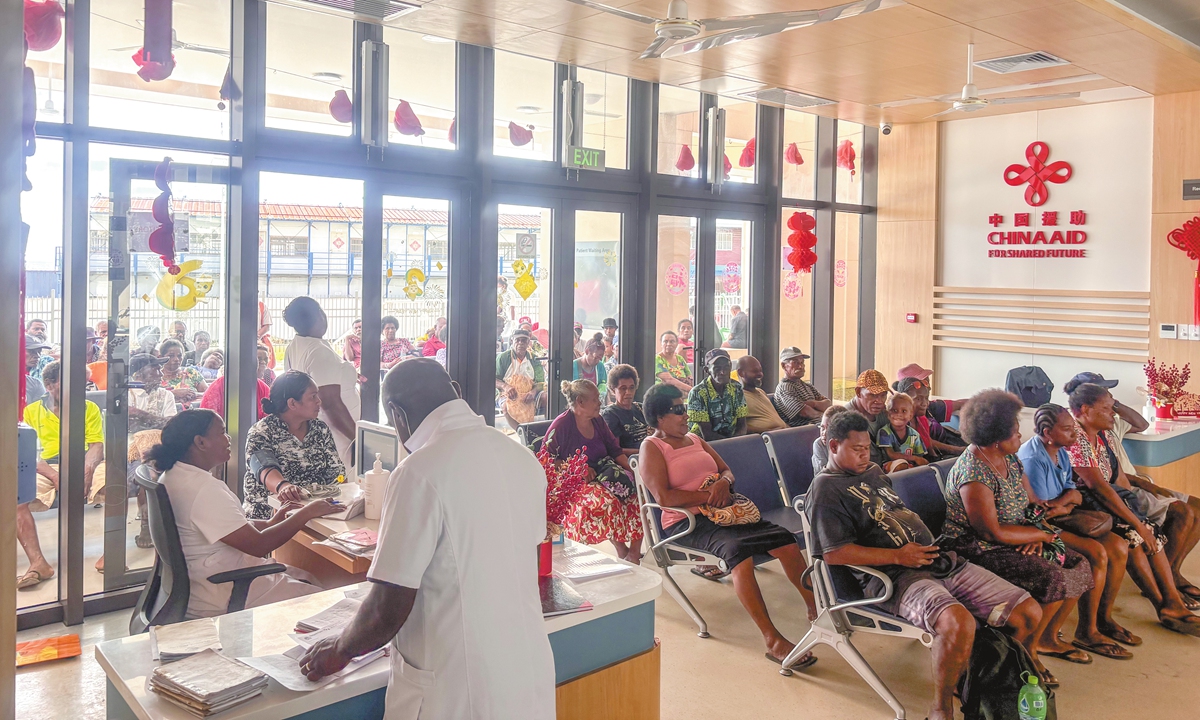
Visitors wait in the waiting area in the National Referral Hospital Comprehensive Medical Center in Honiara, Solomon Islands.
After the center began operating, changes first emerged through specific treatments.A 3-year-old boy underwent minimally invasive holmium laser surgery for a urethral stone and was discharged the next day.
An 18-year-old girl whose breast lump had grown over several years and affected her daily life underwent a small-incision operation performed by a Chinese breast surgeon and local colleagues. She was discharged 24 hours later.
This year, the fifth medical team completed the first neurosurgical operation performed by a Chinese medical team in Solomon Islands. A 20-year-old man was admitted after being struck in the head by a stone. Tests showed a crushed occipital bone fracture, and his vital signs deteriorated rapidly. The team organized an emergency operation overnight and completed a seven-hour craniotomy despite limited local instruments and supplies.
More than equipment
Inside the operating rooms of the Comprehensive Medical Center, local doctors are increasingly working alongside Chinese doctors.
In urology, local medical staff members participate in preoperative discussions, surgical assistance and postoperative care. In breast surgery, local doctors have begun gradually performing some routine procedures independently, including needle biopsies and benign lump removals. In neurosurgery, ward rounds, surgical demonstrations and case discussions have become part of training for the new specialty.
The work of a medical team cannot end with a single operation, Zhao said. "We truly teach them these medical techniques hand in hand."
During the fourth team's assignment, nine Solomon Islands medical professionals traveled to the Affiliated Hospital of Guizhou Medical University for training in urology, anesthesiology, pathology and emergency medicine. When the fourth team returned to China, it also brought three local doctors for a one-year program in acupuncture, massage, physiotherapy and moxibustion.
Chu said the fifth medical team continues to provide on-the-job training through outpatient care and surgery. The extent to which local medical staff participate will determine whether new techniques can truly take root.
"We hope to leave behind a local medical team that can carry on without us," he said.
The growing acceptance of traditional Chinese medicine and acupuncture offers one example.
One resident had relied on crutches because of severe knee pain. Diagnosed with pes anserine bursitis, the patient regained normal mobility after two acupuncture sessions and later sent the medical team a video of the recovery.
Zhao said the distinction between a resident medical team and some short-term international medical missions is not simply the number of operations performed. It is whether local doctors can learn alongside visiting specialists and continue the work afterward.
"Doctors rotate, but techniques must not leave with them," he said.
When Peace Ark left Honiara in 2023, local residents said they hoped it would return.
The ship has since sailed on to other ports. But at the hospital, consultations continue and operating-room lights still come on.
For a growing number of patients, medical care is no longer a rare service arriving from afar. It is becoming an everyday option that stays on the islands.
RELATED ARTICLES