Photo: VCG
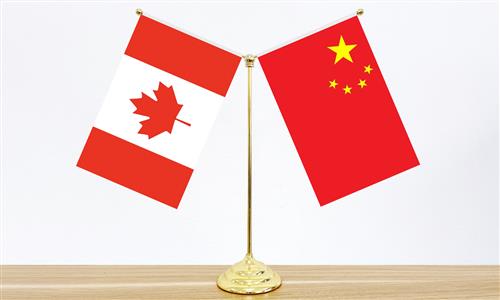
On August 4, a new mechanism in Canada known as the Registry of foreign influence activities came into force. Established under the Foreign Influence Transparency and Accountability Act, the registry is officially intended to increase transparency around foreign influence on Canada's political and governmental processes and guard against foreign interference. Yet, its legislative origins, enforcement framework and broad scope for political interpretation raise legitimate concerns that it could become an institutional tool for some forces in Canada to fuel anti-China narratives, with negative consequences for China-Canada people-to-people exchanges and the Chinese Canadian community.To understand the potential risks posed by the new registry, it is necessary to look back at the legislative context in which it was created. As a key component of Canada's Countering Foreign Interference Act, enacted in 2024, the Foreign Influence Transparency and Accountability Act was introduced against the backdrop of sustained allegations that China was interfering in Canada's domestic affairs. A 2024 report by the Public Inquiry into Foreign Interference in Federal Electoral Processes and Democratic Institutions described China as "the most persistent and sophisticated foreign interference threat to Canada." By framing a specific country as the principal source of foreign interference, such narratives provided much of the political momentum behind the legislation. In that sense, the law was shaped less by a neutral and objective assessment of security risks than by the political climate.
Several features of the new registry warrant scrutiny. First, its central concept of "foreign influence" is defined in ambiguous terms. Under the legislation, individuals or organizations that undertake, under the direction of or in association with a foreign principal, certain activities in relation to Canada's political or governmental processes may be required to register. Yet key concepts - including what constitutes acting "in association with" a foreign principal - leave considerable room for interpretation and official discretion. That ambiguity itself creates the potential for selective enforcement.
Second, although the law does not explicitly establish a list of hostile states, implicit assumptions in political practice can prove more pervasive than written provisions. Given the sustained and intense negative discourse about China that preceded the legislation, enforcement agencies will find it difficult to avoid being influenced by existing political narratives when opening investigations and confirming targets. Chinese cultural exchange organizations, community associations, Chinese-language media outlets, academics and international students in Canada could all come under heightened scrutiny because of their national background or natural emotional and cultural ties to their ancestral homeland.
Politically, some politicians and media outlets could invoke the legislation to demand investigations into Chinese organizations or individuals. Even if no legal violations are ultimately found, the investigations themselves could generate damaging publicity.
Legally, the law could be used as a political instrument to subject individuals and organizations with legitimate ties to China - or those expressing balanced or objective views - to burdensome scrutiny. The purpose in such cases may not be prosecution, but rather to consume resources, create uncertainty and foster fear. The most immediate consequence of this institutional risk could be a pronounced chilling effect on the Chinese Canadian community and on broader China-Canada people-to-people exchanges. Such widespread anxiety would erode the principles of fairness and equality on which a multi-cultural society depends.
Creating a legal mechanism that implicitly treats a particular ethnic community or a particular country as a presumptive security concern may generate short-term political gains. Over time, however, it risks eroding the multi-cultural foundations that Canada has long regarded as one of its defining strengths while undermining the trust that underpins normal international engagement. A system established in the name of preventing foreign interference could ultimately leave Canada more inward-looking rather than more secure.
At a time when China-Canada relations have begun to show signs of improvement, consolidating that positive momentum requires more bridges of understanding, not higher walls of suspicion.
The author is a research fellow at the Center for Canadian Studies at Guangdong University of Foreign Studies. opinion@globaltimes.com.cn
RELATED ARTICLES