PLA Air Force unveils three-drone system with GJ-3A debut, providing intel to Army, Navy, Rocket Force
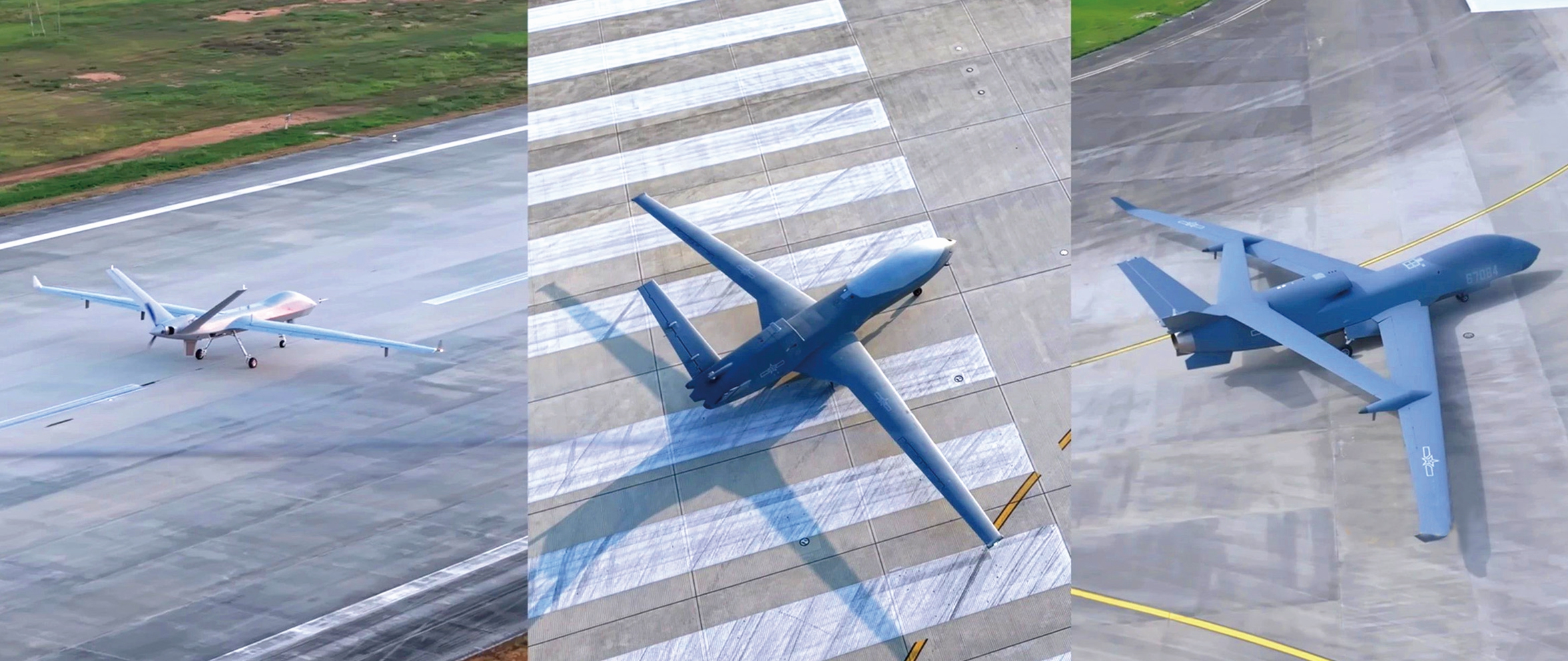
The GJ-3A armed reconnaissance drone, WZ-10 reconnaissance drone and WZ-7 reconnaissance drone together in a split-screen display Photo: Screenshot from CCTV News
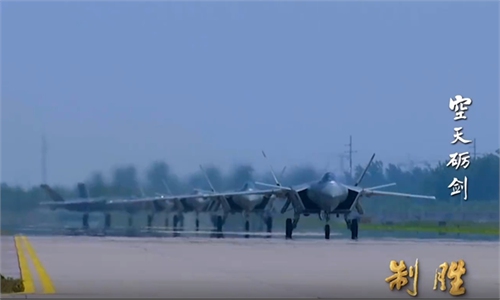
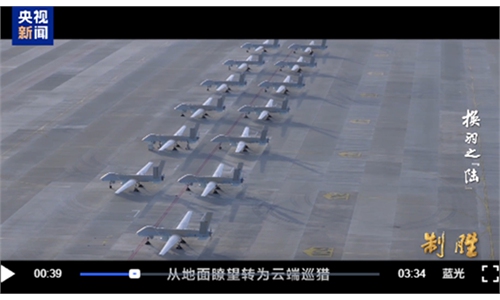
State media released footage on Tuesday showing the PLA Air Force's systematic application of three types of unmanned aerial vehicles (UAVs), which provide intelligence support to the PLA Army, Navy and Rocket Force. Among the three, the GJ-3A armed reconnaissance drones made its first public appearance.A military affairs expert said the three UAVs represent an integration of China's tactical and strategic reconnaissance capabilities, with the PLA Air Force UAVs serving as terminals within the military's existing information system that break down service boundaries and enable cross-branch coordinated operations.
"The deploy to this forward position. After the mission is complete, the two aircraft will return and be replaced by the GJ-3A for continued tracking and surveillance," the narrator in the video says. The footage, released by CCTV News, is from the sixth and final episode of the PLA documentary series Zhisheng (Victory).
In subsequent footage, the GJ-3A, WZ-10 reconnaissance drone and WZ-7 are shown together in a split-screen display.
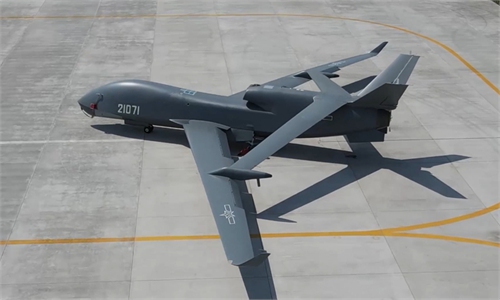
Wang Yanan, editor-in-chief of Beijing-based Aerospace Knowledge magazine, told the Global Times on Tuesday that the GJ-3A is a medium-altitude, long-endurance UAV. While its appearance is derived from the earlier Wing Loong series, it is a China-specific model intended for domestic use.
It can be seen as an enhanced and enlarged version of the Wing Loong, with a likely maximum takeoff weight exceeding 6 tons and a payload capacity of over 2 tons. It is not only capable of air-to-ground strikes but also possesses air-to-air combat capabilities, Wang supposed.
The WZ-10 and WZ-7, on the other hand, are high-altitude, long-endurance UAVs with higher speeds. The WZ-7 is larger in size and can be seen as a large UAV with strategic reconnaissance capabilities, said Wang.
The combination of these three types of drones suggests that China has integrated its tactical and strategic reconnaissance capabilities, with the tactical reconnaissance component also incorporating reconnaissance-strike capabilities, Wang added.
In November 2024, the WZ-7 and WZ-10 made autonomous landings at Airshow China in Zhuhai, South China's Guangdong Province.
In November 2018, the GJ-2, a UAV in active service with the PLA Air Force, made its debut at Airshow China in Zhuhai. Compared with the GJ-1, the GJ-2 features a larger airframe, increased engine power and more hardpoints under the wings. This indicates that the GJ-2 has extended endurance and enhanced capabilities for integrated reconnaissance and strikes against ground fixed or moving targets, the Xinhua News Agency reported at the time.
The GJ-3A, in particular, represents a further step forward with comprehensively enhanced combat capabilities, Wang said.
The CCTV video noted that unmanned warfare is profoundly changing the nature of warfare and subverting traditional combat models, moving from situational awareness to precision strikes, and gradually advancing to the forefront of the combat system.
The CCTV report revealed that the PLA Air Force has become a new means of intelligence acquisition for the PLA Rocket Force, a new channel of situational awareness for the PLA Navy and new support for long-range firepower strikes for the PLA Army. The precision operational requirements of all branches and services are now deeply interlinked with the massive intelligence data generated by UAVs. As UAV applications in joint operations continue to expand, faster data processing capabilities and more optimal intelligent game algorithms will unlock unlimited possibilities for unmanned warfare.
Wang said, while all combat information was relayed to the joint command center in the past, the level of human involvement was relatively high and operational planning and order issuance were largely done manually, requiring large professional staff teams and consuming a significant amount of time.
The current change is revolutionary as all intelligence is now integrated into an open-architecture information system. This system synthesizes frontline intelligence with assessments of all combat resources and capabilities, enabling AI-driven evaluation that can generate optimal operational plans in seconds or tens of seconds. What was once a cumbersome process is now highly efficient and seamless, the expert said.
UAVs serve as terminals in the military's combat information system, which integrates intelligence across all branches, not just a single platform. In anti-carrier operations, for instance, UAVs play a key role in forward reconnaissance and target designation, Wang noted.
The expert highlighted that modern warfare seemingly is breaking down traditional service boundaries. Future operations may focus more on overall military coordination. The system may automatically determine which resources are most effective and fastest for a given strike, and deploy them accordingly.
RELATED ARTICLES