72 robot ‘employees’ deployed across 14 Beijing parks for cleaning, patrols, tour guide and pest control amid sweltering summer heat
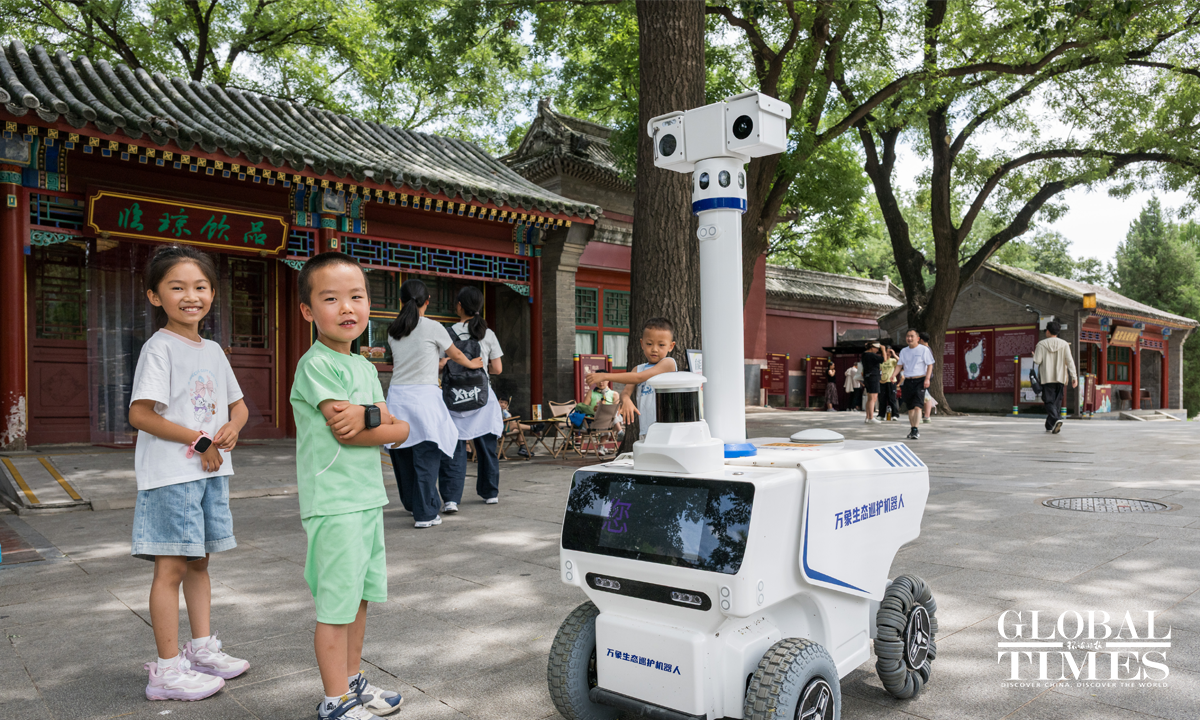
Photo: Chen Tao/GT
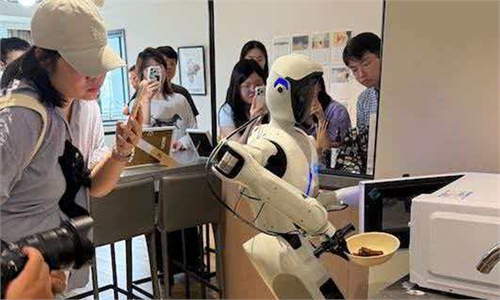
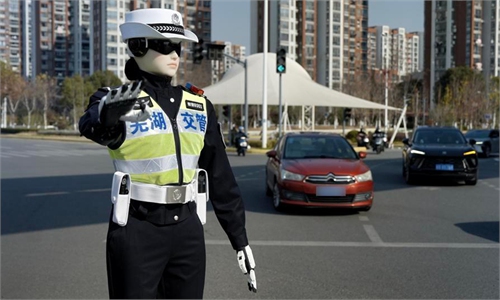
A total of 72 robot "employees" have been deployed across 14 municipal parks in Beijing this summer, taking on tasks ranging from cleaning and patrols to providing guided tours, detecting pests and discouraging inappropriate behaviors, Beijing Daily reported on Wednesday.
At the Summer Palace, cleaning robots can begin operating within 30 seconds after sanitation workers define their operating areas and select cleaning modes through a mobile app. Equipped with lidar systems and sensors, the robots can perceive their surroundings in real time, with side brushes continuously sweeping inward to collect litter along their routes.
The robots are capable of edge cleaning and automatic water spraying, and can adjust cleaning intensity based on the amount of waste detected. They can also actively avoid pedestrians and vehicles.
The park has also integrated intelligent tour guide robots that can provide explanations along preset routes while also answering visitors' questions and reminding them to maintain order.
At Yuyuantan Park, 11 robots have taken up duties. A 1.5-meter-tall white patrol robot can smoothly navigate among visitors. Equipped with more than 10 high-precision AI models, external sensing radar and recognition cameras, the robot can identify behaviors such as smoking and issue voice reminders to visitors through preset audio messages.
Meanwhile, Zizhuyuan Park has introduced four types of "smart breathing" robots that simulate human exhaled carbon dioxide to attract and capture mosquitoes, helping reduce mosquito density in specific areas.
Xu Ziling, a staff member at Zizhuyuan Park, told the Global Times that the coordinated use of smart equipment, including mosquito-catching robots, responds to visitors' concerns about increased mosquito activity in grassy areas during evening visits.
"Especially during evenings when many children visit the park, compared with traditional mosquito traps, these devices can not only reduce the workload of frontline workers but also improve visitors' experience," Xu said.
Meanwhile, park staff can use mobile phones to monitor real-time data, analyze pest activity cycles and develop targeted prevention plans, addressing limitations of manual inspections.
Notably, the pest monitoring lamp robots mainly operate in light-controlled mode during spring, summer and autumn. After insects enter dormancy in winter until the solar term of Jingzhe (awakening of Insects) the following year, the devices automatically stop operating, enabling greener maintenance.
The plan on deployment of robot workers began in 2024, when Beijing authorities established the city's first "robot + landscaping" innovative application pilot at Yuyuantan Park, launching trial operations of gardening robots, according to Xinhua.
In 2025, Yuyuantan Park established a "landscaping robot workstation," becoming a key platform for equipment testing, scenario adaptation and technology upgrades.
"Located in central Beijing, Yuyuantan Park has diverse environments including water areas, green spaces and plazas, while maintaining steady visitor flows, making it an ideal real-world testing ground," said Han Ling, deputy director of Yuyuantan Park.
Over the past two years, 23 robot devices from 18 companies have undergone field testing there. Robots with strong adaptability have gradually been introduced across 14 municipal parks, per Xinhua.
Previously, the work relied largely on manual labor and was physically demanding. This year, newly deployed aquatic weed-removal robots have integrated functions including cutting, collecting, draining, transporting and unloading, and can operate through remote control or autonomously, according to Beijing Daily.
Zhou Ziniu, a deputy director of the Beijing Municipal Parks Administration Center, said the center will coordinate operational data from robots across municipal parks, strengthen data monitoring, and enable real-time tracking, precise positioning and multi-dimensional analyses of robot performance.
The data foundation will provide support for deeper integration and wider application of robotics in urban landscaping and park management, Zhou said.
RELATED ARTICLES